


/file/attachments/orphans/ED_543155_209242.jpg)


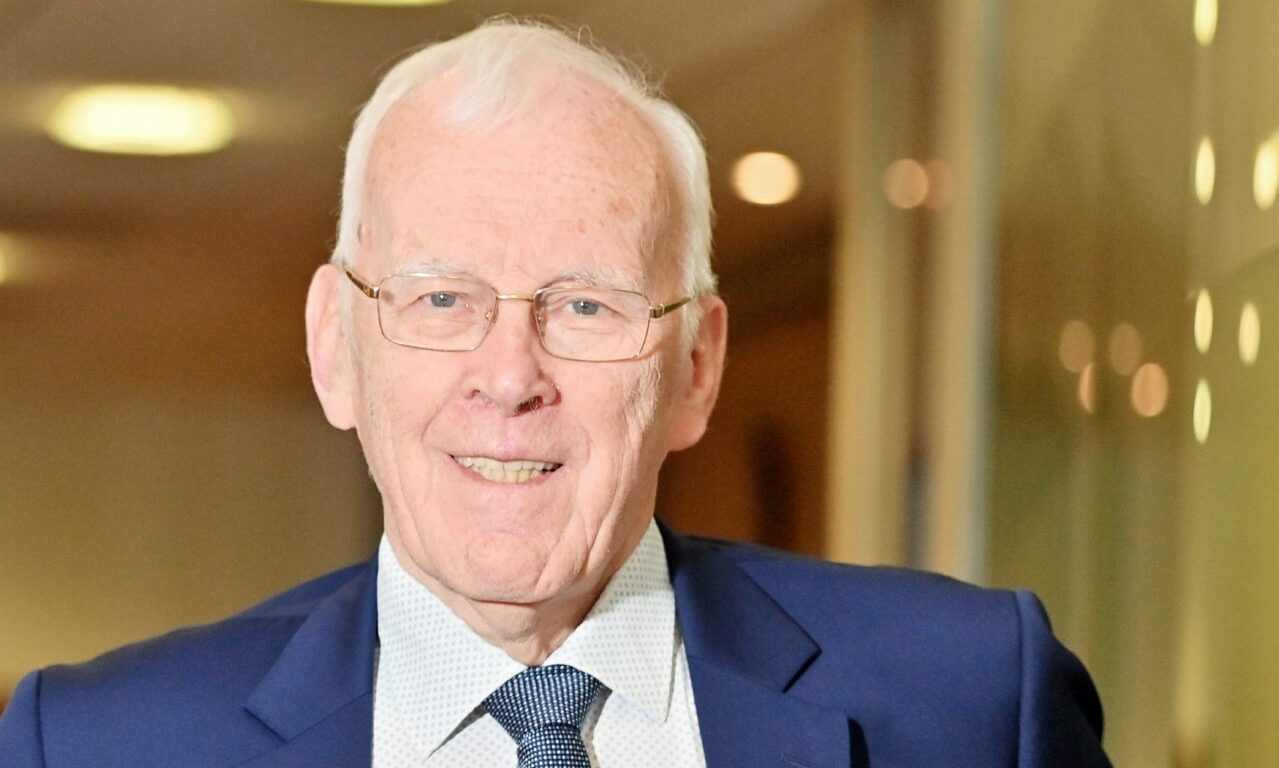













Lord Flight, City success story and ambitious would-be Chancellor brutally defenestrated by Howard
As MP for Arundel and South Downs, he privately briefed that a Howard government would make bigger cuts than admitted – and lost the whip

Lord Flight, who has died aged 77, was a successful City fund manager whose ambition to be Chancellor was dashed when Michael Howard sacked him as a Conservative candidate and deputy party chairman just before the 2005 general election.
Howard Flight had been MP for Arundel and South Downs for eight years and had already served in the Shadow Cabinet when it was reported that he had told a private meeting a Howard government would have to make tougher spending cuts than had been admitted.
Determined to maintain discipline during a campaign where he had high hopes of at least seriously denting Tony Blair’s Commons majority, Howard decided to make an example of Flight. He fired him as deputy chairman, withdrew the Tory whip, and Conservative Central Office ordered a reluctant constituency association to deselect him.
David Cameron, succeeding Howard, put Flight on his “A-list” of candidates, but this did not bring him a seat. And while he was created a life peer after the 2010 election, he was not offered a job in government.
Tall and self-confident, with a voice “a cross between a hooray Henry bray and a klaxon”, Flight was – save for a love for Elgar – the ultimate 1980s Essex man. He had a picturesque turn of phrase: of his negotiations to acquire Hambro’s fund management business, he said: “We smelt each other’s bottoms and decided that we fit together quite well.” Even to the ebullient Alastair Morton, who got the Channel Tunnel built, he was “not a quiet and restful soul”.
Flight thrived in the City as the promoter, with his Cambridge friend Tim Guinness, of Guinness Flight Asset Management; starting with £9.3 billion under management, he expanded the business over 12 years before selling to the South African banking group Investec after his election to Parliament.
A passionate believer in capitalism, he described it as “like a Bach fugue: a wonderfully complicated thing which has come about naturally and works”.
Well to the Right and strongly Eurosceptic, Flight backed John Redwood for the leadership in 1997 – then turned to Kenneth Clarke. He was a fierce opponent of large-scale homebuilding in the South-East, pressed for the privatisation of state pensions, and backed a wholly elected second chamber.
Howard Emerson Flight was born at Romford on June 16 1948, the son of Bernard Flight, regional head of the Westminster Bank’s trustee department and a “rampant socialist”, and the former Doris Parker. He joined the Young Conservatives at 16.
From Brentwood School – two years behind Jack Straw – he read history and economics at Magdalene College, Cambridge. He chaired the university Conservative association, and in 1969 was vice-chairman of the Federation of Conservative Students.
Guinness persuaded Flight to go to business school instead of plunging straight into the City, and he took an MBA at the University of Michigan. In 1970 he joined Rothschild’s as an investment advisor, moving to Cayzer’s in 1973 and HSBC in 1977. Asked to set up a merchant banking arm in Bombay, he almost died there of typhoid.
When he returned to London in 1979, Guinness suggested he set up a managed currency fund at Guinness Mahon. The project got off the ground, but relations with the parent company were bumpy until Flight and Guinness were given a 33 per cent stake.
Flight stayed with Guinness Mahon for seven years, the final three as a board member. Then in 1986 he and Guinness set up Guinness Flight, acquiring Hambros’ fund management business to give it bulk. In 1989, helped by Morton, they bought out Guinness Mahon’s 80 per cent stake. Choosing a base across the river in Southwark, Flight said the location was “twice the space at half the price, and handy for the City”.
Flight worked for Norman Tebbit at Epping in the 1970 election, and stood against the Labour veteran Bob Mellish at Bermondsey in both 1974 elections. Chosen again as prospective candidate after his return from India, he withdrew in 1982 just as Labour selected Peter Tatchell in place of Mellish – a decision that would lose the seat to the Liberals.
Flight was briefly personal consultant to Tebbit at the DTI, and from 1984 to 1994 chaired the Putney Conservative Political Centre. Despite the success of Guinness Flight, he was tempted by a political career, with the Treasury his goal. In 1993 he mused: “If I had the chance one way or another I would take it – though [my wife] Christabel says I actually wouldn’t like it.”
That September, he warned in The Daily Telegraph that if Clarke raised taxes further to bring down the deficit in the absence of an “adequate national crisis”, he would “expose a much bigger party divide than Maastricht and severely damage the long-term position of the Tory party, supposedly committed to low taxation and cutting government expenditure.”
Prior to the 1997 election, Flight was selected for the new seat of Arundel and South Downs, taking it with a majority of 14,035 as the Conservatives nationally were routed. He was appointed to the Environment Select Commmittee, soon switching to Social Security, and chaired the all-party Hong Kong group in the wake of the handover to China.
In the Commons, he condemned Gordon Brown’s giving independence to the Bank of England as “hotch-potch privatisation”, saying it would have been better to relaunch the Bank on the lines of the US Federal Reserve.
William Hague brought him onto the front bench in 1999 as Shadow Economic Secretary to the Treasury; Iain Duncan Smith made him Shadow Paymaster General after the 2001 election, and a year later brought him into the Shadow Cabinet as Shadow Chief Secretary. Howard in 2004 made him deputy party chairman.
From the front bench, Flight was scathing about New Labour’s accounting standards. He said the Private Finance Initiative had left some Government activities, notably a new prison at Kilmarnock, off anybody’s books. This, he asserted, was “Enron-style accounting”.
In March 2005, with a further election called, Flight – unaware he was being recorded – told a meeting of Conservative Way Forward that the party in office could make deeper cuts than were promised in its manifesto. When these comments surfaced, a furious Howard cut him loose.
Flight refused to accept his forced deselection as a candiidate, maintaining that only his constituency association had the power to do this and producing a confirmatory opinion from a QC. The Arundel and South Downs association initially refused to seek a new candidate, but backed down when threatened with suspension. Nick Herbert was chosen in his place, comfortably holding the seat.
Despite being rehabilitated by Cameron, Flight was one of a minority of the “A-list” not to find a seat for the 2010 election. With the Coalition in power, he was created a life peer that November, taking his seat the following February.
A week after the announcement of his peerage, he provoked controversy by suggesting the government’s cuts to child benefit would “discourage the middle classes from breeding”, while “for those on benefits there is every incentive”. He served for five years on the Lords’ EU Economics and Financial Affairs committee.
Flight stayed active in the City, launching the Flight & Partners Recovery Fund in 2007, remaining a director of Investec until 2019 and chairing several investment trusts and the Enterprise Investment Scheme Association.
He was a trustee and vice-president of the Elgar Foundation, and an advisory board member of the Centre for Policy Studies, Institute of Economic Affairs and Financial Services Forum; a governor of his old school; and, in 2019, Master of the Carpenters’ Company.
In 1988 he published All You Need to Know About Exchange Rates.
Howard Flight married Christabel Norbury in 1973 (“her mother was an enormous Prussian opera singer, her father a delightful Worcestershire fruit farmer”). Later Lord Mayor of Westminster, she survives him with their son and three daughters.
Howard Flight, born June 16 1948, died January 24 2026.
[Source: Daily Telegraph]