

/file/attachments/orphans/ED_543155_209242.jpg)























'Trauma still felt': North African Jews and the Holocaust
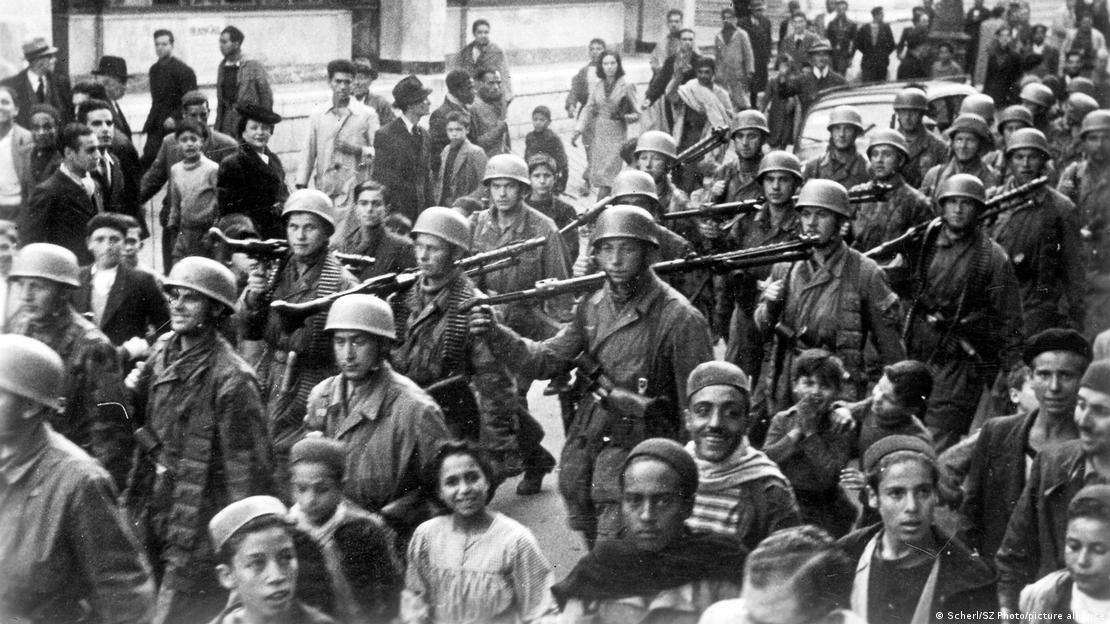
The Nazi persecution of Jews in Europe during World War II also had its effects on North African Jews, who experienced death, forced labor, hunger and looting of their property by Nazi Germany and its allies.
The Holocaust is widely remembered as a tragedy that devastated Europe's Jewish communities. But its impact extended far beyond the continent's borders.
Nazis persecution and antisemitic policies had also reached deep into North Africa's Maghreb region, where Jews in Morocco, Algeria, Tunisia and Libya suffered under Nazi occupation and local collaborators.
In these territories too, Jews were murdered, forced into labor camps, suffered inhumane conditions, and were pushed out of public life.
Before World War II, Jewish communities in the Maghreb region were flourishing. According to Yad Vashem, the Holocaust remembrance center in Jerusalem, some 415,000 Jews lived in the Maghreb before the war. An estimated 200,000 of them in Morocco, 120,000 in Algeria, 85,000 in Tunisia and 30,000 in Libya.
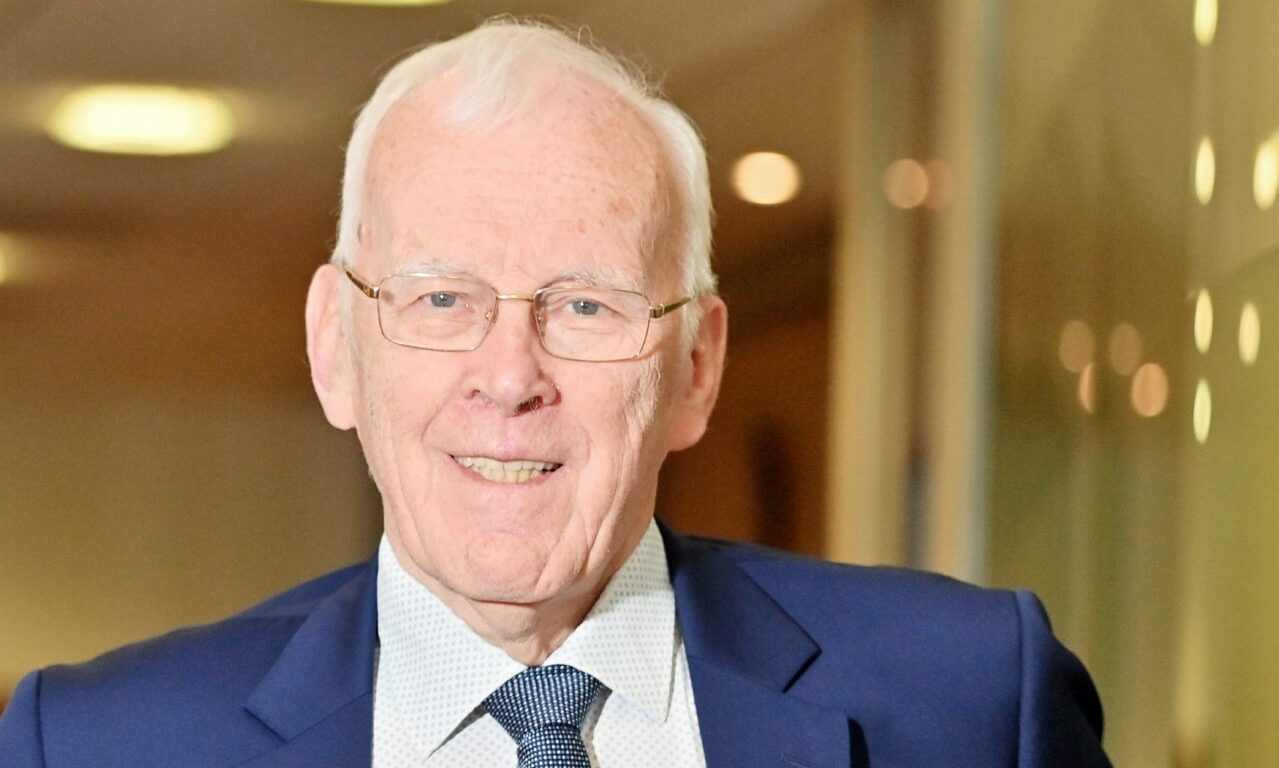
Dan Michman is the Head of the International Institute for Holocaust Research at Yad Vashem. He tells DW that even though the Holocaust took place in Europe, North Africa and its Jewish communities were affected — to different degrees — by the war.
"The Vichy regime in France and its extensions in North Africa are part of the Holocaust story, I'd say it's a second circle," he says.
Hundreds killed in Libyan labor camp
Libya, then a colony of Benito Mussolini's fascist Italy, had managed at the beginning to avoid the full application of Rome's anti-Jewish laws. That changed in the early 1940s.
Allegations of Jewish espionage made by members of the fascist Black Shirts resulted in restrictions on the participation of Jews in public life in 1942, followed by an order forcing all Jewish men aged 18 to 45 into labor camps.
Of the several labor camps established for Libyan Jews, Giado, located 150 kilometers (93 miles) away from the capital, Tripoli, was the most notorious one. Jews were held there in difficult sanitary conditions and received very little food, which led to diseases being spread across the camp.
Yosef Da'adush, born in the city of Benghazi, documented his time at Giado in a diary found after his death and published in 2020. According to the diary, the then-20-year-old could have saved himself from being sent to Giado, but insisted on going "wherever all my other brothers, the Jews, will go."
Da'adush also described the death of his baby daughter from a disease at Giado, and how he buried her with his own hands. "I laid her little body on the ground and started digging," Da'adush wrote.
According to Michman, while the Giado camp was not managed by Nazi Germans, it was ideologically "influenced" by them.
Approximately 2,600 Jews were sent to Giado between May 1942 and its liberation by British troops in January 1943. Around 500 of them died as a result of hunger, exhaustion and diseases — the highest number of Jews from a North African country to have been killed during World War II.
Jews who were non-Libyan nationals were sent to Nazi camps in Europe: "In Benghazi, there were British Jews. The Italians took them to Italian labor camps, and in September 1943, Germany took over the north of Italy, and those Jews were taken to Bergen Belsen. My parents were taken there, too," explains Michman.
Stolen Jewish property, forced labor and a 'miracle'
Tunisia's flourishing Jewish community was spread across a few towns, with the majority living in the capital Tunis. It was a politically and intellectually diverse community, which included Zionists, socialists and communists.
Nadia Nakash is the daughter of a Holocaust survivor from the town of Gabes in Tunisia. She recalls hearing from her parents that while the local communities were aware of a war taking place, they were not aware of its extent.
"People lived a simple life and they cared about living normally and practicing their religion," she says, while adding that in many cases, Jews and Arabs lived in the same neighborhoods.
Sporadically, Jews experienced outbreaks of violence against them, culminating in the pogrom in the city of Gabes on the island of Djerba in 1941, in which seven Jews were murdered by locals. Hostility and violence grew worse after Germany invaded Tunisia in 1942, putting the Jewish community under direct Nazi occupation — the only one in the Maghreb region.
Some 5,000 Tunisian-Jewish men were sent to labor camps, with some 20 Jewish political activists being sent to the concentration and extermination camps in Europe, where they were murdered.
The Nazis also looted Jewish property. On the island of Djerba, Nazi soldiers demanded that the Jewish community collect and hand over 50 kilograms of gold within three hours, or else they would kill Djerba's Jews, starting with community leader Rabbi Moshe Kalphon Hacohen.
After only 43 kilograms were collected, the Nazis extended the deadline by one day. Fortunately, that very next day, the Allied forces liberated Djerba — an event many Tunisian Jews refer to as the "Djerba Miracle" to this day.
Algerian Jews resist
Algeria was considered formally an integral part of France. This meant Algerian Jews were French citizens and enjoyed full civil rights before the war.
Those rights were restricted under Nazi control of Vichy France, starting in 1940, and Algerian Jews were barred from studying and working in many professions, with their French citizenships being taken away from them.
Thousands of Jews — mostly foreign nationals — were sent to camps in the country, where they were subjected to harsh forced labor. Many Algerian Jews joined the underground resistance movement against the occupiers.
King in support of Moroccan Jews
Just like their fellow Jews in Algeria, Moroccan Jews — the biggest community in the Maghreb — suffered under the discriminatory laws by the Vichy regime, excluding them from certain jobs, and their number in the country's education system was extensively restricted.
However, according to Yad Vashem, the laws only had a limited effect due to Jewish communities in Morocco having their own education system to begin with.
Holocaust researcher Michman describes a difference between the discrimination experienced by Jews in Morocco's big cities and how Jews in smaller communities experienced that time.
"The local commanders in smaller communities did not want any troubles with the locals, which is why they did not implement the anti-Jewish laws so extensively," he said.
In Morocco's big cities, however, it was an entirely different story, according to Michman. Jews in Morocco's big cities were closer to the French colonizer, both in terms of their support and their culture and lifestyle. The war had pushed them to the margins of society.
A big part of the effort to protect the Jews and minimize the Nazi and French restrictions is attributed to the king of Morocco at the time, King Mohammed V, who has been honored by some Jewish organisations for his role in protecting Jewish communities during the war.
Trauma still a topic among survivors
The time after the Holocaust was marked by a change of approach by Jews in North Africa towards their home countries and communities, with many choosing to move to Israel or France.
Nadia Nakash recalls how her parents, who immigrated to Israel in the 1960s, always insisted on having large amounts of food at home due to fears of not having enough, a remnant of the Nazi occupation in Tunisia.
"They were scared no food would be left. Hunger was a real danger," she says, adding that the Holocaust was a "very present" and "very traumatic" issue in their family.
Many survivors refrained from talking about their experiences during the Holocaust, with some testimonials being discovered after their deaths through diaries or other forms of documentation.
According to Yad Vashem, the situation for North African Jews' would have been a lot worse if the Germans had had control over the country for a longer period.
Michman believes the Nazi aspiration to exterminate Jews would have reached Jewish communities in North Africa on a much larger scale.
Nadia Nakash agrees. "It is not that there wasn't a Holocaust, it's just that they couldn't implement it."
[Source: DW English]