/file/dailymaverick/wp-content/uploads/2023/10/CovidGrant-1.jpg)


















100 non-Syrian Kurds return to PKK’s Qandil stronghold under SDF-Damascus deal
The transfer of non-Syrian PKK fighters to Iraq’s Qandil Mountains follows a US-brokered SDF-Damascus deal aimed at easing tensions and preserving Kurdish forces under national army oversight.
At least 100 non-Syrian militants from the outlawed Kurdistan Workers Party have crossed from Syria into the Iraqi Kurdistan Region and traveled to the outfit’s main headquarters in the Qandil Mountains on Iraq’s border with Iran, three well-placed sources with knowledge of the scheme told Al-Monitor. The exfiltration of the rebels, facilitated by Iraqi Kurdish authorities, is in line with a US-brokered integration deal signed between the Kurdish-led Syrian Democratic Forces and the interim government of Syrian President Ahmed al-Sharaa on Jan. 30.
The agreement, a revised version of an earlier one signed on Jan. 18, improved the terms for the SDF and ended weeks of clashes between the two sides that claimed dozens of lives and saw the Kurdish-led entity in northeast Syria lose more than 80% of the territories under its control. Under the terms of the amended deal, the SDF gets to retain four brigades, albeit under the overall command of Syria’s national army, a key Kurdish demand that is meant to assuage Kurdish security concerns.
Turkey was strongly opposed to the preservation of the SDF in any size or form because of its links to the PKK, which fought the Turkish army for self-rule inside Turkey until last summer. That is when it announced that it was disbanding and renouncing its four-decade-long fight in response to orders from its imprisoned leader, Abdullah Ocalan.
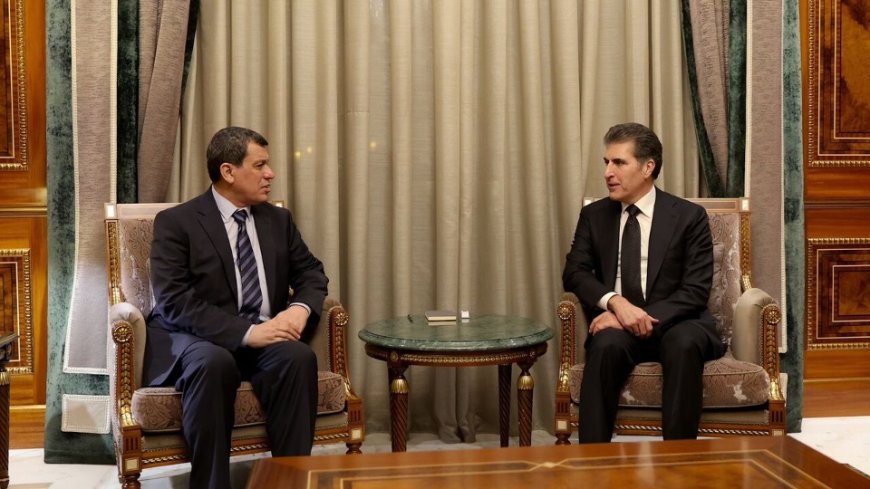
The process of transferring non-Syrian PKK elements to Iraqi Kurdistan came after a Jan. 22 meeting between Nechirvan Barzani, the president of the Kurdistan Region of Iraq, and the SDF commander in chief, Mazlum Kobane, the sources briefing Al-Monitor said. Barzani, who has played a key role behind the scenes in bridging differences between all the key stakeholders, told Kobane that this would be a critical confidence-building step. Kobane agreed. Turkey’s foreign minister, Hakan Fidan, and the head of Turkish intelligence, Ibrahim Kalin, were “extremely pleased” upon receiving news of Kobane’s acquiescence, one of the sources said. The move likely contributed to a softening in Turkey’s position regarding the establishment of the four SDF brigades.
The exact number of non-Syrian PKK militants remains unclear, but their transfer is ongoing, the sources said, without providing further details. Kobane and many other Syrian Kurdish leaders governing northeast Syria held positions of influence within the PKK before crossing back to Syria at the start of the civil conflict in 2011 to organize Kurdish defense forces there and protect the civilian Kurdish population.
The Syrian Kurds’ de facto foreign minister, Ilham Ahmed, has met with Turkish intelligence officials since the start of Turkey’s efforts to strike a lasting deal with its own Kurds that was launched in the spring of 2024 and involved direct talks with Ocalan for the first time. Ocalan was expected not only to dismantle the PKK but to use his influence over the SDF for it to follow suit. Ocalan did not make any such call to the SDF, at least not publicly.
Had the Jan. 18 agreement held, the SDF would have effectively capitulated to all of Sharaa's — and Ankara’s — demands. But President Donald Trump played a key role in getting Ankara and Damascus to soften the agreement in separate phone calls made to Sharaa and Turkish President Recep Tayyip Erdogan on Jan. 28. Barzani’s exhortations for Kobane to accept the new deal, together with similar pressure from US Syria envoy Tom Barrack, resulted in the signing of the Jan. 30 accord.
The emerging thaw between Ankara and the SDF could eventually see Syria’s Kurds and Turkey working together in ways that could balance Saudi Arabia's deepening alliance with Sharaa. If all goes to plan, peace between Turkey and Syria’s Kurds could form the basis of an expanding Turkish-led sphere of influence encompassing Kurds in Turkey, Syria and Iraq, with economic and strategic dividends for all.
Turkey’s persistent hostility toward the SDF saw Turkish forces mount three military incursions aimed at crippling the Kurdish-led entity in northeast Syria. The collapse of the regime of Syrian dictator Bashar al-Assad in December 2024 ushered in a new balance of power that weakened the Kurds and shattered their hopes for a federal arrangement mirroring that between Iraq’s Kurds and Baghdad.
However, on the upside, cross-border Kurdish unity is on the rise. Barzani’s uncle and father-in-law, Masoud, who is the KDP president and the grand old man of Kurdish politics worldwide, has become its public face, advocating on behalf of his Syrian brethren in several phone calls with Sharaa while forging strong ties with Kobane. The pair met again on Feb. 6 in Erbil, where Kobane also met with Nechirvan Barzani as well as with France’s foreign minister, Jean-Noel Barrot.
[Source: Al-Monitor]