


/file/attachments/orphans/ED_543155_209242.jpg)



















Ramaphosa to act on ‘illegal immigration’ as anti-foreigner protests spread across SA
Protests targeting foreigners are increasing. President Cyril Ramaphosa says the country needs to deal with illegal migration.
/file/attachments/orphans/WhatsAppImage2026-06-02at144237_549013.jpeg)
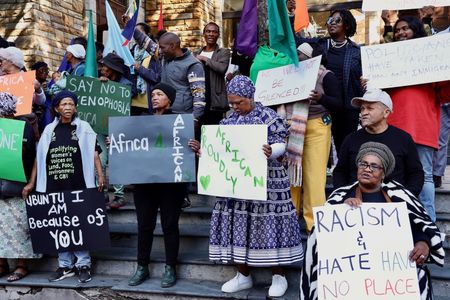
As anti-foreigner protests have spread across the country in recent days, with flare-ups in Gauteng, KwaZulu-Natal and Western Cape, President Cyril Ramaphosa has pledged a tougher government response to migration issues while cautioning against xenophobia and vigilantism.
On Tuesday, 2 June, protesters in Ekurhuleni, Gauteng, targeted foreigners’ homes in Cloverdene and Chief Albert Luthuli, reported News24. In Ladysmith, KZN, hundreds of protesters marched through the streets and visited stores, calling on the government to act against illegal migration.
Speaking during the Presidency Budget Vote in Parliament on Tuesday, Ramaphosa outlined government’s plans to strengthen immigration enforcement.
“As we work to build a safer, more stable and more prosperous society, we need to address the challenge of migration. When it is well managed and regulated, migration can help drive growth and opportunity for South Africans.
“However, we need to deal with illegal migration. We have seen how illegal immigration can put pressure on our public services and undermine our efforts to create decent work,” Ramaphosa said.
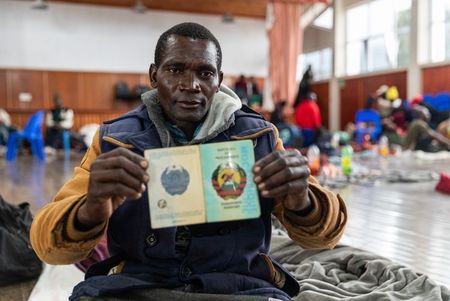
The President’s comments come as surveys show that anti-foreigner sentiment continues to grow. At the same time, groups such as March and March continue to gain traction and pressure the government to take a stronger stance on immigration.
Several groups have raised concerns that the anti-foreigner movements and protests, which tap into grievances over unemployment, crime and overcrowded public services, could have deadly consequences, as seen in multiple xenophobic flare-ups since the 2008 attacks, in which 62 people were killed.
Nhlamulo Sambo, 18, was killed in Mossel Bay last week. On the same day, there was a violent anti-foreigner protest in the area. Sambo was a South African citizen from Giyani, Limpopo.
*While his family maintains that he was targeted after being mistaken for a foreign national, preliminary police investigations have, however, found no evidence linking his death to the protests. Police say Sambo was allegedly killed during a separate criminal incident involving an attempted theft at a shack.
In Mangaung, Free State, on 26 May, protesters looted shops in an anti-foreigner march, leading to 140 arrests. On 29 May, anti-foreigner protesters looted stores in Estcourt, KwaZulu-Natal.
On Tuesday in Parliament, Ramaphosa said, “We are cracking down on violations of immigration laws. We are increasing our inspections of workplaces and prosecuting employers who violate our labour laws. We are strengthening border security, stamping out corruption in the immigration system and closing the loopholes in fragmented immigration laws.”
While embracing tougher immigration enforcement, he stressed, “Every person in South Africa – whether they are citizens or foreign nationals – must respect our laws, and the rights of every person in our country must be upheld. We must never give in to violence, xenophobia or vigilantism.”
“As a society, we must stand against all forms of disinformation, incitement, racism and ethnic mobilisation. We will strengthen and enforce our laws, while upholding the Constitution and the human dignity of all. This will enable us to deal with illegal immigration without turning against one another,” the President said.
Anti-foreigner sentiment reaches new heights
According to public opinion data recently released by the Human Sciences Research Council (HSRC), anti-foreigner sentiment has increased since the Covid-19 pandemic, with 42% of respondents now saying they would not welcome any immigrants to the country.
“South African Social Attitudes Survey data shows that the South African public, which already displayed relatively unfavourable attitudes towards foreign nationals, has become considerably more antagonistic towards immigrants over the last five years. In fact, the data shows that the levels of hostility towards immigrants recorded in 2025 are the highest observed since the start of measurement in 2003,” said the HSRC in May.
“One of the reasons for this increase in hostility in recent years is that immigrants are increasingly being perceived as an economic threat. Additional analysis confirms that South Africans in 2025 are more likely than before the Covid-19 pandemic to associate immigrants with crime and economic competition.
“For instance, 77% of the public agreed in 2025 that immigrants increase crime rates; a figure that is 13 percentage points higher than the level recorded in 2018.”
Human Rights Watch researcher Nomathamsanqa Masiko-Mpaka recently commented, “South Africa’s Constitution and international human rights law protect the right to protest, but that does not include permission to commit violence.”
She continued, “South African authorities should intensify efforts to address anti-immigrant sentiments and violence to ensure the safety and protection of at-risk foreign nationals in the country,” Masiko-Mpaka said. “Vigilante groups need to be held fully accountable, including through effective criminal prosecutions.”
Last week, close to 300 Ghanaians fled the country as a result of growing xenophobic tensions and violence in South Africa, boarding a repatriation flight that was organised by the Ghanaian government. SA officials told Daily Maverick that only 10 of the 300 Ghanaians who were to board the flight on Wednesday were properly documented.
[Source: Daily Maverick]