


/file/attachments/orphans/ED_543155_209242.jpg)







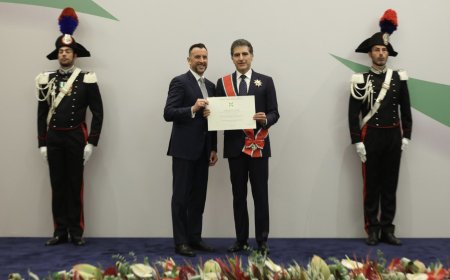













Sir Alex Younger, long-serving head of MI6 who shaped the service for a ‘fourth generation of espionage’
Younger was at pains to dispel the James Bond and Oxbridge ‘tap-on-the shoulder’ myths about the sort of people who work for MI6

Sir Alex Younger, who has died of cancer aged 62, served as “C”, the code name for the head of the Secret Intelligence Service (MI6), from 2014 to 2020, becoming its longest-serving chief in 50 years.
He joined MI6 in 1991 after serving as a captain in the Scots Guards. His secret service career began with operational intelligence duties in Europe and the Middle East, and he went on to serve as MI6 station chief in Afghanistan during the US-led coalition against the Taliban. Later he led MI6’s counter-terrorism work in the three years running up to the London Olympic Games in 2012.
Younger’s appointment to the top job in 2014 came amid a difficult period for Britain’s intelligence services following the leak of a cache of top-secret documents, including at least 58,000 British intelligence files, by the former US National Security Agency contractor Edward Snowden.
Snowden’s supporters argued that the leaks exposed an abuse of powers among the security and intelligence services in the UK and US.
The allegations led to an unprecedented hearing of the Intelligence and Security Committee, at which the heads of MI6, MI5 and GCHQ appeared together in public for the first time, the then MI6 chief Sir John Sawers warning that “our adversaries are rubbing their hands with glee, al-Qaeda is lapping it up.”
Though Sawers had been respected and admired by many in the service, his determination to bring MI6 into the Whitehall mainstream had not gone down well with traditionalists; nor had a large-scale redundancy programme which resulted in up to 40 per cent of senior officers losing their jobs.
Younger’s appointment was a popular choice among colleagues at MI6’s Vauxhall Cross headquarters. One described him as “a tremendous guy, decent, clever with a good manner. There is steel beneath his affable demeanour and he is a good choice,” and over the next six years he did much to restore morale.
His time in the hot seat coincided with a period when all the UK intelligence agencies adopted a more public profile. In 2016 Younger, in a first, delivered a speech to the media from inside the headquarters of MI6 in which he was at pains to dispel the James Bond and Oxbridge “tap-on-the shoulder” myths about the sort of people who work for the service:
“For too long – often because of the fictional stereotypes… people have felt that there is a single quality that defines an MI6 officer, be it an Oxbridge education or a proficiency in hand-to-hand combat. This is, of course, patently untrue. There is no standard MI6 officer.”
Younger launched a concerted bid to make the recruitment process less elitist and to fit the service for what he termed a “fourth generation of espionage” against Russia and other adversaries, with a new focus on digital, data, and cyber security. He lowered the minimum recruitment age to 18 and presided over a recruitment drive with job ads, particularly for people with modern technical skills, appearing in a wide range of media.
In 2015 MI6 even advertised on Mumsnet; the parenting website then publicised the novel recruitment drive with a tweet that ran: “What did you expect, an exploding pen? Reckon you could rival Q? MI6 are looking for tech specialists.”
Younger particularly impressed the then prime minister Theresa May with his handling of the 2018 Salisbury poisoning, when agents from Russia’s GRU intelligence service attempted to assassinate the former Russian spy Sergei Skripal and his daughter Yulia with Novichok nerve agent – so much so that in April 2019, six months before he was due to retire, Mrs May announced that he would continue in his post for another year to maintain stability through the Brexit negotiations.
Although Younger confessed to mixed feelings about the 007 stereotype, he admitted that there were some advantages to the powerful brand James Bond had created for MI6 (“there are few people who will not come to lunch if I invite them”).
Shortly before his retirement he visited the Pinewood set of the upcoming Bond film No Time to Die and contributed his own pen containing green ink – which spy chiefs traditionally use to sign their letters – to the film-makers to add some authenticity to the movie.
It was said that he even considered making a cameo appearance in the film but eventually declined the offer.
Alexander William Younger was born to parents of Scottish heritage in Westminster on July 4 1963, and educated at Marlborough and at St Andrews University, where, sponsored by the Army, he graduated in economics.
He was commissioned into the Royal Scots in 1986, later transferring to the Scots Guards, and was promoted to captain the following year. In 1990 he transferred to the Regular Army Reserve before joining MI6.
Public accounts of his early years with the secret service tended to reticence. In 2018, however, in a speech at St Andrews University, Younger let a few chinks of light into the darkness, telling students how as a young SIS officer in the mid-1990s his first job was “penetrating an organisation intent on genocide” in the western Balkans: “It took me to places I never thought I would visit, often travelling under a false identity. It involved many nights drinking obscure homemade alcohol, piecing together the intentions of the parties to that conflict, and allowing me to create the secret relationships necessary to provide the intelligence our country urgently needed.
“I had the satisfaction of knowing that my work, along with that of many others, helped pave the way for the eventual arrest and prosecution of war criminals implicated in the murder or displacement of hundreds of thousands of people.”
He became deputy director of the service under Sir John Sawers in 2012, before being nominated as chief in October 2014 on Sawers’s retirement. It was said to have been Younger’s matter-of-fact approach that persuaded the prime minister David Cameron to give him the job, in the face of strong competition from two other candidates.
In his 2016 speech to the media, Younger observed that MI6’s primary focus was on terrorist threats, observing that British “intelligence and security services have disrupted 12 terrorist plots in the UK since June 2013.”
His claim that Islamic State cells were exploiting the chaos caused by Vladimir Putin’s military operations in Syria to plot attacks on Britain seemed to have hit home when the official Kremlin newspaper Rossiyskaya Gazeta accused him of scaremongering and posted a web mock-up showing James Bond calling the emergency services: “Hello, ambulance? Our boss has gone mad!”
But Younger also emphasised the growing threat to Western democracies of cyber warfare and propaganda from hostile states. In 2018 he raised concerns about the Chinese telecoms company Huawei’s role in the new 5G mobile network. Two years later, while he predicted continuing ideological friction between the West and China, he argued that the West should remain realistic about the need for coexistence and focus on building its own strengths rather than simply complaining about the rise of a competitor.
In 2020 he described continuing Russian ambition to subvert Western democratic process through disinformation, though he observed that the Russians “did not create the things that divide us, we did that to ourselves.”
In retirement Younger reportedly became a paid adviser to Goldman Sachs, and in 2025 joined the advisory board of Datenna, a “global provider of techno-economic intelligence on China”, based in the Netherlands.
Interviewed on the Today programme in January 2026, he warned that, following the US strikes on Venezuela, the world order was changing. With Donald Trump in the White House for a second time, “might is right” had become the order of the day, and US allies were facing difficult choices.
The absolute priority, he said, was to “rebuild our relationship with hard power”, observing that “if you don’t possess hard power you don’t have a vote.”
It was, however, unclear whether he felt Britain was up to the challenge. In an interview with ITV News in 2024, Younger claimed that the country had become “irrelevant” since Brexit.
Younger was said to enjoy music, sailing and mountaineering and was appointed CMG in 2011 and KCMG in 2019.
In 1993 he married Sarah Hopkins, with whom he had a daughter and two sons, the younger of whom was killed in a motoring accident in 2019.
Sir Alex Younger, born July 4 1963, died June 2 2026
[Source: Daily Telegraph]