
/file/attachments/orphans/ED_543155_209242.jpg)


















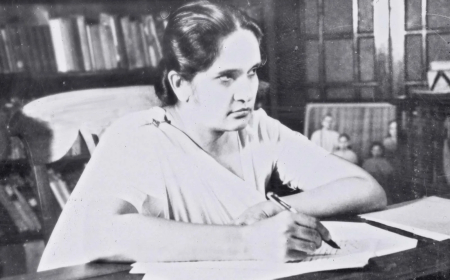

Lady Pamela Hicks, daughter of Lord Mountbatten and childhood friend of Queen Elizabeth II
The ebullient ‘Pammy’ was at the late Queen’s side as a bridesmaid at her wedding and lady-in-waiting at her accession, at Treetops in Kenya

Lady Pamela Hicks, who has died aged 97, was the wife of the interior designer David Hicks and the younger daughter of Lord Mountbatten of Burma, to whom she bore a striking physical resemblance; she thus enjoyed a ringside seat at some of the most momentous events of modern history.
She accompanied her parents to India and remained with them there throughout her father’s term as Viceroy of pre-Independence India and then Governor-General of post-Partition India in 1947-48. A childhood friend of Queen Elizabeth II and a first cousin of the Duke of Edinburgh, she was at the Queen’s side as a bridesmaid at her wedding and, as lady-in-waiting, at her accession.
Her father bullied the young “Pammy” into keeping a journal and she could, potentially, have been a royal Boswell. But when life got really interesting the entries tended to dry up, and although she acceded in old age to her children’s urging to record her extraordinary life – in three tactful memoirs, India Remembered (2007), Daughter of Empire (2012) and My Years with the Queen (2024) – she remained to the end the soul of loyalty and discretion.
The younger of two daughters, Pamela Carmen Louise Mountbatten was born prematurely on April 19 1929 in Barcelona, where her mother, the former Edwina Ashley, heiress and granddaughter to the banker Sir Ernest Cassel, was passing through while “following the fleet” round the Mediterranean. Her father, Lord Louis Mountbatten (later Earl Mountbatten of Burma), then a young naval officer, was on shore leave from HMS Stuart.
She was born into a family of close royal connections. Queen Victoria was her great-great-grandmother. Her father had been ADC to the Prince of Wales (later Edward VIII) and her grandfather, Prince Louis of Battenberg, had been ADC to George V. Through the marriage of her aunt, Princess Alice, to Prince Andrew of Greece, Pamela was a first cousin of the young Prince Philip of Greece and Denmark.
One of Edwina Mountbatten’s biographers described the young “Pammy” as a “plump giggler”, in contrast to her taller, more serious elder sister, Patricia(who would succeed her father, as 2nd Countess Mountbatten of Burma, in 1979). The fun-loving side of her nature made her a great favourite with the Royal family and she grew up close to both the young Princess Elizabeth and her future consort.
She enjoyed a warm and affectionate relationship with both her parents. This was despite the fact that Edwina Mountbatten was so self-absorbed that she was once said to have forgotten where she had sent her daughters and their nannies and governesses on holiday and had to wait for them to get in touch to reveal their whereabouts.
“As a child, I admired her for her glamour,” Pamela Hicks told the Telegraph in 2012. “Then when we were in India, and I saw the work she did there, especially with Japanese prisoners of war, that admiration grew.”
At the outbreak of war the two girls were packed off to New York to live with Cornelius and Grace Vanderbilt, friends of their parents, sailing in the liner Washington six weeks before hostilities began. The decision to send their children out of harm’s way brought the Mountbattens unfavourable reviews from critics who noted that parents who were either less privileged or more bound by noblesse oblige, including the King and Queen, thought it their duty to keep families together. When conditions improved back home, however, the girls returned and Pamela was dispatched to boarding school.
In 1946 Pamela was taken out of school to accompany her parents to India, and she remained with them throughout her father’s time there. Energetic and cheerful, she was a tower of strength to both her parents, working by day in the Allied forces canteen or in an improvised free dispensary touring the countryside round Delhi, and by night enjoying the social whirl of dinners and cocktail parties.
In 2007 she published India Remembered, a breezy account of life in the viceregal palace, in which she attempted to nail the rumour that her mother had had an affair with Pandit Nehru. Their immediate attraction “blossomed into love”, she claimed. “Although it was not physical, it was no less binding for that. It would last until death.”
Her denial of a rumour which was widely believed at the time (and still is) was the more convincing because Pamela harboured few illusions about her parents’ marriage. By the time she arrived in India, Edwina Mountbatten had had a number of affairs: “She was young, she was rich, she was beautiful and she was married to a naval officer who was away for long periods of time. What does one expect?” her daughter observed. “It broke my father’s heart, of course.”
In the war the couple had come to a civilised accommodation over a man called Bunny, one of Edwina’s lovers in England. (“It was all done so naturally I thought everyone had a Bunny in the family” Pamela recalled.) It seems that Mountbatten decided to take the same stoic line when he sensed his wife’s attraction to Nehru. Defending her belief that the pair were never lovers, Pamela observed that her mother “had plenty of affairs so there would be no point in lying about it”.
Of her father she observed: “He could be so naive. To her dying day, he was always worrying that Mummy would divorce him. ‘I’ll have to move out to the flat above the garage,’ he’d say to us. But although she said she had no time for royalty, and that she was a true socialist, Mummy would never have left him. Try keeping her away from a party at Buckingham Palace.”
In 1947, as the Partition crisis loomed, Pamela received a handwritten note from Princess Elizabeth asking her to be a bridesmaid at her wedding to Lt Philip Mountbatten and telling her about the Norman Hartnell dress she would be wearing. The Mountbattens were nervous about leaving India at such a critical juncture but, deciding that not to go would draw attention to the impending crisis, they flew home for 10 days.
Pamela’s teenage memories of the ceremony itself were eclipsed by the grand pre-wedding ball given by the King and Queen for 1,200 people – an occasion where a European prince asked for her hand in marriage after only one dance. Her impression of the royal couple was of figures in a fairytale.
“He was handsomer than a fairy prince because he was so masculine. And she, with that marvellous complexion, had absolute star quality. With the golden coach and beautiful horses, it was a kind of vision.” Her biggest disappointment was the refusal of Prince Baudouin, the highly eligible heir to the Belgian throne, to join the bridesmaids afterwards at Ciro’s nightclub.
The Mountbattens had been the bearers of a white cotton cloth woven by Gandhi as a present to Princess Elizabeth and Prince Philip, and were amused by Queen Mary’s disgusted reaction to what she assumed was “a loincloth”.
Of her fellow bridesmaids, Pamela recalled Princess Alexandra, aged 12, running around boisterously at the reception and Princess Margaret, chief bridesmaid, bossing the others about. Queen Juliana of the Netherlandsexpressed disgust at how dirty everyone’s jewellery was and Prince Philip was dismayed that his three German sisters were not invited. Otherwise Pamela’s memory of the occasion was sketchy for the good reason that she did not record it: “I went to my diary for ’47 and found that those 10 days are a complete blank,” she admitted.
Five years later, by now talked up as the most eligible girl in England after Princess Margaret, Pamela Mountbatten had the chance to redeem herself as a royal Boswell when she was invited to accompany Princess Elizabeth and Prince Philip to Kenya as a lady-in-waiting on the first leg of a tour to Australia and New Zealand.
She was one of only four other people to accompany them up a ladder to Treetops Hotel, perched in the branches of a giant fig tree in Aberdare National Park, but she never made a record of her impressions, having dropped her typewriter into shark-infested waters as the party disembarked from the SS Gothic.
They were still there on the night of February 6 1952 when King George VI died, although news did not reach the party until much later. The new queen was devastated, Lady Pamela recalled, “but she was also incredible. They asked her what she wanted to be called as Queen. She was astounded by the question and said: ‘Elizabeth. That’s my name.’ It was so typical of her. She showed great control, though I think she may have been in floods once we were on the plane home.”
The appearance of the interior designer David Hicks in the lives of the Mountbattens was less than auspicious. “Walked with Pammy barefoot on the lawn for one hour hearing about David Hicks,” Lord Mountbatten recorded for September 13 1959. “As a result had blood blisters on both feet. Very painful.” But Hicks’s natural chutzpah appealed to Mountbatten, who became one of his greatest supporters.
Pamela Mountbatten and David Hicks were married during a blizzard on January 13 1960 at Romsey Abbey (a “fairytale wedding with snowflakes falling,” as Lord Mountbatten recorded), the bride in a satin gown by Worth trimmed at cuffs and neck with white mink. They settled down to live at Britwell Salome House, in Oxfordshire, where their son and two daughters were born.
The early days of the Hicks’ marriage were overshadowed by the death, a month after the wedding, of Edwina Mountbatten; though she had been ill, it came as a shock to the whole family.
Worse was to come, however, in 1979, when an IRA bomb, planted in Lord Mountbatten’s 29ft lobster fishing boat, Shadow V, detonated during the family’s annual holiday trip to Cassiebawn Castle, above Donegal Bay, killing the Earl along with Nicholas Knatchbull, his 14-year old grandson by his elder daughter Patricia Brabourne, and a local boy, Paul Maxwell.
Nicholas’s twin brother Tim, his parents, Lord and Lady Brabourne, and the Dowager Lady Brabourne were also seriously injured, the last succumbing that night to a combination of her injuries and shock.
Pamela Hicks and her children were also staying at the castle, but by good fortune had not joined the fishing party. They heard the blast, and it was Pamela who took on the grim task of confirming to her sister the news of her son’s death.
The tragedy marked a watershed for the Hickses, ending their cycle of idyllic family summers in Ireland and Christmases spent at Broadlands, the Mountbattens’ Hampshire estate. In the same year David Hicks’s business affairs took a downturn, as a result of which they sold their stately home in Oxfordshire and moved to the Grove, a less grand home on the estate.
Subsequently there were well-publicised rumours of difficulties in Hicks’s relationship with his children, particularly his son, Ashley, now an architect and interior designer, and his society model daughter, India, a bridesmaid at Charles and Diana’s wedding, now a designer and businesswoman.
Pamela Hicks responded to these slings and arrows with exquisite grace and tact and her “rock-and-royalty” marriage to her difficult, witty, talented husband remained a happy one. “I came from this ordinary naval family,” she told The Daily Telegraph, “and as a result of my marriage I’ve now spent 50 years surrounded by dotty creative people.”
When, after David Hicks’s death in 1998, his body lay in state in the pavilion at the Grove, his son Ashley, with whom he had been reconciled, decorated his coffin using the first fabric he designed, while Lady Pamela stuffed his pocket with his obituaries.
Lady Pamela Hicks is survived by her children, Edwina Brudenell, Ashley Hicks and India Hicks.
Lady Pamela Hicks, born April 19 1929, died June 5 2026
[Source: Daily Telegraph]