






/file/attachments/orphans/ED_543155_209242.jpg)



























Britain’s favourite butterfly
More than 20,000 votes cast in Butterfly Conservation’s poll of 60 native species to find nation’s favourite for first time

The votes are in on Britain’s favourite butterfly, and it is one of the most ubiquitous yet spectacular backyard beauties that has flown to victory.
With its lavender, yellow and maroon eye spots and luscious rusty red and black colouration, the peacock butterfly is both beautiful and commonplace, flying throughout spring, summer and autumn in all corners of the British Isles.
It beat 59 other native species in the charity Butterfly Conservation’s poll to find the nation’s favourite for the first time, in which more than 20,000 votes were cast. The rest of the rainbow coalition top five were the orange-tip in second place, the red admiral in third, followed by the holly blue and the sulphur-yellow brimstone.
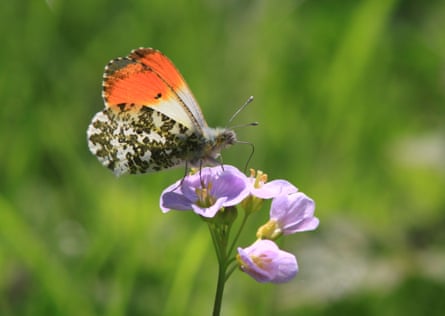
All five are common species widely seen in gardens, parks and suburbs across most of the country. More elusive and endangered species fared less well, with Britain’s largest butterfly, the swallowtail, finishing ninth, possibly because this exotic-looking insect is usually seen only in the wild of the Norfolk Broads. The charismatic, iridescent purple emperor, which is adored by a vibrant subculture of enthusiasts, finished in an unexpectedly lowly 15th position.
Although voters eschewed some of the showiest of lepidoptera, moth-like skippers and beautiful but less colourful butterflies received little support: all of the bottom 10 were grey, brown, golden-brown or black-winged insects.
Kate Merry, the head of engagement at Butterfly Conservation, said: “The response to Britain’s favourite butterfly has been absolutely wonderful, and we’re not surprised. It’s clear that people up and down the country love butterflies of all shapes, sizes and colours, and voted in their thousands for their favourites.
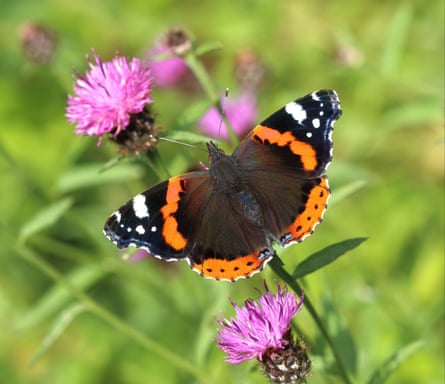
“The peacock is a worthy winner, it’s a true showstopper and a species that I bet a lot of us picture when we think of butterflies. It’s been really special seeing people get so passionate about their favourites and throw their support behind them! Now we can’t wait to see how many peacocks are spotted up and down the country in this summer’s Big Butterfly Count.”
The peacock is a frontrunner to be the most-seen insect in this year’s Big Butterfly Count because butterfly enthusiasts are reporting large numbers of its caterpillars on nettles at present, which should lead to a big emergence in mid-July.
The count is the world’s largest butterfly survey, in which participants spend 15 minutes in any outdoor space counting the butterflies and day-flying moths they see before submitting their sightings via a free app or website. It starts on 17 July.
Another butterfly expected to be seen in large numbers this summer is the painted lady, which finished 10th in the poll. A long-distance migrant from Africa, the butterfly has arrived in large numbers in recent weeks, with its caterpillars set to devour thousands of thistles in the next few weeks before the emergence of a British-born generation.
[Source: The Guardian]