




/file/attachments/orphans/Nonku-Nombasa-Mapisa3_550805.jpg)


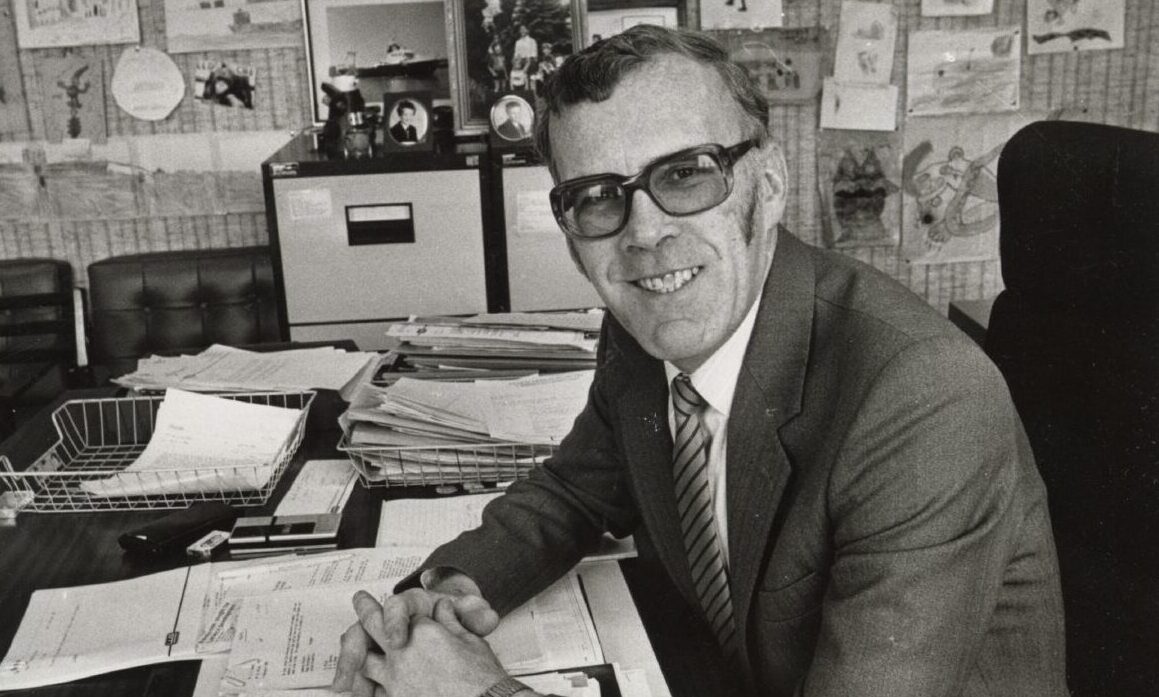



















Stanley Baxter, comic actor whose TV extravaganzas and female impersonations won vast audiences
The Scottish star used his exceptional gift for impersonations to create genre-mashing specials that were as epic as the Hollywood films they parodied. He was a perfectionist performer with huge talent

Stanley Baxter, who has died aged 99, was a comedian, character actor and pantomime dame best known for his lavish television Christmas spectaculars, the highlights of which were his astonishingly convincing impressions of glamorous women.
His renderings of such stars as Shirley Bassey, Marlene Dietrich and (in one show) both Judy Garland and Liza Minnelli were all the more impressive in view of the fact that Baxter, in repose, looked rather like a monkey. That he was able regularly to transcend his simian countenance – he had a wide, flat-nosed face and dramatically flared nostrils – was largely due to a huge natural talent as a mimic, and to “great legs”, but also depended much on his painstaking attention to detail.
Indeed, it was because of the great care he took in ensuring that every aspect was perfect that his television career virtually ended when he was only 63. Although his shows seemed almost part of the national landscape, watched at the height of his popularity by an audience of 14 million, the 40 or so costume changes that one of his extravaganzas could entail were taking their toll of Baxter, while his insistence on perfection was exasperating the accountants.
His boss, John Birt, sacked Baxter twice, once from LWT and once from the BBC, when he was judged the most expendable item on the balance sheet.
Baxter had made his network television debut in 1959 in a series of intimate satirical revues called On the Bright Side, in which he starred – live and in black and white – with his extensive repertoire of impersonations which earned Baftas for himself and his BBC producer, Jimmy Gilbert.
A stage version of the show went out on a provincial tour, before a West End run at the Phoenix Theatre. In 1961 he made his first feature film, Very Important Person, with Leslie Phillips and James Robertson Justice, the influential critic Alexander Walker hailing Baxter as “the new Peter Sellers”.
He and Phillips teamed up a second time for Crooks Anonymous (1962), the first in a three-picture deal he signed with Rank, in which Baxter played eight roles, equalling the feat of Alec Guinness in Kind Hearts and Coronets (1949). But as shooting got under way in January 1962, Baxter was arrested for “cottaging” in north London, the case finally being dropped following a behind-the-scenes intervention on his behalf by the celebrity lawyer David Jacobs. Thereafter, Baxter always referred to this episode as le scandale.
Two further films followed, The Fast Lady (also 1962) and Father Came Too! (1964), but when the Beaconsfield studio closed in 1963, Baxter returned to television in the fortnightly Stanley Baxter Show, again produced by Gilbert, followed by Baxter On…, wry takes on a different subject every fortnight.
While brooding on his sexual torments, he was unexpectedly asked by the farceur Brian Rix to take over from him in Chase Me, Comrade! at the Whitehall Theatre, followed by a tour of Australia in 1965, where it bombed.
More successful was an American tour of The White Heather Club with Andy Stewart, a stage version of the 1950s tartan television warhorse, during which Baxter acquainted himself with the gay bath-houses of New York and other cities.
Baxter’s television career continued to flourish, with The Stanley Baxter Show broadcast in colour on BBC Two. This led to an offer from London Weekend to star in his own television Christmas special, The Stanley Baxter Big Picture Show, in December 1972. More work followed from LWT, including The Stanley Baxter Moving Picture Show, which won three Baftas.
He continued to make regular appearances throughout the 1970s and early 1980s until the station’s director of programmes, John Birt, pulled the plug on grounds of cost. Baxter kept afloat by voicing a series of TV commercials for British Telecom (the “It’s for yoo-hoo” campaign).
When Michael Grade was appointed Controller of BBC One in 1984, Baxter was one of his first signings. In December 1985, Stanley Baxter’s Christmas Hamper was watched by 14 million viewers.
In a 50-minute special a year later, The Stanley Baxter Picture Annual, he played 37 different characters, including Noël Coward as a Wild West gunslinger and Vivien Leigh’s Scarlett O’Hara and Clark Gable’s Rhett Butler in a pastiche of Gone with the Wind. This turned out to be his BBC swansong; when in 1987 John Birt followed Grade to the BBC as deputy director-general (and Grade’s boss), he again handed Baxter his cards.
In 1991 Baxter performed the last in a long, illustrious list of pantomime dames, Mother Goose at the King’s Theatre, Glasgow, and little else followed. As he considered anxiety to have been the principal emotion he felt throughout his career, there was a certain amount of relief – “A life without stress – you cannae whack it!” – but, as his powers of mimicry, and nimble step remained intact for some years after his retirement, there were often calls for a return.
Baxter, though, claimed that his best days were behind him on account of the changing nature of female film stars of whom he found it difficult to get the measure. “It’s hard to find their distinguishing features; Michelle Pfeiffer is a very beautiful woman but I’ve no idea where the padding should go.”
Stanley Livingstone Baxter was born at Kelvinside, Glasgow, on May 24 1926. His father, Fred, an insurance actuary, was the assistant branch manager of the Commercial Union, while his flamboyant mother, Bessie, played mah-jong and smoked blue and red Russian cigarettes. In adulthood, Baxter blamed the First World War for creating the circumstances which led to such a mismatch: “Och, I never really loved him,” his mother used to say of Fred, “but he was a good provider.”
She was eager that young Stanley should follow more in her footsteps – “Don’t be like the Baxters,” she would advise him, “they’re awfully boring, kirky and boring. Be like the McCorquodales” – and encouraged him to do his Mae West impressions for friends and relatives.
His father was scandalised, but by the age of 12 Stanley already had a fully-developed penchant for glamorous women, and “lived to escape grey days in Glasgow by going to the Grosvenor Cinema” and watching Hollywood musicals. This enthusiasm, and being the class clown, saw him through bleak days at Hillhead High School.
He also developed an understanding of the subtle gradations conveyed by accents, convincing his mother that his future lay on the stage. Stanley began his broadcasting career at 14 on Scottish radio’s Children’s Hour and continued it even when conscripted during the Second World War to work down the mines as a Bevin Boy.
After school, in deference to his father, he briefly became an English teacher, but in 1946 he was called up, serving in the Far East with Kenneth Williams and the aspiring actor and future playwright Peter Nichols, among others, in the Combined Services Entertainment Corps. He remained close to Williams until his friend’s death in 1988.
On his return to Britain, Baxter applied to the Old Vic theatre school but was turned down on account of being already “formed” as an actor. In 1948 he joined the Citizens Theatre, Glasgow, as “assistant stage manager, small parts”. There he met Moira Robertson, who was “assistant wardrobe mistress, small parts”. They married in 1952.
He made his professional stage debut in The Thrie Estaitis at the Edinburgh Festival of 1948, and the following year made his pantomime debut, in which he was talent-spotted by the BBC. He made his first television appearance in 1951 and by 1952 was established as a top comic with his own regular show. He moved to London in 1959.
Other appearances included a long-running radio show, Parliamo Glasgow, and membership of the original cast of What the Butler Saw, Joe Orton’s last play, with Ralph Richardson and Coral Browne, which flopped.
During his glory days at LWT in the 1970s, a fully staffed “Stanley Baxter Unit” was dedicated to his sumptuous television specials, in which he would play up to 45 characters a show. Made with meticulous care and high production values, they were among the most expensive productions in the field of light entertainment.
“The camera-work, cross-cutting between a number of characters all played by me, was incredibly intricate and time-consuming, and the editing even more so,” he told The Daily Telegraph in 1996. “The money men would take one look at a budget which needed pruning and see the most obvious single cut was me.”
In his last BBC television spectacular at Christmas 1985, costing close on half a million pounds, he performed a compressed version of The Wizard of Oz, playing the Tin Man, the Scarecrow and the Lion as well as the Wizard and Dorothy.
From 1988 to 1990 he played a schoolteacher with magical powers in ITV’s popular children’s series Mr Majeika. In later life he turned down high-profile roles, including a part in the Harry Potter films, preferring to work steadily but unostentatiously in radio.
He found a showcase for his vocal versatility in The Stanley Baxter Playhouse, which ran for eight series on Radio 4 between 2006 and 2016; he also teamed up with Richard Briers to play a pair of elderly detectives in the gentle drama series Two-Pipe Problems (2007-13). And in 2008 he revived one of his best-loved impersonations, Queen Elizabeth II, for an ITV retrospective, Stanley Baxter – Now and Then, in which comedy stars including Victoria Wood and Rory Bremner paid tribute to his comic gifts.
In retirement Baxter was sometimes portrayed as a recluse by journalists but he was merely living quietly in Highgate. “I don’t do the talk-show thing,” he explained, “because I’m just too damned nervous about appearing as myself. I’m still not quite sure who I really am, which makes it easier to play other people, but a lot harder to be convincing as Stanley Baxter.”
In 1997 he was presented with a Lifetime’s Achievement Award at the British Comedy Awards; he dedicated it to his wife Moira, who had swallowed a fatal overdose of aspirin a few weeks earlier. They had separated in 1970 but never divorced.
Stanley Baxter, born May 24 1926, died December 11 2025
[Source: Daily Telegraph - edited]







/file/attachments/orphans/ED_543155_209242.jpg)
