



/file/attachments/orphans/Nonku-Nombasa-Mapisa3_550805.jpg)

















The ‘farcical’ battle to build the National Theatre
Ahead of the venue’s 50th anniversary, a look back at the ‘nightmare’ saga that preceded its opening

In 1973, while still just an empty concrete shell beside Waterloo Bridge, the new National Theatre building made the architecturally conservative John Betjeman gasp with delight. While in 1984, the then Prince of Wales likened Denys Lasdun’s Brutalist edifice to “a nuclear power station”. In other words, the theatre’s home on London’s South Bank has been as polarising as any of the hundreds of productions staged in its three auditoriums – and it’s about to turn 50.
On Monday March 8 1976, the South Bank NT’s first paying customers watched a matinee of Samuel Beckett’s Happy Days, starring Peggy Ashcroft, and, in the evening, Ben Travers’s farce, Plunder. Both were in the proscenium-arch Lyttelton, because – despite the complex being seven years behind schedule and despite a vibrant poster campaign on buses and tube platforms promising the taxpayers who funded it that “The New National Theatre is yours” – this was the only auditorium ready for business; well, ready-ish.
“No bells yet working to summon the audience,” Peter Hall, the NT’s director, observed in his diary. “So the house manager had to walk through the foyers with an old electric bell and battery strapped onto plywood, holding it up and ringing it. How English…” He might also have noted that the first tickets for Plunder had been mis-printed “Blunder”.
These chaotic teething problems were in keeping with the campaign to build Britain a National Theatre: a 60-year saga which included several false starts.
In October 1963, Laurence Olivier, as founding director, led the National Theatre Company, including Derek Jacobi and Maggie Smith, into its temporary base at the Old Vic. Lasdun was appointed a month later. He was 49, best known for the stepped concrete ziggurats of his University of East Anglia campus. His brief was for a twin-auditorium NT and a 1,600-seat opera house, but the latter was killed off on cost grounds in 1966.
Construction of the NT finally began in November 1969, but was agonisingly slow. Olivier’s immense NT workload, and bouts of serious illness, forced him, aged 66, to abandon hope of taking his company onto the South Bank.
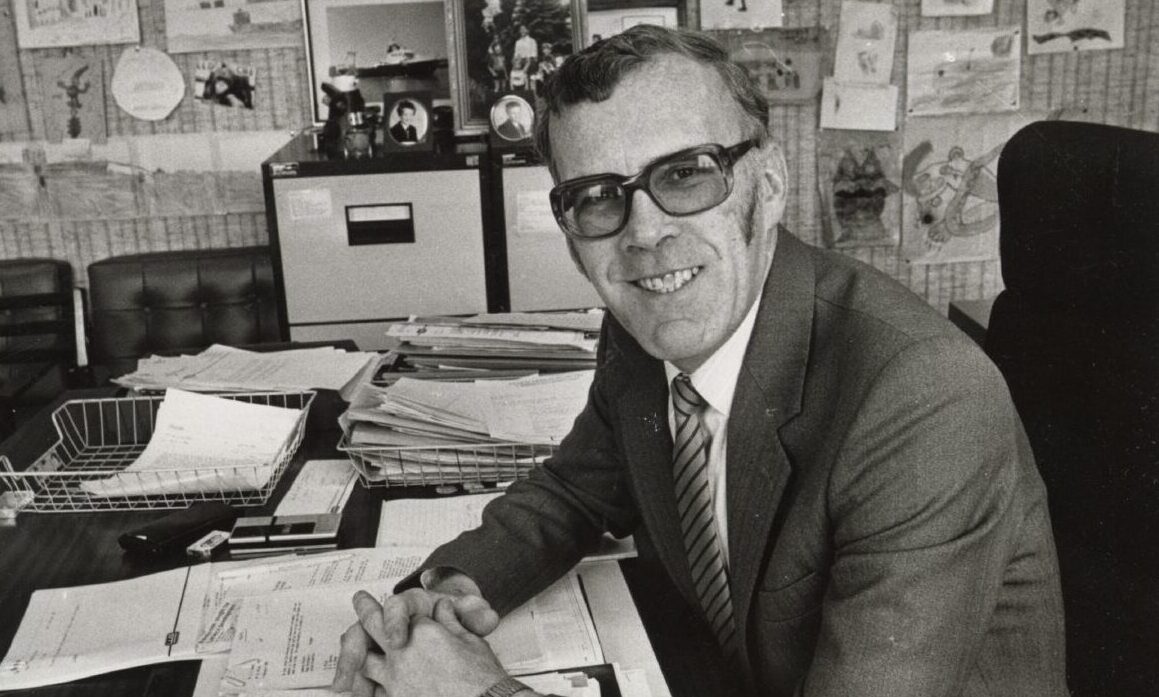
Hall took over as NT director in November 1973, when Lasdun’s building was supposed to open in June 1974, but that date soon slipped. Contractors blamed each other for delays and overspending. Hall faced sometimes militant backstage unions and overwhelmingly hostile press coverage of the delays, and of his presenting an ITV arts programme, Aquarius, on top of his National service (“Time Out absolutely takes me apart for doing it,” runs one diary entry).
Fellow artistic directors wrote to the Times warning of “serious dangers” from the new NT’s huge running costs devouring a disproportionate share of Arts Council drama funding. Signatories included Joan Littlewood, who led Theatre Workshop at Stratford East without a penny from the Arts Council, and vowed to a friend: “I’ll never go inside that [NT] building as long as I live.” For Hall, the struggle to open the NT was becoming “a nightmare… And an unbelievable farce.”
Rosemary Beattie was stage manager for three of Hall’s productions that featured in the Lyttelton’s opening season, including Happy Days. She remembers him having to miss many rehearsals to attend meetings with politicians, “battling to get enough money to actually get the theatres open. It was a strange thing for all of us: actors arriving to rehearse, then being told ‘the director can’t be with you.’”
In September 1975, Hall announced a “foot-in-the-door” policy: the NT would open in phases, “as each theatre becomes ready”. It was a giant leap in scale from the 150-year-old Old Vic and ramshackle administrative huts on nearby Aquinas Street, to a 250,000-square-foot behemoth: three theatres with state-of-the-art lighting, sound and machinery; spacious foyers and restaurants; rehearsal rooms, administrative and production offices; workshops and scenery dock.
David Hare, who in June and July 1976 battled malfunctioning stage equipment as director of Howard Brenton’s Weapons of Happiness, the first new production in Lasdun’s building, sorrowfully points out that “the people who really engineered that move are all dead” – among them Hall, his technical administrator, Simon Relph, and Richard Pilbrow of Theatre Projects (responsible for the NT’s mechanical and electrical installations).
Hare pays tribute to their efforts: “It was one of the most physically and emotionally daunting experiences that people ever went through. That group were working up to 20 hours a day to get a company into this massive new building, which, to begin with, didn’t work.”
Diana Quick, who played the vampish Prudence, a country house burglar’s moll, in Plunder, recalls encountering backstage corridors and staircases so labyrinthine that “we used to make jokes: could we be issued with a ball of string each to find our way”, like Theseus in the minotaur’s maze. Had they been, Quick’s castmate Paul Dawkins might not have entered NT folklore.
In act two of Plunder, Prudence and burglar Freddy Malone (Frank Finlay) creep into an upstairs bedroom to steal jewels. They’re interrupted by old lag Simon Veal (Dawkins), who props a ladder against the bedroom window and climbs in. During one early Lyttelton performance, Dawkins’s cue arrived, but, Quick remembered, “there was no sign of Paul at the window. We looked around, and there he was, standing in the auditorium at the entrance of one of the vomitories, which linked somehow from backstage. He’d taken the wrong turn. And he stood there, in a dressing gown and striped pyjamas, and I heard him say [to a member of the audience] ‘I come on in a little bit.’ Somebody had to shepherd him back on. It was priceless.”
The Olivier finally opened in October 1976, the Cottesloe in March 1977, completely reshaping the NT’s capabilities. During its decade at the Old Vic, Olivier’s Company typically opened six or seven new productions a year; in 1977, the South Bank NT held 23 first nights. That number speaks not only to increased attendance but enhanced flexibility. Hall – in theory, if not always in practice – could now choose the ideal auditorium for each revival or premiere. A challenging new drama liable to draw “only” 400 people a night – a commercial disaster at the Old Vic – could now fill the Cottesloe.
In Hare’s view: “Olivier’s company was an actors’ company, possibly one of the greatest ensembles ever in this country. When Peter had to fill three theatres, [the National] became a writers’ theatre. And he wanted modern writers. He wanted Harold Pinter, Howard Brenton. He wanted me, he wanted Athol Fugard. He wanted Edward Bond, Edward Albee. He was transforming the idea of a National Theatre into a theatre of living writing.”
Grade II* Listed by English Heritage in 1994, the NT enters its 50s during a much-needed major works programme. Meanwhile, construction continues on an adjacent project that would have appalled Lasdun, who died in 2001. Billed as “the South Bank’s next major icon”, Mitsubishi Estate and CO–RE’s Vista is an £800m, 640,000 sq ft redevelopment of the former ITV Studios site at 72 Upper Ground.
Due for completion in 2029, it will comprise a 25-storey office tower connected to two smaller buildings of 14 and six storeys, and promises “cultural venues” and workspaces “tailored to Lambeth’s creative industries”. But Charles Saumarez Smith, former chief executive of the Royal Academy, has written that Vista will “make Denys Lasdun’s building look puny”.
Although it will soon be physically overshadowed, it seems unlikely that the building will be diminished. In A Sense of Theatre (2024), his superb, posthumously published exploration of the National, Richard Pilbrow, in his time the world’s most influential theatre design consultant, was unequivocal: Lasdun gave us “the most significant theatre building of the 20th century”.
[Source: Daily Telegraph]






/file/attachments/orphans/ED_543155_209242.jpg)
