

/file/attachments/orphans/ED_543155_209242.jpg)
























Trump’s key Gulf allies turn on each other
‘Very public divorce’ between Saudi Arabia and the UAE over Yemen puts region’s future at risk

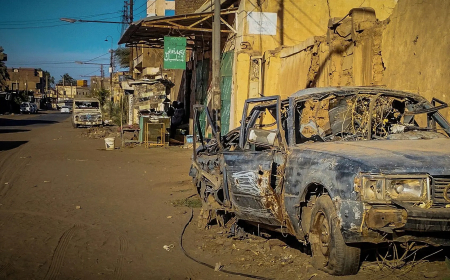
The rebel leaders who knocked on my hotel room door in the Yemeni port city of Aden back in 2011 said they had an important message to deliver.
With due solemnity, two delegates from the secessionist Southern Movement handed me a letter addressed to “the Queen of England”. They asked me to let her know that they had taken good care of the Rolls-Royce she had used to tour the port city in 1954, and that she could have it back any time she liked.
More importantly, they wanted the Queen to know that the British communiqué granting South Yemen independence contained a technical error. As a result, they insisted, both Aden and the deserts of Hadramout – the former territories of the Crown Colony and Protectorate of Yemen – still belonged to the Queen. They would therefore be terribly grateful if she returned to reclaim them from the corrupt regime in the Yemeni capital, Sana’a.
Under British protection, they argued, South Yemen could again break free from its unhappy union with North Yemen, which merged in 1990 to form the Republic of Yemen.
For years, such claims seemed little more than nostalgic fantasy. But last month, that dream briefly appeared to have come true –courtesy not of Britain, but of a new power accused of neo-imperial designs: the United Arab Emirates (UAE). What followed was not southern independence, but a rupture with Saudi Arabia that threatens to unleash a cascade of instability across the region.
In a lightning offensive on Dec 2, forces of the Aden-based Southern Transitional Council (STC), an Emirati-backed offshoot of the Southern Movement, seized much of Hadramout and the al-Mahra region to the east. Within days, the secessionists controlled all eight governorates that once made up South Yemen.
For a moment, it appeared the UAE had engineered a dramatic territorial realignment in Yemen more than a decade into its latest and most brutal war – one that has claimed an estimated 377,000 lives – burnishing its Emirati ambitions to build its power in the process.
But what looked like a local Yemeni power grab quickly exposed something much bigger.
A fortnight later, triumph turned into humiliation. A dramatic Saudi military intervention forced the separatists to retreat as quickly as they had advanced, plunging relations between the Gulf’s two foremost powers into open crisis.
For years, Saudi Arabia and the UAE had moved in lockstep, reshaping the Arabian Peninsula from a geopolitical backwater into a global powerhouse.
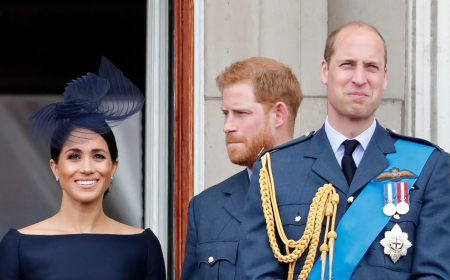
Now, tensions between their rulers – both of whom have positioned themselves among Donald Trump’s closest foreign partners – have burst into the open, with potentially serious international consequences.
“It’s a very public divorce,” says Mohammed al-Basha, a US-based Middle East analyst. “Court papers have been served, video and audio evidence aired. It has become very ugly.”
Already at odds over Sudan’s civil war, where the two states back opposing sides, the rift threatens to unsettle the Middle East, roil oil markets and unnerve foreign investors. There are implications inside Yemen, too, where the local offshoot of al-Qaeda stands to benefit from renewed chaos. Emirati special forces – which withdrew under Saudi pressure this week – had previously led regional efforts against the militants alongside Britain and the United States.
The Trump administration is clearly anxious. Marco Rubio, the US secretary of state, has been working the phones with both sides and held urgent talks with the Saudi foreign minister in Washington this week.
Saudi Arabia and the UAE jointly intervened in Yemen’s civil war in 2015 to prevent the country falling under the sway of the Iran-backed Houthi movement. But their anti-Iran coalition has since turned on itself, with both states backing rival factions that have turned their guns on each other rather than on the Houthis, who control Sana’a and much of the north.
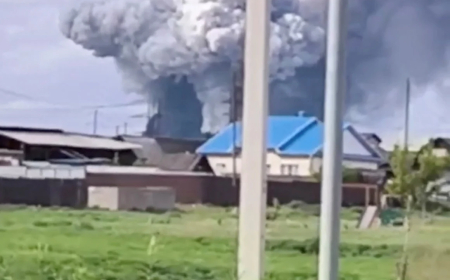
The crisis came to a head last week when Saudi Arabia, alarmed at being usurped in a neighbouring state it regards as firmly within its sphere of influence, bombed the Hadrami port of Mukalla, destroying what it said was a shipment of weapons the Emiratis were delivering to the separatists.
Riyadh demanded – and secured – an Emirati commitment to withdraw its forces from Yemen. But it has so far failed to force its rival to abandon its support for its network of local militias.
In a humiliating setback for Emirati ambitions, Saudi jets swiftly routed separatist forces that had, only weeks earlier, appeared confident enough to announce plans for a referendum on southern secession within two years.
Determined to reunify the fractured anti-Houthi front, Saudi Arabia summoned the STC’s leadership to Riyadh. Hopes of a swift resolution evaporated after Saudi Arabia accused the UAE of smuggling Aidarous al-Zubaidi, the STC’s leader, out of the country and granting him sanctuary in Abu Dhabi. Saudi officials wanted Mr Zubaidi to stand trial on treason charges and was trying to force his movement to disband. The dispute has taken relations to a new low.
For more than a decade, Saudi Arabia and the UAE had ostensibly been on the same side in Yemen, their joint intervention underscoring the blossoming relationship between the two Mohammeds: the Saudi crown prince Mohammed bin Salman, known as MBS, and Sheikh Mohammed bin Zayed, his Emirati counterpart known as MBZ.
A generation older, MBZ initially acted as MBS’s mentor, burnishing his reputation in Washington and working with him to promote a more modern interpretation of Islam. Together they isolated Qatar and sought to counter Iran, reshaping the region to suit their modern – if authoritarian – vision.
Yet beneath the camaraderie, tensions were already building. Co-operation gave way to competition as Saudi Arabia pressed international companies to relocate regional headquarters from Dubai to Riyadh as part of its drive to reinvent the kingdom as a global business hub.
Saudi irritation with an increasingly unilateral Emirati foreign policy also grew. The UAE, Saudi officials grumbled, undermined unity in the Gulf by restoring ties with Bashar al-Assad, the former Syrian dictator, normalising relations with Israel and aligning with Russia over Saudi Arabia on energy issues.
Increasingly, that rivalry spilled onto foreign battlefields. In both Sudan and Yemen, the Saudis and Emiratis began backing opposing factions after initially supporting the same sides.
In Yemen, their objectives had always diverged. The UAE, a staunch opponent of political Islam, shared Saudi Arabia’s hostility towards Iran but was sceptical of Riyadh’s alliance with the Yemeni branch of the Muslim Brotherhood. With Saudi Arabia focused on the north of Yemen and border security, and the UAE on southern ports and sea lanes, they ended up backing rival factions.
Why the UAE risked provoking Saudi Arabia remains unclear. Analysts suggest Abu Dhabi may have miscalculated, gambling that Riyadh had lost interest in Yemen as it pursued a wider regional detente.
Although the Emiratis moved swiftly to defuse the immediate crisis by withdrawing their troops within 48 hours, there are growing fears that the rivalry will continue – with grave consequences for Yemen.
“The UAE has paid, trained and armed at least 100,000 soldiers in Yemen,” says Farea Al-Muslimi, a research fellow at the international affairs think-tank Chatham House. “It retains huge influence beyond the STC. Given how much the UAE has invested, it is a cheap and simple option for it to wage a proxy war.”
“The saddest thing,” he adds, “is that millions of Yemenis are going to suffer even more.”
Nor are the risks confined to Yemen. Areas where the two states previously co-operated, or at least avoided confrontation, could become new theatres of rivalry across the Middle East and beyond.
“This is going to spill over into Libya, into Syria, into Lebanon, into Palestine,” Mr Al-Muslimi warns. “There will be consequences at sea, in trade, in countering al-Qaeda, in migration. It is a very disturbing picture.”
Whether or not tensions ease in Yemen, Saudi Arabia appears determined to curb Emirati ambitions elsewhere.
“Even if things will be calmer in Yemen, I don’t think they will be in Sudan, Somalia, Libya,” says Mr Basha, the US-based analyst. “Saudi Arabia may become more aggressive towards the UAE. They’re going to go after its regional network.”
Within weeks, what was arguably the most important bilateral relationship in the Middle East is now in tatters, with profound implications for the region.
MBZ and MBS no longer speak. With his 90-year-old father ailing, the Saudi crown prince is now a king-in-waiting and is said to view his former mentor as an uppity minnow who needs to be put in his place. As affection gives way to antagonism, the effects will ripple far beyond Yemen – where the prospect of southern independence now looks more distant than ever.
[Source: Daily Telegraph]