







/file/attachments/orphans/2280240110_840642.jpg)




/file/attachments/orphans/Nicky_Bay_Lepidoptera-Alucita-P2113474_568305.jpg)







Why Labour’s confidence in Gorton and Denton is misplaced
Party risks losing traditional stronghold amid demographic change and pressure from both Left and Right

Labour is clearly feeling bullish about its prospects in the Gorton and Denton by-election on Thursday.
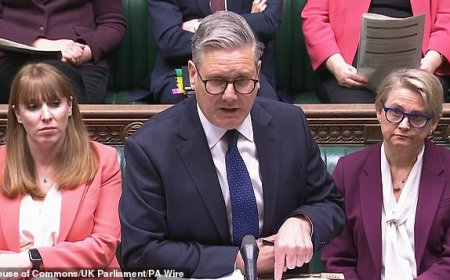
On Monday, Sir Keir Starmer visited the seat to warn that only a vote for Labour would stop Reform UK.
The visit was notable because he did not hit the campaign trail during last year’s Runcorn and Helsby by-election, which Reform’s Sarah Pochin wonby just six votes.
On one level, there should be nothing remarkable about Labour holding this fiercely contested Manchester seat.
Almost all of the constituency’s residents will have been represented by a Labour MP throughout their lives. Andrew Gwynne, the constituency’s former MP, was elected on a 50.8 per cent vote share with a commanding 13,413 majority in 2024.
But the Government’s unpopularity looks set to expose the deep socio-economic rifts within the constituency, squeezing the Labour vote from Left and Right in a microcosm of the country as a whole.
The Government’s national woes and the Prime Minister’s plunging popularity ratings are clouding the campaign for Angeliki Stogia, the Labour candidate.
On the day of Sir Keir’s trip to Manchester, the day’s headlines were dominated by the the arrest of Lord Mandelson, his former US ambassador, on suspicion of committing misconduct in public office.
Polling suggests the seat is most likely to break for the Greens’ Hannah Spencer or Matthew Goodwin, the Reform candidate, in Thursday’s by-election – and these maps and charts provide the key to why.
The 2023 review of parliamentary constituencies bears a fair share of responsibility for the current political disruption.
Before the 2024 general election, two historical constituencies split the current Gorton and Denton district down the middle: Manchester Gorton, which consistently returned Labour MPs all the way back to the 1930s, and Denton and Reddish, created in 1983 and only ever represented by two Labour Andrews (Bennett and the departing Gwynne).
The boundary commission – whose priority is to adjust for population change, regardless of social makeup – shattered this harmony.
In 2026, the electorate is uncommonly at odds: according to Electoral Calculus’s latest seat-level voting intention poll, only 44 of the UK’s 650 constituencies have both Reform and the Greens polling above 20 per cent. Gorton and Denton is one of the 44.
The constituency’s internal demographics reveal a place of extremes.
In one corner of Levenshulme, roughly a third of residents were born in the UK at the time of the latest census. Over in the leafier southern suburbs of Denton, this share reaches 97 per cent.
Similarly, only one in 15 identified as white when asked for their ethnicity in Longsight, rising beyond 95 per cent in parts of Denton.
The pattern quickly becomes familiar, and the map lays it bare – Gorton and Denton is a constituency of two halves.
The former is generally cosmopolitan and diverse – a group that would historically have leaned Labour. No 10’s hardening rhetoric on immigration and its stance on the Israel and Gaza war, however, have pushed many towards the Greens. Just under 40 per cent of Gorton is Muslim.
The white working class, meanwhile, predominates in Denton, making it fertile ground for Reform as it hoovers up those feeling abandoned politically and economically by the party in power.
The dividing line between the two sides of the constituency also matches the contrast between the two boroughs of Greater Manchester across which Gorton and Denton lies – two councils that could hardly be more different.
The city of Manchester, including Gorton, has changed more than almost anywhere else in the UK over the past decade.
Net international migration to the northern powerhouse totalled over 100,000 between 2014 and 2024, swelling its population by a fifth. Tameside, home to Denton, saw just 8,500 new arrivals on balance.
Manchester’s economic boom owes a lot to this influx. The number of available jobs in the city has risen by nearly 30 per cent since 2015. By comparison, Tameside’s 6 per cent is the lowest growth rate of all 10 of the combined authority’s boroughs.
But these local authority-level abstractions mask Gorton’s own hardships. In spite of the much-touted Manchester success story, almost half of Gorton’s working-age residents had never worked when asked by the census’s field officers last time around. This proportion is halved in Denton.
Gorton also clocked roughly three times as many people claiming Universal Credit in January (18,000), relative to Denton (6,000), the latest statistics from the Department for Work and Pensions (DWP) show.
In fact, England’s hallmark deprivation survey suggests that Gorton’s setbacks, more broadly, tend to be greater.
One central neighbourhood was found to be the 66th most deprived out of nearly 34,000 in the country, according to the 2025 Index of Multiple Deprivation. Just two miles away, Granada Park in Denton ranks amongst the least deprived.
The Government’s push for welfare reform, although ultimately aborted because of a rebellion by Labour’s MPs, will be yet another drag on the party’s vote.
No voter’s political views are entirely shaped by their characteristics or circumstances, and anything could happen on election day.
But the diversity of the electorate looks set to make Gorton and Denton a case study for how Labour may fare nationally in 2029 and beyond, and how the party is haemorrhaging votes to both the Left and Right.
During his visit, Sir Keir was keen to insist the Manchester contest was a two-horse race between his party and Reform and warned that the constituency would “descend into hostility” if Reform won.
But, alongside decrying the “toxic division” of Reform, Sir Keir also singled out the Green Party leader Zack Polanski’s support for the legalisation of all drugs as a “disgusting” policy. This is a party now battling on two fronts.
The result of Thursday’s by-election is likely to be close. Even more likely is that almost half the constituency will wake up on Friday diametrically opposed to their elected representative in Parliament.
[Source: Daily Telegraph]