




/file/dailymaverick/wp-content/uploads/2025/04/Krill_school_1_credit-Aker-Qrill.jpg)




























How Iran plans to go to war with the US – and win
Five-step plan to overcome America and hold global economy to ransom revealed by IRGC mouthpiece

Iran has revealed its vision for war with the United States, detailing how it would overcome the world’s most powerful military and severely disrupt the global economy.
In a detailed battle plan published by Tasnim, the news agency affiliated to the Islamic Revolutionary Guard Corps (IRGC), Iran’s leadership envisages strikes on US bases, new fronts opened up by proxy allies, cyber warfare and the paralysis of the global oil trade. Middle Eastern geography would win out against American technology, Iran insists.
The two arch enemies held the second round of renewed indirect talks this week in Geneva. Abbas Araghchi, Iran’s foreign minister, said that both sides agreed on “guiding principles” but they fell short of a full deal.
One US aircraft carrier strike group is already in the region with another on its way. Ayatollah Ali Khamenei has threatened to send them “to the bottom of the sea”.
“They constantly say we have sent an aircraft carrier towards Iran,” the Islamic Republic’s supreme leader said. “Very well, an aircraft carrier is certainly a dangerous machine, but more dangerous than the carrier is the weapon that can send it to the bottom of the sea.”
Mr Khamenei’s threats to sink US warships are likely aimed primarily at a domestic audience rather than Washington, but nonetheless risk angering Donald Trump.
Mr Trump warned that Tehran had 10 to 15 days to make a “meaningful deal” with Washington or “bad things” would happen. Iran’s envoy to the United Nations said Tehran will respond “decisively” to any “military aggression” by the United States.
If the two countries do go to war, here is how Iran plans to defeat the United States.
Stage one: US strikes Iran
Iran’s scenario begins with US air and missile strikes targeting nuclear sites, military installations and IRGC bases, most of which are located in densely populated areas.
It is likely that US forces would launch attacks from aircraft carriers, including the USS Abraham Lincoln strike group currently in the region, strategic bombers flying from home or European bases, and possibly land-based systems in allied countries.
The Pentagon has conducted extensive planning for such operations over decades and carried out strikes on Iranian nuclear facilities last June. Mr Trump has made repeated threats to strike the country again after anti-regime protesters were brutally put down by government forces, with thousands killed.
Speaking to The Telegraph’s Planet Normal Podcast, Sir Richard Dearlove, the former MI6 chief, said: “I think the possibility of an attack is reasonably high, and the reason it’s reasonably high is because it’s what the Israelis are urging Trump to do.”
American strike packages would entail stealth aircraft, precision-guided munitions and coordinated salvos designed to overwhelm Iranian air defences while minimising US aircraft losses.
Technological advances in hypersonic weapons and electronic warfare would give the US significant advantages.
However, Iran believes it has prepared for this scenario through hardening and dispersing critical assets, building redundant command structures, and developing extensive underground facilities that would survive initial strikes.
Tehran’s calculus depends not on preventing damage but on retaining sufficient capability to launch counter-attacks.
“We are ready for any action by enemies,” Maj Gen Abdolrahim Mousavi, chief of staff of the armed forces, said on Wednesday as he toured an IRGC missile city.
“After the 12-day war, we changed our military doctrine from defensive to offensive by adopting a policy of asymmetric warfare and a crushing response to enemies,” he said.
Stage two: Iran strikes back – with help
Iran’s response would expand the battlefield beyond its borders immediately. Within hours, Tehran would launch barrages of ballistic missiles and drones at US military installations across the region, the plan envisaged.
Primary targets would include Al-Udeid air base in Qatar, which hosts the US Central Command’s forward headquarters and serves as the main air operations hub. Iran attacked this base last year after its own nuclear sites were struck by US B-2 bombers.
In Kuwait, Ali Al Salem air base and Camp Arifjan, a major logistics centre for US ground forces, would come under attack, while facilities across the United Arab Emirates and a US base in Syria, where 2,000 US troops remain, would also be targeted.
Amir Akraminia, Iran’s army spokesman, claims access to US bases is “easy”.
Iran hit Ain al-Asad air base in Iraq with ballistic missiles after Qassem Soleimani’s assassination in 2020, causing traumatic brain injuries to more than 100 American soldiers. It could try to do so again, even though US troops completed a “full withdrawal” from the base in January.
The report said: “Iran does not see itself as an ‘isolated island’ in war, but rather as the centre of a potential network of confrontations.”
The Iranian strategy envisages overwhelming US defences through volume by launching hundreds or thousands of projectiles simultaneously to saturate Patriot and Terminal High Altitude Area Defense (THAAD) missile defence batteries.
Iran’s arsenal includes Shahed-136 drones with 50kg payloads, Kheibar Shekan ballistic missiles with manoeuvrable warheads designed to evade missile defences, Emad ballistic missiles with 750kg payloads, and Paveh cruise missiles with a 1,000-mile range.
While many would be intercepted, Iran believes enough would penetrate to inflict significant casualties and damage critical infrastructure. Simultaneously, it is imagined that Iran’s “axis of resistance” would activate across multiple fronts.
Hezbollah in Lebanon has said it considers a war on Iran its own war and could launch rockets and missiles at Israel, forcing the US ally to divert resources for defence.
Yemen’s Houthi rebels would intensify attacks on ships in the Red Sea, Israel and US bases in the region. Iraqi militia groups aligned with Tehran would strike US personnel and diplomatic facilities.
However, this multi-proxy strategy faces significant challenges. Israel’s recent military operations have severely degraded the capabilities of Hezbollah and Hamas.
The assumption that these groups would immediately coordinate effective attacks while simultaneously defending against Israeli and US countermeasures appears optimistic.
Host countries, including Iraq and Lebanon, could actively work to prevent their territory from being used for attacks that would bring devastating retaliation.
But the multi-front approach aims to spread America’s forces thin in the region by opening multiple conflicts in disparate locations, limiting Washington’s ability to concentrate forces against Iran itself.
Any country providing airspace, basing or logistical support to US operations would be declared a “legitimate target”, Tehran warned.
Stage three: cyber warfare
Iran plans to launch cyber attacks targeting what it perceives to be American vulnerabilities: transportation networks, energy infrastructure, financial systems and military communications.
Tehran believes cyber operations could disrupt US logistics, complicate command and control, and sow chaos in allied countries hosting American forces.
By attacking civilian infrastructure, such as power grids or water systems, Iran hopes to pressure host governments to expel US forces.
Iranian hackers have previously demonstrated capabilities against regional targets. In 2012, the Shamoon virus disrupted 30,000 computers at Saudi oil giant Aramco.
More recently, Iranian groups have examined US infrastructure, though with limited success against hardened military networks.
However, US Cyber Command has spent years preparing for such scenarios. American cyber capabilities dwarf Iran’s, with the ability to conduct counter-attacks on Iranian infrastructure, which is more vulnerable than US systems.
The Pentagon could disable Iranian power generation, disrupt missile guidance systems and compromise communications networks.
Stage four: paralysing global oil supplies
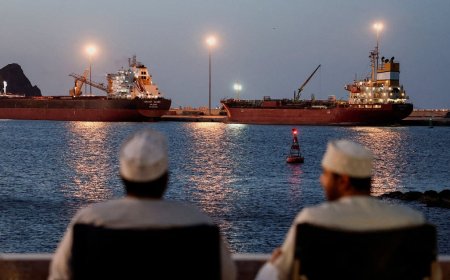
Iran’s most potent weapon, it says, is geographic: control over the Strait of Hormuz, through which approximately 21 million barrels of oil pass daily – roughly 21 per cent of global petroleum.
The IRGC closed the strait for several hours on Tuesday for live-fire naval drills in the north-west of the USS Abraham Lincoln strike group this week.
Iranian state television broadcast footage showing cruise missiles being fired towards targets during the exercises.
Russian warships joined the IRGC later in the week for “naval exercises” in the Gulf of Oman.
Alireza Tangsiri, the IRGC navy commander, warned during those drills that “weapons that come to the field [of war] are different from the ones in drills.”
This waterway, just 24 miles wide at its narrowest point, is one of the world’s most critical energy choke points. Iran has repeatedly threatened to close the Strait during periods of heightened tension.
Iran’s tactic would involve mining the waterway, attacking tankers with missiles and drones, and potentially sinking vessels to block shipping channels.
IRGC naval forces have practised swarming tactics, using small boats armed with rockets and torpedoes, designed to overwhelm larger warships.
Such actions would send oil prices soaring, potentially to $200 (£160) or more per barrel, inflicting severe economic damage worldwide and putting pressure on the US to back down.
Hossein Shariatmadari, a representative of Khamenei, said: “We can impose restrictions against the United States, France, Britain and Germany in the Strait of Hormuz and not allow them to navigate.”
Iran calculates this economic weapon could fracture the international coalition supporting US military action.
The US has contingency plans for keeping Hormuz open, including mine-sweeping operations, destroyer escorts for tanker convoys and strikes on Iranian coastal installations.
However, even partially degraded shipping through the Strait of Hormuz would roil global markets. Iran believes the economic cost would ultimately force Washington to negotiate rather than sustain an extended war.
Yet this strategy carries risks for Iran itself. Oil exports account for the majority of government revenue, and closing Hormuz would devastate Iran’s economy even more than its enemies’.
Stage five: the endgame
Tehran’s strategy banks on the US and its allies concluding that the costs of sustained conflict would exceed any benefits.
By threatening global energy supplies, imposing continuous attacks across multiple countries and potentially inflicting significant US casualties, Iran hopes to create an unsustainable multi-front situation.
Iranian planners believe the US has limited appetite for protracted wars after Afghanistan and Iraq.
Fighting simultaneously against entrenched proxies in Lebanon, Yemen, Iraq and potentially Syria, while defending Gulf allies and maintaining open shipping lanes, would strain even US military resources.
Iran views its strategy as one of asymmetric endurance. It cannot win militarily, but believes it can make victory too expensive for Washington to pursue.
This calculus depends on the US choosing to de-escalate rather than applying its full conventional capabilities, which could devastate Iranian infrastructure and military forces.
The ultimate question is political will rather than military capability.
The strategy also assumes rational decision-making on both sides, but escalation dynamics in war are notoriously unpredictable. What Iran intends as calibrated pressure could trigger overwhelming US retaliation, especially if American casualties are high.
Iran knows this. While the plan envisages victory, there is quiet hope that it will never be put into action.
[Source: Daily Telegraph]