














Sir Ed Davey is worse than a laughing stock. He’s a disgrace
Leader’s cheap shot at Dubai ex-pats suggests the Lib Dems aren’t even trying to grow up

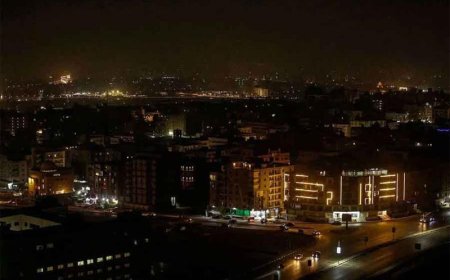
Sir Ed Davey, the self-styled clown of the last general election campaign, reached new heights of absurdity this week when he denounced British people facing Iranian bombardment in Dubai as tax exiles who “mock ordinary people who stay in the UK and pay our taxes here, but then expect us to pay the bill for their protection”.
Arguing that British expats in Gulf states should “start paying taxes to fund our armed forces just like the rest of us”, the Liberal Democrat leader was rightly ridiculed for his insensitive and inflammatory remarks. Bombs and drones are still falling on swathes of the Middle East, with thousands of Brits left at risk. Not that Sir Ed seemed to care: their plight was merely an opportunity to take a cheap shot.
What has happened to his once respected political party? Even after the Liberals were eclipsed by Labour and the Conservatives in the early 20th century, their successors still played an important role in British politics, whether as a self-described “centrist force”, as inheritor of a distinct “liberal” intellectual tradition, or merely as a repository for protest votes. The Lib Dems even occasionally offered a voice capable of moderating the excesses of Britain’s two larger political tribes, particularly on issues such as civil liberties.
Today, the best that could be said is that the Lib Dems have purposely become a laughable irrelevance. The worst is that they’ve disgracefully abdicated any responsibility towards the country at a moment of increasing peril.
Consider the contrast between Sir Ed and another Lib Dem leader at a time of war in the Middle East, Charles Kennedy.
A charismatic and affable public speaker, Kennedy’s calm and principled opposition to Tony Blair’s support for the American-led invasion of Iraq in 2003 gave the Lib Dems a clarity of purpose that resonated with voters. His position helped propel the party to significant success at the 2005 general election, when the Lib Dems surged to their highest number of Commons seats since 1923.
Yes, the final stages of Kennedy’s leadership were overshadowed by concerns about his health, and in 2006 he bravely acknowledged that he had undergone treatment for alcoholism. But even while battling those personal demons, he was taken far more seriously as a political leader than Sir Ed Davey is today – and for good reason.
Kennedy did not spend his years at the top of the Lib Dems staging publicity stunts or making absurd remarks. His reasoned critiques of the Iraq War spoke directly to the feelings of millions of voters, channelling their anger but keeping them in the political mainstream. Yes, there were more radical figures on the fringes tapping into the same fury, notably George Galloway. But there was no mass surge towards extremist outfits such as the Greens, which today appears increasingly supportive of Iran’s tyrannical Islamist region rather than just critical of Donald Trump’s war.
Today the Lib Dems don’t even try to be grown-up. They don’t bother to craft a distinctive voice on policy, either. To all intents and purposes, their political positions are indistinguishable from those of Labour.
At Prime Minister’s Questions, Davey often resembles the ultimate “pick me” politician – eager to curry favour with Sir Keir Starmer while presumably hoping that some form of progressive alliance might eventually open the doors of Downing Street to the Lib Dems once again.
Few moments illustrated the Lib Dems’ descent more starkly than the extraordinary intervention by former leader Sir Vince Cable during last month’s Gorton and Denton by-election, when he openly suggested that Lib Dem voters should back the Labour candidate instead.
Admittedly, the seeds of the party’s current problems were planted during the Brexit years. The Lib Dems damaged their own credibility by appearing neither liberal nor democratic in their repeated attempts to overturn the referendum result.
Since then, the party has plumbed even greater depths. From openly promoting tactical voting to insisting that a trans woman is a woman, the Lib Dems have steadily surrendered their claim to be a proper political force. This matters more than it might appear. The more the Lib Dems abdicate their responsibility to represent politically homeless voters, the more space they leave for more divisive political forces to occupy the terrain they once dominated.
The rise of figures such as Zack Polanski illustrates this dynamic. I’m not for one minute arguing that, if Sir Ed Davey hadn’t turned the Lib Dems into a laughing stock, the Greens would now be a political afterthought. Polanski is benefiting from everything from the collapse in trust in the two main parties and the woke-ification of British education, to major demographic shifts in the country’s electorate. But the Lib Dems’ conspicuous retreat from serious politics has helped open up a vacuum at the heart of British politics that others are now happily filling.
There remains a strong case for genuinely liberal answers to many of Britain’s problems. The 2004 book The Orange Book: Reclaiming Liberalism, edited by then Lib Dem MP David Laws and Paul Marshall, emphasised greater personal choice and market-oriented solutions. By identifying what Tory MP David Davis once described as “areas of overlap” between liberal and conservative thinking, it helped to shape the intellectual foundations of the 2010 coalition government.
But Davey’s party increasingly seems uninterested in anything so useful as that. The Lib Dems have even largely given up on civil liberties. How else to explain their failure to stand up for our fundamental liberties during the Covid lockdowns?
There was much criticism this week of MPs who were seen dancing in Parliament while “World War III” was breaking out in the Middle East. It was an unedifying moment. But that’s how Sir Ed Davey approaches politics every day – unserious, performative and strangely detached from events beyond Westminster.
They might continue to hang on to a few seats. Just as the party once organised itself around the single mission of “Stop Brexit”, its modern message sometimes appears to revolve around a different slogan: “Stop Farage”. That may offer short-term electoral benefits in some local contests. But it is no substitute for a serious national political vision.
[Source: Daily Telegraph - Camilla Tominey opinion]