/file/attachments/orphans/Nonku-Nombasa-Mapisa3_550805.jpg)

























Nechirvan Barzani and the New Kurdish Diplomacy
Domestic disunity is a major hindrance to Iraqi Kurdish foreign policy goals. The central question in Iraqi Kurdish foreign policy at the moment is not whether Nechirvan Barzani, president of the Kurdistan Regional Government (KRG) in Iraq, has changed Kurdish diplomacy. He has. The question is whether Kurdish politics can change enough to use what his diplomacy has made possible.
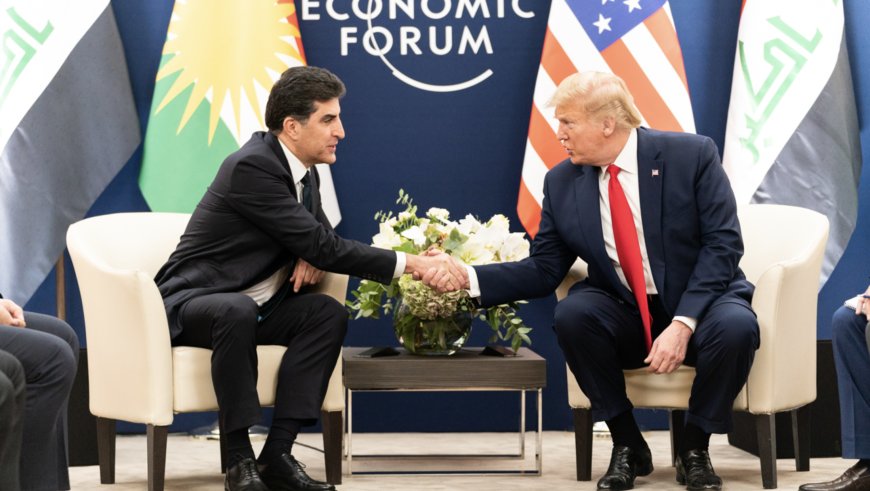
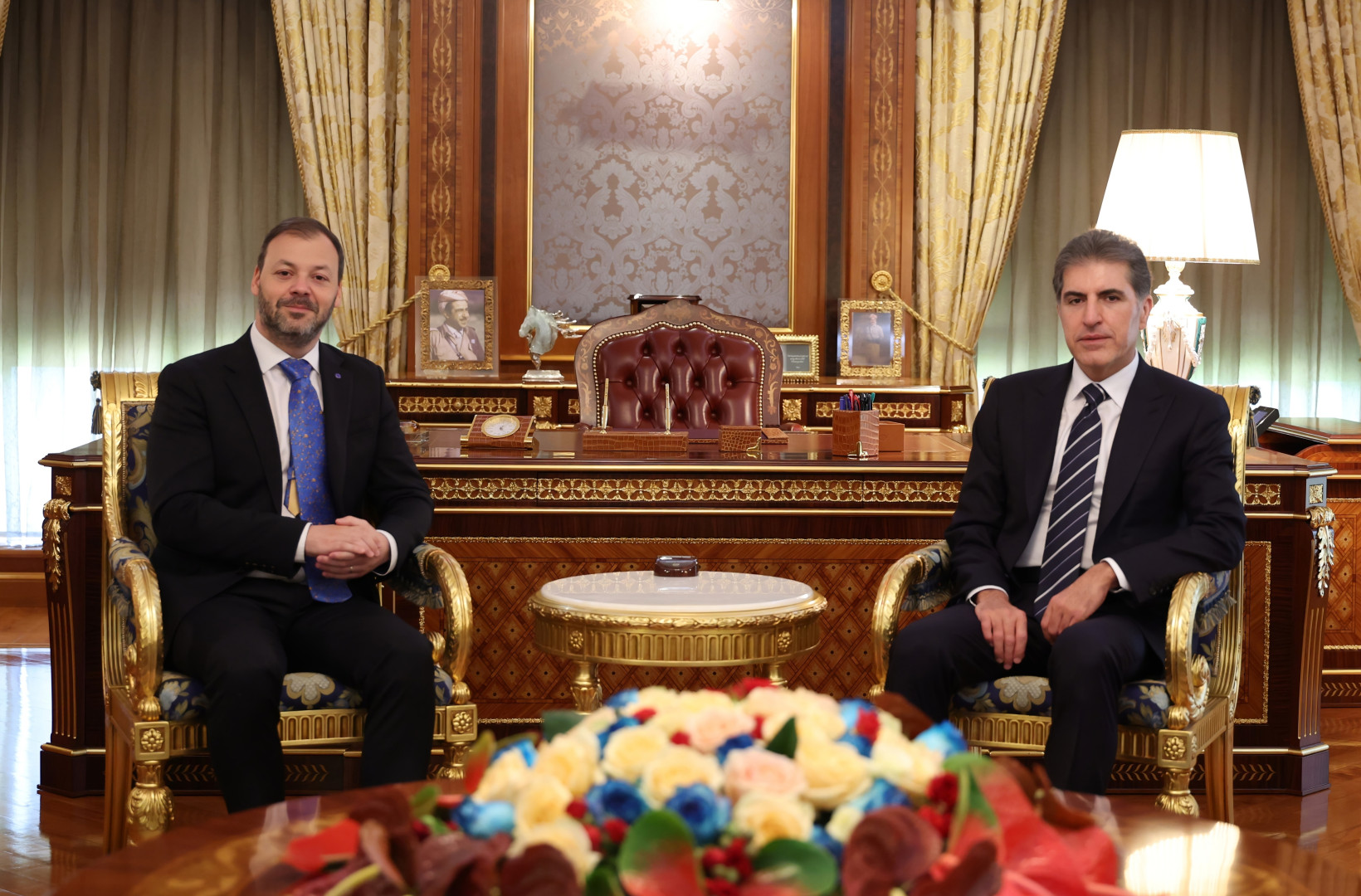
Nechirvan Barzani, President of the Kurdistan Regional Government (KRG) in Iraq, is trying to move Kurdish politics from an approach rooted in revolutionary prestige to a more modern style of networked statecraft. In that, he has been successful. But the harder negotiation may be inside Kurdistan itself. There are three main factors in domestic politics that hinder the pursuit of Kurdish foreign policy goals:
-
The government formation process has stagnated – to the point that international partners might question the KRG’s reliability, and political actors in Baghdad and elsewhere could exploit the divisions in Erbil.
-
Even as Nechirvan has managed to establish a new normal in Kurdish diplomacy, in which the interests of the region and its people stand above party and family politics, he has also been constrained by the public perception (at home and abroad) that his voice is subordinate to a rigid Barzani family hierarchy.
-
The foreign policy decision-making apparatus within the KRG is still a patchwork of institutions lacking sufficient coordination and strategic vision to effectively mobilize in support of Nechirvan’s achievements.
The diplomatic window of opportunity that Nechirvan is opening can accomplish tangible gains for the KRG and the Kurdish people. However, that window will close if the Iraqi Kurdish political parties cannot reach an accommodation with each other and find a way to support institutional growth in Erbil.
Establishing a new normal
Kurds have long feared that what they win through hard sacrifice can be quickly lost at the negotiating table. That fear is not just a slogan. It has been
a reality for generations, the result of abandoned alliances, bargains made over Kurdish heads, and moments when military or territorial gains failed to become durable guarantees. And this fear has left a deep mark on Kurdish politics. In Iraqi Kurdistan, memories of past experiences came flooding back after the failed 2017 independence referendum. The vote expressed a real national aspiration, but it also left the Kurdistan Region diplomatically exposed, triggering a confrontation with Baghdad that ended with major territorial and political losses. As a consequence, Masoud Barzani stepped down from the regional presidency, leaving the office vacant until his nephew, Nechirvan Barzani, assumed it in 2019.
Nechirvan’s presidency should be read against that history, in the sense that his arrival marked an attempt to turn the page. His importance does not lie simply in being another internationally-active Kurdish leader. After all, Kurdish politics has produced consequential negotiators before him, including Jalal Talabani and Masoud Barzani. Nechirvan’s significance is different. Since he became President of the Kurdistan Region in 2019, after previously serving as Prime Minister, he has tried to change the grammar of Kurdish diplomacy itself. Moving away from revolutionary prestige toward institutional statecraft, away from dramatic assertion toward preventive negotiation, away from treating Baghdad only as an adversary toward treating Baghdad as the unavoidable arena in which Kurdish autonomy must be protected. Nechirvan is attempting to step outside of the Kurdish historical experience and demonstrate that the Kurds can engage constructively and positively with the world on its own terms.
That shift is real, but it is incomplete. Nechirvan may be the Kurdish leader most familiar in foreign capitals today, yet he remains constrained by the political order from which he emerged. He is the grandson of Kurdistan Democratic Party (KDP) founder Mustafa Barzani, whose legacy still plays a key role in defining the boundaries of Kurdish political discourse. He is the nephew of Masoud Barzani, who continues to dominate newspaper headlines in the KRG, acting in a sense as the symbolic imagination of Kurdish nationalism. Accordingly, the Barzani family and the KDP shape how diplomats read power in Erbil.
Yet, the KDP and the Barzani family are not the only power brokers. An unresolved rivalry between the Kurdistan Democratic Party (KDP) and the Patriotic Union of Kurdistan (PUK) has left the Kurds in Iraq unable to form a new regional government since the October 2024 parliamentary election. Even the negotiations between the KDP and PUK over who should represent the Kurds in Baghdad as President of the country ended in a stalemate that was only resolved by the parliament stepping in and deciding for themselves on the PUK’s Nizar Amidi. The paradox is clear. Nechirvan has built diplomatic bridges to the world at a moment when Kurdish politics has lost internal coherence.
The old style of Kurdish diplomacy should not be caricatured. It emerged from the conditions
of statelessness. Kurdish leaders often had no embassy, no army recognized by international law, no seat at the United Nations, and no reliable Great Power patron. Under those conditions, diplomacy naturally rested on personality, biography, family lineage, party loyalty, and revolutionary legitimacy. The leader who had fought, suffered, survived exile, buried relatives, and carried the national cause could speak with a moral authority that no formal office could easily replace.
Masoud Barzani remains the most important contemporary embodiment of that tradition in Iraqi Kurdistan. His authority comes from far more than formal titles. It is rooted in the Barzani family’s nationalist history, the Peshmerga militia’s struggle for Kurdish independence, the memory of resistance, and the emotional force of the independence question. Even after leaving office, he has remained a central political figure. That is not a small matter in Kurdish politics. It means that formal institutions still operate under the weight of historical prestige.
Foreign officials have also helped reproduce this hierarchy. In Erbil, high-level visitors often move through a diplomatic circuit that includes Masoud Barzani, Nechirvan Barzani, and the current KRG Prime Minister, Masrour Barzani. Winthrop Rodgers has called this the “Full Barzani” protocol, noting that it reinforces family-centered power within the Kurdistan Region. The point is not that foreign diplomats are intentionally strengthening dynastic politics. It is that their protocol reflects how power is understood: not only through offices, but through family, party, history, and access.
Jalal Talabani represented a different but related form of prestige diplomacy. He began not primarily as a military figure, but as a student activist, party organizer, and Kurdish political operator at a very young age, before later becoming a guerrilla leader, founder of the PUK, president of Iraq, and one of the most skilled Kurdish negotiators of the modern era. His diplomacy relied on personality, memory, humor, and personal access as much as on formal institutional authority.
That older style of diplomacy had a pre-institutional character. It treated politics as something negotiated through personal standing, honor, shame, elder authority, patronage, lineage, and alliance. This was not because Kurdish leaders lacked sophistication. It was because Kurdish politics developed where institutions were weak, Kurdish autonomy was insecure, and external powers often dealt with Kurdish leaders as movement chiefs rather than as representatives of a stable governmental order. Prestige diplomacy could mobilize loyalty, attract sympathy, and open doors. Its weakness was that it often struggled to convert Kurdish sacrifice into enforceable guarantees.
Nechirvan Barzani departs from this tradition without fully escaping it. He comes from the same Barzani family and the same KDP structure. He benefits from the name and remains limited by it. But his diplomatic method is less performative and less centered on the moral drama of Kurdish suffering. It is built around routine access, calibrated language, regional reassurance, and the slow conversion of presence into leverage. He is not trying to win applause at one decisive moment. He is trying to keep the Kurdistan Region present in every room where its future might be discussed.
A brief constitutional background helps explain why Baghdad matters so much. Iraqi’s 2005 Constitution recognizes the Kurdistan Region together with its existing authorities and jurisdictions as a federal region. It gives regional authorities executive, legislative, and judicial powers, except in areas reserved exclusively to the federal government. Similar to the United States Constitution, those federal powers include foreign policy and diplomatic representations, the negotiations and ratifications of treaties, national security policy, fiscal policy, currency and national budget. At the same time, the Constitution gives the region authority over internal administration, allows it to maintain regional offices in Iraqi embassies and diplomatic missions for cultural, social, and developmental affairs, and also makes the regional government responsible for internal security forces such as police, security forces, and guards of the region. The Kurdistan Region is therefore not a sovereign state, but neither is it an ordinary province similar to other Iraqi provinces. Its diplomacy operates in a narrow federal space. Erbil can build relationships, reassure neighbors, and act as a regional interlocutor, but it cannot formally conduct foreign policy, sign treaties, or settle major security, budget, oil and disputed territories questions without Baghdad.
Dealing with Baghdad
The clearest sign of this departure is Nechirvan’s language about Baghdad. At the 2023 Iraq Forum in Baghdad, Nechirvan put it in his own words, saying that “our strategic depth is Baghdad,” and even more pointedly, noting that the “solutions to our problems are in Baghdad.” For Kurdish politics, that sentence matters. It does not deny the central government’s role in imposing Arabization, the Anfal tragedy, struggles over the disputed territories, economic isolation and budget pressure, or violations of federal law. It does not ask the Kurds to forget the state that harmed them. But it rejects the illusion that the Kurdistan Region can secure autonomy by bypassing the Iraqi state.
The 2017 referendum made that reality unavoidable. Masoud Barzani’s referendum was the high point of Kurdish nationalist ambitions, but it also revealed the cost of acting without a viable diplomatic coalition. Baghdad rejected the vote. Turkey and Iran opposed it. Western governments warned against it. Kirkuk returned to federal control. Nechirvan’s presidency began after this shock, so his diplomacy has always carried a post-referendum task – to repair channels of communication without appearing to surrender Kurdish rights.
His recent Baghdad activity should be understood in that light. For example, in early May he traveled to Baghdad for meetings focused on Iraq’s government formation, Erbil-Baghdad relations, and wider political questions. The immediate question at hand was how to advance the government-formation process in a constructive way, but the deeper meaning of that visit was strategic. Salaries, budget transfers, oil, disputed territories, security coordination, and constitutional rights all pass through the federal arena. A Kurdish leader can denounce Baghdad from Erbil, but he must also be able to negotiate inside Baghdad. Nechirvan’s presence in the negotiations was intended as a means of lowering the emotional temperature and keeping channels functioning normally. It treated Baghdad not only as a source of Kurdish problems, but also as the arena where many of those problems must be managed.
Similarly, during the 2020 budget crisis Nechirvan criticized Baghdad’s punitive language. Yet he still insisted that “our choice in this issue is to settle through dialogue,” and Erbil would “continue to follow the way of dialogue.” This is not soft language that effectively abandons Kurdish claims. It is a method of keeping negotiation open even when Baghdad acts harshly toward the Kurdistan Region. And this is why his diplomacy matters beyond Kurdish politics. For Washington and European capitals, the question is not only whether the Kurdistan Region receives recognition or sympathy. It is whether Erbil can remain a stable federal partner inside Iraq, a useful channel on Syria, a counterweight to militia escalation, and a place where minority autonomy does not collapse into either separatist isolation or federal absorption. Nechirvan’s diplomacy speaks to that broader problem, and therefore it addresses the concerns of key partners both in the West and in the Middle East, who want to see the KRG making the effort to work constructively with Baghdad.
Lessons from Rojava
The Syrian Kurdish file is the strongest test of this new diplomacy because it exposes the difference between a proactive diplomacy of positive engagement and a reactive diplomacy of personal prestige and damage control. By January 2026, the Syrian Democratic Forces (SDF) were under severe pressure to integrate into the new Transitional
Syrian Government of Ahmed al-Sharaa. The Syrian government and Kurdish-led forces reached a ceasefire and phased integration deal after Damascus regained large parts of northern and eastern Syria from the SDF, forcing Kurdish forces into a shrinking enclave. The agreement was not a Kurdish victory in the old nationalist sense. Le Monde described it as ending the dream of Kurdish autonomy in Rojava, even if the agreement did include language on Kurdish rights, local administration, education, and cultural recognition.
Nechirvan’s role mattered. On January 17, 2026, he received U.S. Special Envoy Tom Barrack and the Kurdistan Region Presidency issued a statement saying that Barrack’s delegation commended his diplomatic efforts and mediation. On January 22,Nechirvan met SDF commander Mazloum Abdi, and the presidency issued another statement saying that Nechirvan pressed for maintaining the ceasefire, reducing tensions, resuming SDF-Damascus talks, and protecting Kurdish rights within a unified Syria. In turn, Abdi thanked him and the KRG for their efforts to stabilize the situation. These official readouts are notable not for their specific content, but for the way in which the office of the presidency made the connection between these back-channel talks and public diplomacy.
Speaking at the Munich Security Conference in 2025, Nechirvan said that his advice to Syrian
Kurdish actors was clear: “they must approach Damascus in unity.” He added that they should approach Damascus “as equals rather than as guests,” and at one point he used the even more revealing formulation: “This Syria belongs to them, and Damascus is their capital.” The phrasing gives a sharper sense of Nechirvan’s diplomatic style. He was not calling for symbolic separation from Damascus, he was urging Kurdish actors to enter the Syrian political process as stakeholders before others defined the terms for them.
There was also a less formal American channel. Al- Monitor reported that Nechirvan reached out through Franklin Graham, the evangelical leader with close ties to President Trump’s political world, and that Graham appealed directly to Trump over the fate of Syria’s Kurds. That is not to say that one phone call determined the policy outcome, of course. But the episode was revealing because it showed the kind of diplomacy Nechirvan practices. He does not rely only on official protocol. He works through overlapping networks: envoys, senators, religious leaders, and Kurdish commanders, in Western capitals and throughout the region.
And Nechirvan has made a point of ensuring that the public can see him maintaining ties with those U.S. lawmakers who are involved in Kurdish security issues. In February 2026, he met Lindsey Graham and Richard Blumenthal at the Munich Security Conference,the two U.S. Senators who introduced the Save the Kurds Act. Nechirvan knows that Washington is not monolithic, and he understands that his media outreach also has to reflect the patchwork of voices in DC.
This is where his diplomacy differs from the older style of Kurdish diplomacy. A solely prestige-centered approach might have treated the Syrian Kurdish file as a question of honor, betrayal, or public denunciation. Nechirvan treated it as a crisis of timing, leverage, and damage limitation. This is a Kurdish leader who can speak to a wide range of actors without turning every contact into a test of nationalist purity. His role was not “heroic” in the old sense, it was operational. And his language toward neighboring states carries that same balance. Speaking about Iran, Nechirvan described non-interference as the KRG’s policy, but paired that reassurance with a reciprocal expectation that Iran would “respect our sovereignty.” That balance – reassurance without submission – is central to his diplomatic style.
Political Constraints
The March 2026 drone attack on Nechirvan Barzani’s residence in Duhok revealed another dimension of his role. World leaders and the international press did not treat the attack as merely a local incident against a provincial politician. Rather, French President Emmanuel Macron described the incident as highly concerning after speaking with Barzani. UN Secretary General Gutierres strongly condemned the attack and called for investigation and accountability.
The Kurdistan Region Presidency reported calls or messages from UAE President Mohammed bin Zayed, British Foreign Secretary Yvette Cooper, Turkish President Recep Tayyip Erdogan, and King Abdullah II of Jordan. These are just public statements, of course. They are not security guarantees. But they do show how attacks on Kurdish leaders inside the KRG matter beyond Erbil and Duhok, and that should serve to some extent as a validation of Nechirvan’s approach.
The real limits to this new approach to diplomacy are not among world leaders abroad, but rather among domestic political actors at home. Nechirvan can open doors in Baghdad, Washington, Ankara, Tehran, Paris, Rome, Abu Dhabi, and Damascus. He can attend security conferences, receive envoys, speak to regional leaders, and keep the KRG visible in moments of crisis. But he cannot escape the domestic political stagnation that currently grips Iraqi Kurdistan, in which the KDP and PUK treat government sinecures as a struggle over survival rather than as part of a routine and institutionalized democratic process.
Nechirvan has also acknowledged this internal constraint in his own language. At the 2026 Munich Security Conference, he said that the political
climate in the Kurdistan Region was “currently at a standstill,” even while adding that recent KDP-PUK contacts were “moving in the right direction.” That admission strengthens the central policy point of this paper – his diplomacy can open external doors, but Kurdish parties still have to convert that access into a functioning internal political order.
The October 2024 Kurdistan parliamentary election gave the KDP the largest bloc at 39 seats and the PUK the second-largest bloc at 23 seats. No governing settlement followed. By April 2026, Chatham House was warning that, more than eighteen months after the election, the inability of the parties to form a government was eroding the KRG’s autonomy and ability to respond to crisis. This matters for foreign policy. Without a government in place, the KRG cannot negotiate effectively with Baghdad. It cannot present a unified position on salaries, oil, disputed territories, security reform, or relations with neighboring states.
The limits are most visible in Baghdad. During his May 2026 visit, Nechirvan met leading Shi‘a and Sunni figures, and a wide range of political actors, but he did not meet Iraq’s newly elected Kurdish president, Nizar Amedi, a PUK figure whose electionthe KDP rejected. The episode was a small matter of protocol, but it sent a strong message – Kurdistan’s most connected politician could meet Iraqi actors from across the spectrum, but he still had to operate within the red lines established by convention among the Kurdish parties.
Masoud Barzani’s continuing presence on the political scene deepens this problem. Masoud remains the symbolic center of nationalist legitimacy. Masrour Barzani controls the premiership and much of the executive machinery. Nechirvan occupies the presidency and the diplomatic space. Foreign diplomats may treat these roles as complementary, but Kurdish society often sees overlapping authorities organized around a Barzani family hierarchy, not independent voices each with their own strategic vision. The result is that Nechirvan is both empowered by his family name and limited by it.
Policy Implications
If Nechirvan Barzani’s diplomacy is to become more than personal access, it will require a strong institutional foundation. The KRG needs a foreign- policy architecture that connects the presidency, cabinet, parliament, party leaderships, Peshmerga, and Kurdish representatives in Baghdad. Otherwise, each meeting abroad becomes an event rather than a strategy. The KRG does not suffer from a lack of international attention. It suffers from a patchwork approach to policymaking.
For the KDP and PUK, the lesson has to be that government formation is now also a foreign-policy issue. The longer the KRG remains without a cabinet, the more its external partners will doubt its capacity to act. Baghdad can more easily exploit Kurdish divisions, and regional states can play one Kurdish power center against another. Armed groups can test the limits of the KRG’s deterrent capabilities. And international sympathy can fade into frustration.
For Baghdad, engaging Nechirvan offers a practical channel for federal stability, but Baghdad should not mistake his pragmatism for Kurdish weakness. A sustainable Erbil-Baghdad relationship requires constitutional seriousness, predictable budget arrangements, security coordination, and an end to treating Kurdish rights as concessions. For Nechirvan to succeed, Baghdad must also empower him by showing that negotiations produce results.
For the United States and European partners, the lesson is also clear. The goal must be to support Nechirvan’s diplomatic efforts without personalizing Kurdish policy around one leader or one family. That means any engagement with Nechirvan should be accompanied by collaboration at the institutional level, in support of a functioning KRG cabinet, unified Peshmerga structures, transparent budget mechanisms, credible power-sharing, and Kurdish participation in Iraqi federal decision-making. External actors should value Nechirvan’s stabilizing role, while at the same time recognizing that the Kurdistan Region’s long-term resilience depends on institutional reform, not diplomatic charm alone.
For Nechirvan Barzani, it is important to remember that a diplomatic win does not have to mean concessions on fundamental Kurdish rights. Those rights survive only when they are defended through institutions, alliances, timing, and credible governance. His diplomacy has made the Kurdistan Region more present internationally, more capable of speaking to rival capitals, and more useful to partners seeking de- escalation in Iraq and Syria.But the greater challenge may not be in Baghdad, Washington, Ankara, Tehran, Paris, or Damascus. It may be inside Kurdistan itself. Nechirvan’s diplomacy can give the KRG visibility abroad, but Kurdish political reforms are essential in order to capitalize on that international goodwill and transform it into enduring outcomes. The central question is therefore not whether Nechirvan Barzani has changed Kurdish diplomacy. He has. The question is whether Kurdish politics can change enough to use what his diplomacy has made possible.
About the Author
Dr. Soran Tarkhani is Assistant Professor of Political Science at Hampton University in Virginia. He is an Iraqi Kurd who has studied and taught in America for over a decade. His new book, Divided Loyalties, Electoral Rules, and Intra-Party Competition: Kurdish Politics in Iraq, is now available from Routledge.
[Source: The National Interest]







/file/attachments/orphans/ED_543155_209242.jpg)