



/file/attachments/orphans/ED_543155_209242.jpg)























Major Pat Gardner, Marine awarded an MC in Malaya who was later a vigorously active philanthropist
Throughout his time in Malaya, he displayed outstanding offensive spirit, leadership, zeal and energy of the highest order

Major Pat Gardner, RM, who has died aged 96, was awarded the MC in the Malaya Emergency, and 11 years later was Mentioned in Despatches during Konfrontasi, the war in Borneo; his Christian faith later brought him to philanthropy in England and South Africa.
On the night of January 4 1952, during the Malayan Emergency, following up an attack on Lahat police station by Communist insurgents, young 2nd Lieutenant Gardner led a five-man patrol of Royal Marines – No 2 Section, B Troop, 42 Commando – into thick secondary jungle, where his patrol suddenly came under heavy fire. One man was wounded, but Gardner rallied his men and returned fire – only to realise that he had disturbed an enemy camp which contained about 50 bandits. By his cool thinking, he extricated his men from being overwhelmed and regained the initiative during a fighting retreat.
On the next night, in command of a hastily planned ambush around Jelapang, then a village outside the city of Ipoh, Gardner led his section on an approach march in darkness through very dense jungle, and the subsequent success of the ambush was attributed entirely to his outstanding ability and tireless energy.
A month later, Gardner’s section was temporarily loaned to support the Malayan police in Sepang, south of Kuala Lumpur, where they earned the confidence of both police and civilians in the area.
Throughout his time in Malaya, Gardner displayed outstanding offensive spirit, leadership, zeal and energy of the highest order, and his section was credited with eight successes against the insurgents. Gardner was awarded the MC.
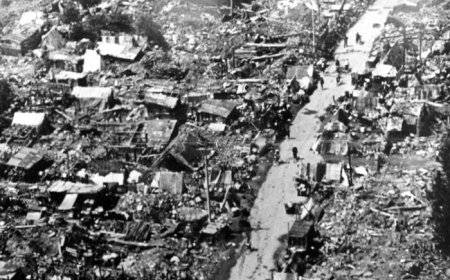
James Patrick Gardner was born on July 31 1929 in Shillong, north-eastern India, the son of Yolande and Lt Col JHD Gardner OBE of the Gurkhas and later of the Assam Rifles. The family survived the 1935 Quetta earthquake, which killed tens of thousands, but as war loomed young Gardner became a child of empire and was sent back to England to stay with an aunt and cousins and attend Oundle. He did not see his mother or younger sister, Jilly, for six years, and his father for 10.
He was commissioned into the Royal Marines in 1947, serving in the cruiser Newcastle in the Mediterranean, and on completing his training he was awarded the sword of honour for passing out top of his entry.
In 1954 he was an instructor at the NCO school at Plymouth, then in 1956 he was posted to 40 Commando in Cyprus, where he was a troop leader during the Cyprus Emergency. In the Suez Crisis that year, he waded ashore at Suez sporting a Czech-made automatic machine pistol in place of the unreliable standard-issue Sten gun and fought hand-to-hand through Port Said.
With typical understatement he wrote home: “There was a bit of opposition, but we got there with only three men wounded.” At one point he had to intervene to prevent a French legionnaire finishing off a wounded Egyptian policeman.
In 1958-59 he was adjutant at the Joint Services Amphibious Warfare Centre, Poole, and in 1960 he was an extra equerry to Prince Philip; he loved the job and was very fond of his boss.
It was during this time that he married Sue Fison, and they had two children. But on May 6 1962, the plane carrying his family from Jersey to Portsmouth crashed in low cloud on St Boniface Down on the Isle of Wight and all three were killed. Gardner requested that the MoD increase his workload as the only way he could cope with his grief. He was always grateful to the Corps for the support they gave him during that terrible time.
In 1963, during the Borneo operations, he was a company commander in 40 Commando, with 600 men under him. He was much respected and admired by his young officers for his steadiness under fire, but also for his compassion. He was Mentioned in Despatches.
In 1964 he met Annie Ridgers at the swimming pool of the officer’s club in Singapore, and they married a year later. Wanting to spend more time with his family, Gardner resigned from the Corps in 1968. He retrained as a teacher in evening classes, and for the next 20 years worked at Elstree School, teaching science, maths, hockey and tennis; he gained a reputation for being firm but fair.
Gardner’s Christian faith became the bedrock of his life. He worshipped at St Peter’s, Woolhampton, but it was a deeply private faith which he would rarely press on others.
Gardner came to loathe injustice. He increasingly saw how unfair life was for many people at the fringes of society, and with his wife Annie he was determined to help.
They volunteered in a youth club called the Greenhouse, which had been started by friends in Camberwell in the 1960s, and was aimed at children who were supposedly “unclubbable”.
He was still in contact and supporting one of these boys (now a man in his 60s) up to the last weeks of his life. Gardner wrote of this experience: “One saw how the other half lived – with a vengeance.”
When Gardner retired he and his wife became involved with a Christian fellowship which befriended young people in UK prisons. They also worked with the African Medical Mission at Umtata (now Mthatha) in the Transkei to improve hospital conditions in rural areas.
He helped with the daily administration of Bedford Hospital in Transkei and hosted Nelson Mandela when he visited to open three new operating theatres and an intensive care unit in 1996.
While there, Gardner also confronted knife-wielding burglars in his nightshirt – and afterwards comforted Annie, who was concerned for the perpetrators.
Gardner was essentially a family man and loved nothing more than being at home with his family and many friends, but he and his wife also had an appetite for travel and adventure which extended to backpacking across Africa, Syria, Lebanon and the Galápagos Islands, often earning the respect of much younger travellers.
But in 1999, while trekking in Nepal, Gardner suffered a ruptured oesophagus. He was taken by helicopter to a hospital in Kathmandu before being flown to Singapore, where he spent a month in a medically induced coma.
He returned to the UK under the care of the John Radcliffe Hospital. After extensive surgery he spent the next 25 years managing life without a conventional stomach. He faced this with the same easy smile and uncomplaining courage he had displayed all his life.
Gardner is survived by his wife and their four children.
Major Pat Gardner, born July 31 1929, died March 16 2026
[Source: Daily Telegraph]