

















Miroslaw Chojecki, Polish dissident publisher who flooded the country with samizdat literature
Circulation of illicit reading material in Poland grew so large that he was dubbed Solidarity’s ‘minister for smuggling’

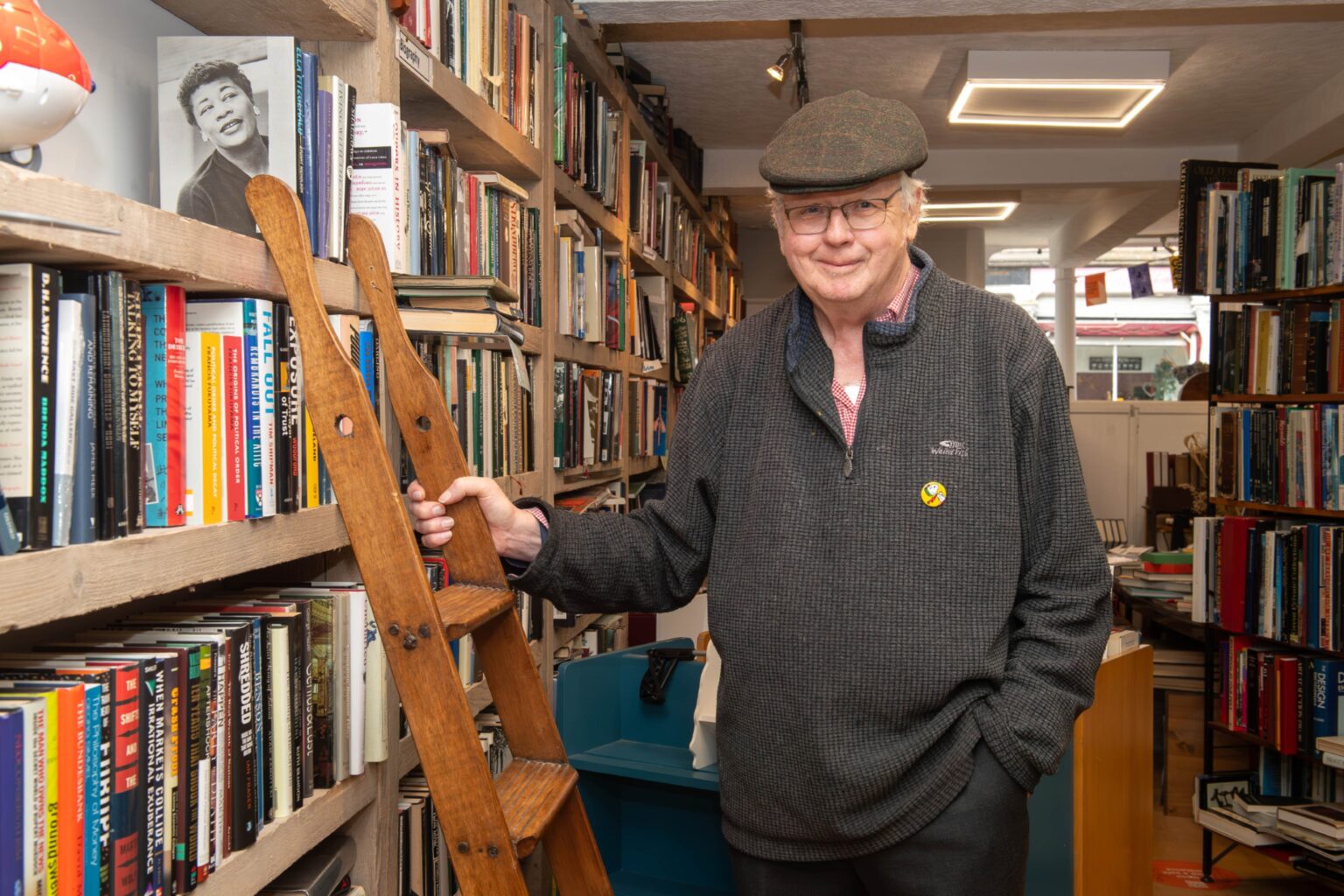
Mirosław Chojecki, who has died aged 76, was a Polish dissident publisher and a key figure in the cat-and-mouse struggle that led in 1989 to the collapse of the country’s Soviet-backed Communist regime.
As Charlie English revealed in his recent book The CIA Book Club (2025), from as early as 1949 the CIA had been funding the smuggling of banned books to Poland and other communist countries, and from the mid-1970s it sponsored a rapidly growing network of proxies – publishers, philanthropists and other exiles – who ran millions of titles into Poland and elsewhere, by authors from Hannah Arendt and George Orwell to Agatha Christie.
At the same time the CIA began to fund and ship printing equipment into Poland so that banned titles could be reproduced by underground printers in situ. Few individuals were more central to these operations than Chojecki, known to the CIA as QRGUIDE.
A nuclear physicist by training, in June 1976 Chojecki had become involved in the campaign to help workers whose protests against the rise in state-controlled prices of basic commodities had been violently repressed by the authorities. As a result he had been dismissed from his position at the Polish Institute for Nuclear Research, gone on trial with others for dissident activities, and received a short jail sentence.
Undeterred, in the spring of 1977 Chojecki founded the publisher NOWA, which soon grew to be the biggest in the Polish underground. By Christmas 1977 they had published short runs of books by blacklisted Polish writers along with reprints of titles that were arriving from the west.
By the beginning of 1980 Chojecki had been arrested 42 times on such charges as “vilifying the Polish People’s Republic” and “organising a criminal group with the aim of distributing illegal publications”, serving several short prison terms. But as the political situation in Poland became more febrile, his 43rd arrest, in March 1980, on charges of stealing a mimeograph machine, sparked an international campaign for his release.
On April 7, when he had been locked up for 10 days without being summoned to court or allowed to contact his family or lawyer, Chojecki went on hunger strike, which led to his being force-fed with a hose pushed so deep that it scratched his oesophagus and made him gag. Yet under interrogation he refused to answer questions about his underground activities.
On May 10 Chojecki was released, emerging from prison to a chorus of cheers. Four days later, however, he was told that the theft charge still stood and that a new charge, inciting others to commit a criminal act, had been added.
At the June trial of Chojecki and several co-defendants, he delivered an excoriating indictment of the communist system. The state, he concluded, illegitimately claimed a “monopoly of thought” and a “monopoly of the word”; the trial was not about those in the dock at all, but about “free speech and thought, about Polish culture, about the dignity of society”.
The court convicted Chojecki and his co-defendants and he was sentenced to 18 months in prison, suspended for three years.
When strikes broke out that August at the Lenin shipyard in Gdansk, Chojecki brought out a special newsletter in support of the workers and was rearrested, only to be released a few days later after the signing of the agreement between the government of General Wojciech Jaruzelski and the striking workers which led to the birth of the independent trade union Solidarity, of which Chojecki became a member. He was also given his old job back.
Fifteen months later, however, under pressure from Moscow, Jaruzelski imposed martial law and Solidarity officials were rounded up. Chojecki was abroad at the time, drumming up support for underground publishing operations. He was based in Paris for the next decade, and when Solidarity’s cause often looked hopeless his distribution network flourished and illicit print works sprang up all over Poland. By the mid-1980s circulation of illicit literature in Poland grew so large that the state’s censorship system could not cope. Chojecki was dubbed Solidarity’s “minister for smuggling”.
The publishing movement of which Chojecki was a leading figure played a huge role in maintaining dissident morale and sustaining and developing Solidarity’s sense of corporate identity. By 1989, as communism crumbled, there was an elite ready to challenge the old order in democratic elections. Poland, the most crucial of eastern bloc nations, was the first domino to fall.
Mirosław Jerzy Chojecki was born in Warsaw on September 1 1949, the elder of two sons of Jerzy Chojecki and Maria Stypulkowska-Chojecka, both of whom had served in the Polish Home Army during the Second World War, Maria winning acclaim for her role in the 1944 assassination of Warsaw’s Nazi police chief, Franz Kutschera.
A teacher at Mirosław ’s high school encouraged him to seek out the censored literature that was being smuggled into Poland from the West, leading him to the discovery that “there was somewhere out there in the world where culture is free”.
In March 1968 he took part in a student strike at the Warsaw Polytechnic, and was sent down. None the less, in 1974 he graduated in chemistry from the University of Warsaw and then took a job at the Institute for Nuclear Research.
When the first semi-free parliamentary elections were held in Poland in 1989, Chojecki supported the Solidarity campaign from Paris. The party’s resounding victory in all freely contested seats paved the way for the end of communist rule in Poland.
In 1990 Chojecki returned to live in Poland, where he continued his publishing activities, co-founded the country’s first commercial television station, started a film group, “Kontakt”, and served for a short time as adviser to the minister of culture.
In 2005 he was reported to be gleefully involved in subverting the regime of Aleksandr Lukashenko in neighbouring Belarus. “We have pressed thousands of compact discs that are then infiltrated into Belarus,” he said. “Our motto is: throw a CD at Lukashenko.”
In 2022, he was appointed to the Order of the White Eagle, Poland’s highest civil decoration
In 1983 Chojecki married Jolanta Kessler, who survives him with a daughter and five sons.
Mirosław Chojecki, born September 1 1949; died October 10 2025
[Source: Daily Telegraph]