

































The Mintlaw teen ref on abuse from the stands: “People get too hung up on football”
A rapid rise through Scotland’s refereeing ranks hasn’t spared 16-year-old Tommy Stark-Proctor the shouting, but — along with a growing number of other young refs — he refuses to be rattled.
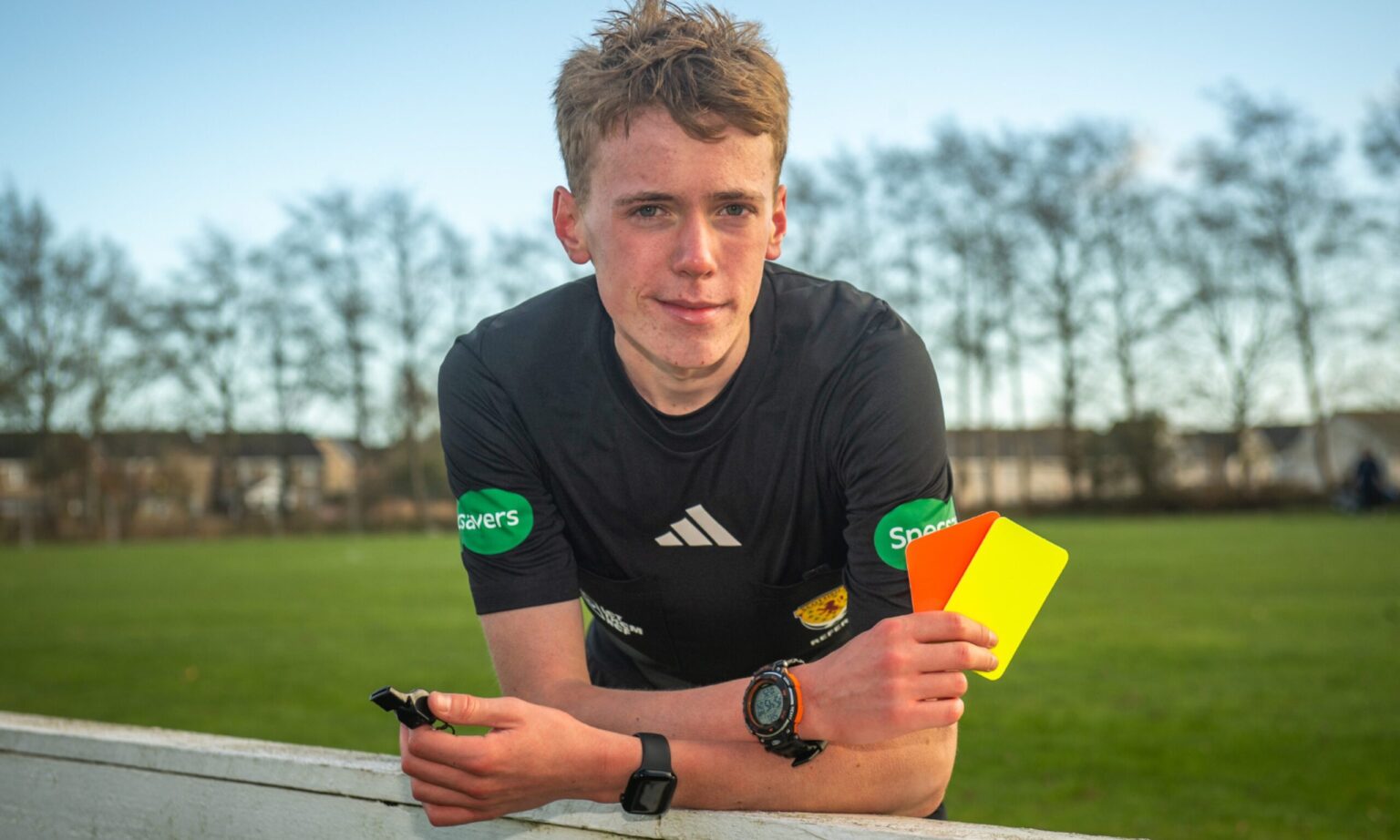
At just 16, Tommy Stark-Proctor already knows what it’s like to be screamed at by grown men.
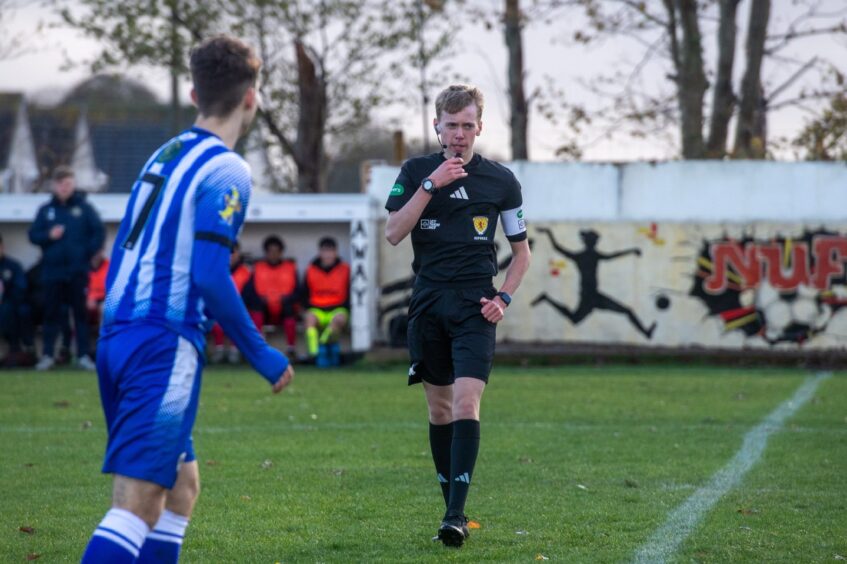
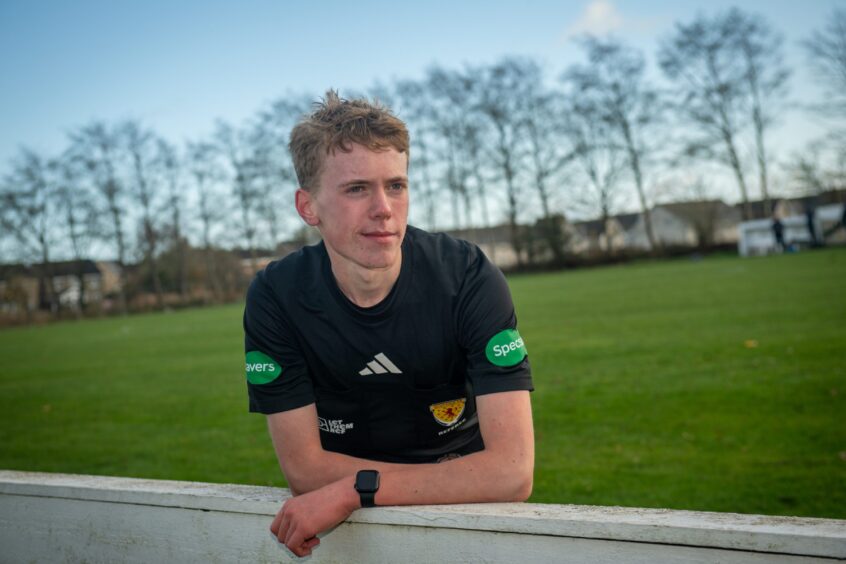
The teenager from Mintlaw is one of the youngest referees in Scotland — and the youngest to run the line in a Scottish Cup game.
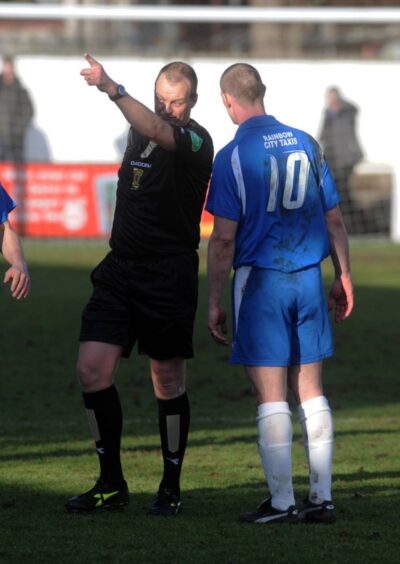
But his age, and his growing reputation as one of the most promising officials in the country, do nothing to spare him from the verbal abuse routinely hurled at referees in Scotland, whether it comes from the pitch or the touchline.
Take his very first game in the North of Scotland Juniors in October.
With only minutes to go and the home team having just conceded a late equaliser, an opposition player who had been on the park for barely four minutes walked straight up to Tommy and shouted, in his face, “F*** off!”
Tommy reached calmly into his pocket and sent the player off.
The memory still makes him laugh.
“Obviously he’s annoyed, but I’m not just moving on from it,” he says. “I had to get him gone.”
The unlikely path that led Tommy into refereeing
There are two distinct forces that mean Tommy now spends his weekends being sworn at.
The first is Tommy’s love of football that – unfortunately for him, at least – didn’t translate into talent.
“I’m terrible,” he laughs, when asked if he plays. “Refereeing is my way to stay in football, because football was not for me.”
The second driver comes from football itself.
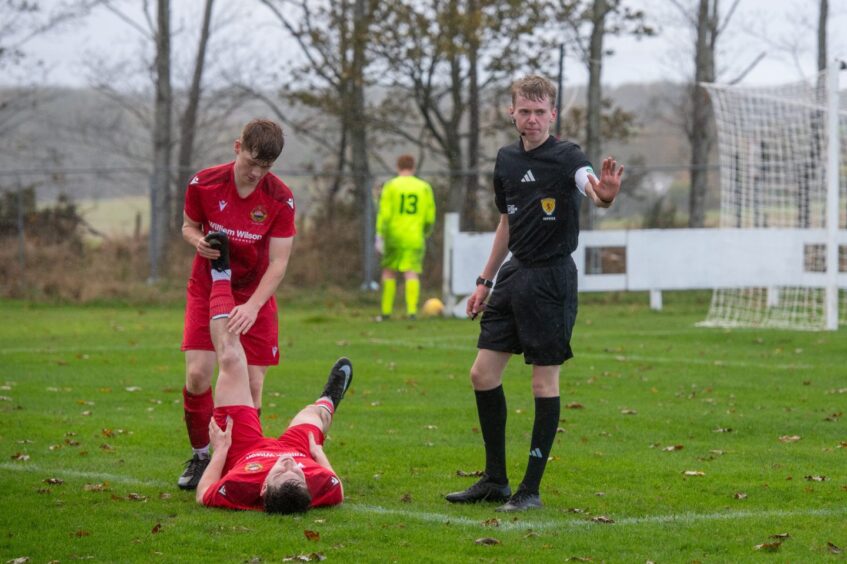
Tommy is part of a fast-rising new generation of Scottish referees who are being pushed into the senior game earlier than ever before.
The Scottish Football Association (SFA) wants younger, fitter officials coming through the system as the game puts increasing physical demands on its custodians.
If Scotland wants referees in charge of World Cup finals and European Champions League games – both ambitions of Tommy’s – it needs them to start earlier than ever.
Hugh Dallas, possibly Scotland’s most famous referee, was 44 when he was the fourth official in the 2002 World Cup final between Brazil and Germany. Today, a referee the same age might be considered over the hill.
So, as part of a concerted effort by the SFA, teenage referees such as Tommy are now regularly taking charge of men’s matches — long before they’re old enough to vote, drive on their own or legally buy a pint.

“I’m seeing a level of maturity I’ve never seen in kids,” says Craig Mackay, who oversees refereeing in the north for the SFA.
“Even the way they interact, the way they come across, their communication. I’ve shown some of their messages to people and said, ‘That’s a 16-year-old,’ and they’ve been stunned with the content.”
Why Scotland is accelerating young referees into the senior game
For Craig, the benefits of bringing referees through early are obvious.
“There’s so many different things they can benefit from — leadership, dealing with conflict, managing people. There are a lot of skills here that’ll help them in everyday life, but also help them get into a working environment later on.”
He says Tommy is the perfect example of the kind of teenager now coming through the system.
“It’s his maturity, his self-confidence, his communication and commitment. He’s willing to listen and learn. Some people take constructive criticism hard, but these kids are more like sponges — they want to learn, they want to improve.”
A decade ago, progress through the refereeing ranks was slow and methodical. Not anymore.
“When I was coming through, you went through the stages and had so many years at different levels,” says Craig, a former category 1 SFA referee.
“These days have gone now. If someone’s got the skill set and the ability, like young Tommy, we’re going to push him. We’ve put him into junior football because we think he can handle it.”
And, as Craig underlines, there’s the practical reason behind that urgency.
“UEFA are driving to reduce the age of their senior officials. To get a real run at that level, you really need to be in your late 20s. It’s maybe a five- or six-year programme, so we want to try and move them on — get them onto the EU list around 25.”
A helping hand — and a decent payout — for young referees
To support the drive, the SFA has launched a number of initiatives.
Since August, all officials under the age of 18 are required to wear a specially designed white armband — sponsored by UK optician Specsavers — so they are instantly recognisable on the pitch.
By making youth referees more visible, the SFA hopes to encourage patience, support and a bit of perspective when tempers flare.
At the same time, the association appoints mentors to all its young charges – a helping hand through the often turbulent world of refereeing.

“It’s so they’ve got someone they can pick up the phone to,” Craig explains. “We try to create that network so that eventually it can come to us and we can help.”
There’s another aspect too. Refereeing doesn’t just offer fitness and experience to 16-year-old — it also pays better than most weekend jobs. A couple of games a week will net a young referee about £100.
“How many shifts would that be in Tesco or Asda?” Craig asks.
“Refereeing gives them the physical and wellbeing element. Plus the money.”
A new era of abuse: how the pressure has changed for young refs
According to Craig, the nature of abuse on referees has changed — and not for the better.
“Social media has changed it,” he says. “When I was refereeing, it was a newspaper on a Sunday and a Monday and the story was killed. That was it — it was finished. Today’s different. Folk can keep bringing it up, making comments. The trail just goes on and on.”
He adds: “There’s so much coverage now. Referees will make a decision, and the clubs will see it on video and make comment. There’s a different pressure on them than it was in our day.”
Even at Highland League and juniors level, crowds are quicker to voice their anger. And players and staff can add to the pressure.
In November, an amateur match in Aberdeen descended into chaos when a referee was hit while trying to break up an argument on the pitch.
‘People call you a cheat for a throw-in’
Tommy has already seen the full spectrum.
He often officiates twice a week, taking charge of North of Scotland Football League matches (the rebranded Juniors) and running the line in Highland League games.
He also referees Highland League U18 and U21 development fixtures on Monday nights, as well as youth and occasional women’s matches.
In September, he became the youngest official in Scottish Cup history when he served as assistant referee – a linesman – in the Inverurie Loco Works v Sauchie Juniors first-round tie.
“You always get your fans that are just there to say anything they can to you,” he says. “Sometimes you give a throw-in and people call you a cheat. It’s the smallest decision in the game and fans will just be fuming.”
He says most of the time he can’t hear the crowd because of the communications unit in his ear — and when he can, he treats it like background noise.
“Sometimes I do hear it, and sometimes you just have to laugh it off because it’s just the most nonsense,” he says. “Some people report it to the clubs, but I just block it out. It doesn’t really bother me.”
As for who gives the most abuse – fans or the players – Tommy points out that players often apologise to him after the game if they’ve given him a hard time.
That olive branch rarely comes from fans.
“I think people just get too hung up on football,” Tommy says. “If their team’s playing bad, they’ll be angry at anything, and if they don’t want to blame their team, there’s only one other place they can put it — the officials.”
What it’s like for a parent to watch a 16-year-old face adult abuse
Tommy’s dad, Chris Stark-Proctor, admits it can be hard listening to grown men lay into his 16-year-old son.
“Oh, 100% it’s tough,” says Chris, who co-owns travel agency CK Travel Trade in Fraserburgh. “But I’ve just got to sit there and think to myself, it’s football. I know it’s not personal.”
At a recent game, a supporter in front of him was loudly laying into the officials until another fan pointed out who was standing just behind.
“Somebody tapped him on the shoulder and went, ‘This is his dad,’” Chris says. “And he turned round and said: ‘He’s having a great game, he’s having a great game.’”

What makes it easier, Chris says, is knowing how well Tommy handles it.
“To see him shine, to see him invest in himself, it’s what makes us proud,” he says. “He was so in his shell before, but now you see him on the pitch and it’s like, that’s my boy.”
Overwhelmingly, the feeling is pride.
“I was reading a report from one of his matches to my wife and I actually started to well up,” he says.
“To have that being said about your flesh and blood – wow. He could score a hat-trick for Scotland and I’d be just as proud as I am now with him running the middle.”
A belief he can reach the very top
For Tommy, all of this — the crowds and the criticism —is only the beginning. His eyes are already fixed on what comes next.
“I’d love to be a FIFA referee,” he says. “That’d be me complete.”
[Source: Press and Journal]
/file/attachments/2988/P1YoungLeaders_622876.jpg)

/file/attachments/orphans/1000146612_845134.jpg)