/file/attachments/orphans/ED_543155_209242.jpg)
















Tehran’s brutal regime will be overthrown
Every barrel of oil the mullahs sell becomes a bullet that kills those demanding freedom and democracy

Both Iranian society and the ruling regime are rushing, at unprecedented speed, toward a new situation. The regime, due to 47 years of dictatorship, corruption, and bloodshed, has reached a dead end. It has no way forward or backward and is incapable of addressing even the most basic needs of the Iranian people. And the people are no longer willing to tolerate this situation.
The uprising and protests that began in Tehran’s bazaar in the final days of 2025 and rapidly spread to dozens of cities reflect the anger of 92 million Iranians. They are exhausted by the steady collapse of their purchasing power, driven by state-engineered price hikes and the plundering of national wealth to fund the Revolutionary Guard. The regime tried, but clearly failed, to prevent the emergence of yet another uprising by intensifying repression. According to the National Council of Resistance of Iran, there were 2,200 executions in 2025, among them political prisoners.
Ali Khamenei’s response to the latest protests has been the use of live ammunition against demonstrators in several cities. He also appointed Brigadier General Ahmad Vahidi, the first commander of the terrorist Quds Force, as the deputy commander-in-chief of the Islamic Revolutionary Guard Corps (IRGC). Vahidi, who is the subject of an international arrest warrant, was allegedly one of those responsible for the worst terrorist attack in Argentina’s history – the bombing of the AMIA Jewish community centre in Buenos Aires in July 1994. The atrocity left 85 people dead.
These actions have made it unmistakably clear that Khamenei still sees the regime’s only path to survival in repression, terrorism, warmongering and a drive toward building the nuclear bomb. Nevertheless, despite any ebbs and flows, the protests will continue.
Because of the looting of national resources, or their squandering on nuclear and missile programs, Tehran, with a population of around 10 million, along with many other cities, now faces severe shortages of water, electricity, and gas. Official statistics put annual inflation close to 43 per cent, but inflation on essential goods has surpassed 100 per cent.
The collapse of the national currency, the rial, seems unstoppable. In the past year alone, it has lost about 70 percent of its value. Although the regime still manages to sell Iranian oil, it is collapsing under budget deficits. Extreme poverty, along with 60,000 deaths per year due to air pollution, has driven public discontent to the verge of explosion.
The fall of Assad’s dictatorship in Syria and the crippling blows dealt to Khamenei’s proxies across the region have left the regime without its backing, defenceless against overthrow by the Iranian people.
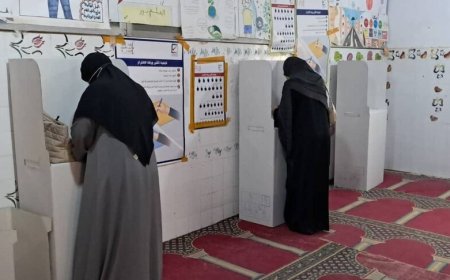
The regime’s social base has evaporated, as reflected in the results of its latest sham elections. And 92 per cent of Iranians are dissatisfied with conditions in the country, according to a recent poll carried out on behalf of the regime itself.
Iran has reached an exceptional moment. There is no way for the clerical regime to return to its previous state and equilibrium or to escape uprising and overthrow. The resistance network, particularly the “Resistance Units,” is expanding across the provinces, and the younger generation is joining the movement in growing numbers. Eighteen political prisoners are currently on death row on charges of membership of the People’s Mujahedin of Iran, the group I lead.
Protesters in the streets are chanting: “Death to the dictator,” “This is the year of blood – Seyyed Ali will be overthrown,” and “Death to the oppressor, be it the Shah or the Leader.” The people of Iran are rejecting both monarchical and religious dictatorships. They seek a future based on the sovereign will of the people.
Four decades of Western efforts to encourage reform within the regime have proven that expecting change from within is an illusion. Those who, because of commercial or diplomatic interests, prescribed appeasement toward religious tyranny have clearly failed, and it has become obvious that appeasement leads to war.
At the same time, it is equally clear that foreign war is not the answer, and those who pinned their hopes on outside military intervention have been discredited. The real solution lies in the organised resistance and the people’s uprising. There is no need for foreign military intervention or financial and arms assistance. Regime change is solely the responsibility of the Iranian people.
The National Council of Resistance of Iran (NCRI) is committed to transferring power to the people’s elected representatives within a maximum of six months after the regime’s overthrow. This would be through elections for a constituent assembly, which will draft the new constitution and oversee a provisional government. The NCRI stands for the separation of religion and state, equal rights for women, autonomy for Iranian Kurdistan, and the abolition of the death penalty,
In previous uprisings, the West merely watched, which benefited the regime most of all. This time, it must stand with the people of Iran and explicitly recognise the right of the people and the organised resistance to confront the crimes of the IRGC and to overthrow the regime. Every barrel of oil the mullahs sell becomes a bullet that kills those demanding freedom and democracy in the streets. Do not allow oil sales to continue.
The IRGC is now firing on Iran’s youth in the streets. Europe must not delay any longer in placing the IRGC on the list of terrorist organisations.
[Source: Daily Telegraph - Maryam Rajavi is the leader of People’s Mojahedin Organization of Iran and the president-elect of the National Council of Resistance of Iran]