













Trump ‘ready to help’ Iranian protesters as US weighs military options
Hundreds feared dead and hospitals overwhelmed as regime cracks down on nationwide protests

Donald Trump said on Saturday night that he was ready to help Iranians protesting against the regime, as his administration began discussing how to carry out a military strike on the country.
US government officials were considering striking multiple Iranian military targets, The Wall Street Journal reported.
Former Pentagon officials told The Telegraph that Mr Trump could also authorise covert CIA operations to destabilise Tehran or give the green light to Israel to launch its own attacks on the regime.
Mr Trump said on Truth Social on Saturday that Iran was “looking at FREEDOM” and that the US was “ready to help”. The comment was later reposted by Pete Hegseth, the US defence secretary.
While one source said a large-scale strike had been discussed, another said officials had not reached a consensus and that military assets had not been moved ahead of an attack.
Mr Trump appears to be seriously weighing an intervention as hundreds of protesters are feared to have been killed in demonstrations across Iran. He has previously warned Iran’s security forces not to use lethal force.
Two American C-17A military transport planes left from Germany and appeared to be heading for the Middle East on Saturday evening, as speculation mounted about a potential strike.
Despite the regime’s brutal crackdown, large numbers of Iranian protesters returned to the streets on Saturday night.
In one video shared on social media, protesters chant: “Until the mullahs are dead, this homeland will not be free.”
They defied orders to stay at home, risking being targeted by Iran’s Revolutionary Guard Corps (IRGC), who have opened fire on demonstrators in an attempt to quell the protests that are threatening to topple the regime.
Doctors told The Telegraph that hospitals across the country were overwhelmed with those suffering from gunshot wounds.
They said the confirmed death toll of 51 protestors represented a fraction of the true scale of the bloodshed.
Families remain too terrified to report deaths and hospitals have become hunting grounds for security forces looking to arrest wounded protesters. Blood supplies are also running low, with residents warning that people are dying because of the lack of blood available.
BBC Persian reported that a total of 70 bodies were brought to just one hospital, Poursina, in Rasht city on Friday night.
The hospital is said to have been overwhelmed and its morgue is full of corpses. Authorities have told relatives of the dead they will need to pay the equivalent of £5,222 ($7,000) to release the bodies for burial.
A hospital worker in Tehran described “horrible scenes”, telling the BBC so many people had been wounded that staff did not have time to perform CPR.
“Around 38 people died. Many as soon as they reached the emergency beds,” the individual said.
Footage shared by the Norway-based Iran Human Rights group showed the bodies of those shot dead during the protests piled on the floor of Alghadir hospital in eastern Tehran.
A doctor in Tehran told The Telegraph: “The death toll is far higher than reported. We are treating large numbers of patients in hospitals and lack everything.”
Protesters have described seeing “hundreds dead” in the streets as Iran’s security forces try to quell the most widespread demonstrations the nation has seen in years.
“Iran is looking at FREEDOM, perhaps like never before. The USA stands ready to help!!!” Mr Trump posted on Saturday.
A day earlier, he said that Iran was in “big trouble” and again warned that he could order military strikes against the regime.
Mr Trump also shared a post by Lindsey Graham, the Republican senator who last year successfully lobbied the president for strikes on Iran’s nuclear sites, making the case for intervention.
Michael Rubin, a former Pentagon official, told The Telegraph that the US could launch targeted strikes on arms caches belonging to the IRGC.
“The Revolutionary Guard isn’t homogeneous, so you want to peel away the ideological hardliners from the cynics who are just in it for the money,” he said. “You go after some of the leadership, but you don’t want to just kill Revolutionary Guards willy nilly.”
Ali Khamenei, Iran’s supreme leader, has placed the country’s security services on their highest state of alert and ordered the IRGC to take control of the crackdown, amid fears of defections by the police and army.
Witnesses said the Iranian security forces were targeting protesters’ eyes, a tactic that has become a signature for the group. It was documented extensively during the 2022 “Woman, Life, Freedom” protests when hundreds were blinded.
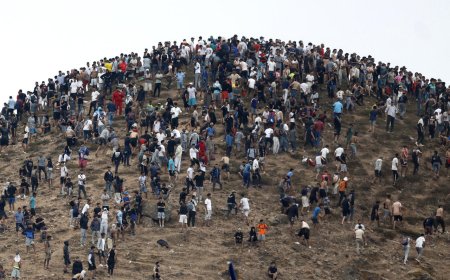
But despite the vicious crackdown, hundreds of protesters descended on to the streets of Tehran again on Saturday night for the 14th consecutive day of protests. Video footage showed them chanting anti-government slogans as they engulfed entire streets.
Sima, a 17-year-old protester in Tehran, told The Telegraph she was going out every night with her friends to protest. Before leaving home each evening, Sima writes on her bedroom mirror in lipstick: “Ready to be next, but not the last” followed by a victory sign.
“This note is a souvenir for my mother if I don’t come back,” she explained.
Dozens of Iranians have not returned home after protesting. Mobin Yaghoubzadeh, a 17-year-old schoolboy, was shot dead by Iran’s security forces in Khoshk-e Bijar, northern Iran.
Hundreds of miles away, Akram Pirgazi, 40, a mother of two, was shot in the head and face by an armed riot squad in north-east Neyshabur.
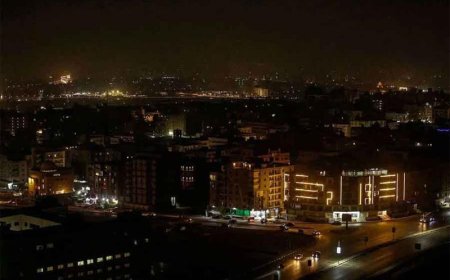
Unverified media reports put the death toll at more than 200, but The Telegraph cannot independently confirm the figure owing to a total internet blackout.
One protester told the Guardian that they’d seen scores of protesters shot across Tehran, saying: “We saw hundreds of bodies.”
One doctor told Time Magazine that six hospitals in the capital alone had recorded at least 217 protester deaths, “most [killed] by live ammunition”.
Protests have spread across Iran since Dec 28 to more than 340 locations, beginning in response to soaring inflation, and quickly turning political with protesters demanding an end to clerical rule.
The demonstrations continued on Saturday night after thousands poured on to the streets of major Iranian cities the night before, chanting “death to the dictator”.
Video footage verified by The Telegraph showed people dancing around fires in the middle of highways in the Pounak district of northern Tehran. Protesters could be heard chanting “death to Khamenei” as they banged pots in the capital’s Saadatabad district.
Footage circulating on social media in recent days also shows protesters setting alight a police booth in Saadatabad in the north of Tehran.
Authorities have arrested more than 2,300 people across the country, including at least 166 minors, while security forces continued using live ammunition against demonstrators.
Reza Pahlavi, the US-based son of Iran’s ousted shah, hailed the “magnificent” turnout on Friday night and urged Iranians to stage more targeted protests on Saturday and Sunday.
Mr Pahlavi said in a video message on social media: “Our goal is no longer just to take to the streets. The goal is to prepare to seize and hold city centres.”
On Saturday morning, Iran’s army accused the United States and Israel of orchestrating the unrest.
“The enemy, with another conspiracy and with the support of the criminal and child-killing Zionist regime and terrorist and opposition groups, is trying to disrupt order and calm in cities, and disturb the country’s public security,” the statement read.
The army pledged that under Khamenei’s command, it would work alongside other armed forces to “powerfully protect and guard national interests, the country’s strategic infrastructure and public property” and would “seriously confront any conspiracy”.
The military’s intervention marks an escalation in the government’s response to protests.
Shirin Ebadi, the Nobel Peace Prize laureate, warned on Friday that security forces could be preparing to commit a “massacre under the cover of a sweeping communications blackout”.
[Source: Daily Telegraph]