

/file/attachments/orphans/Nonku-Nombasa-Mapisa3_550805.jpg)


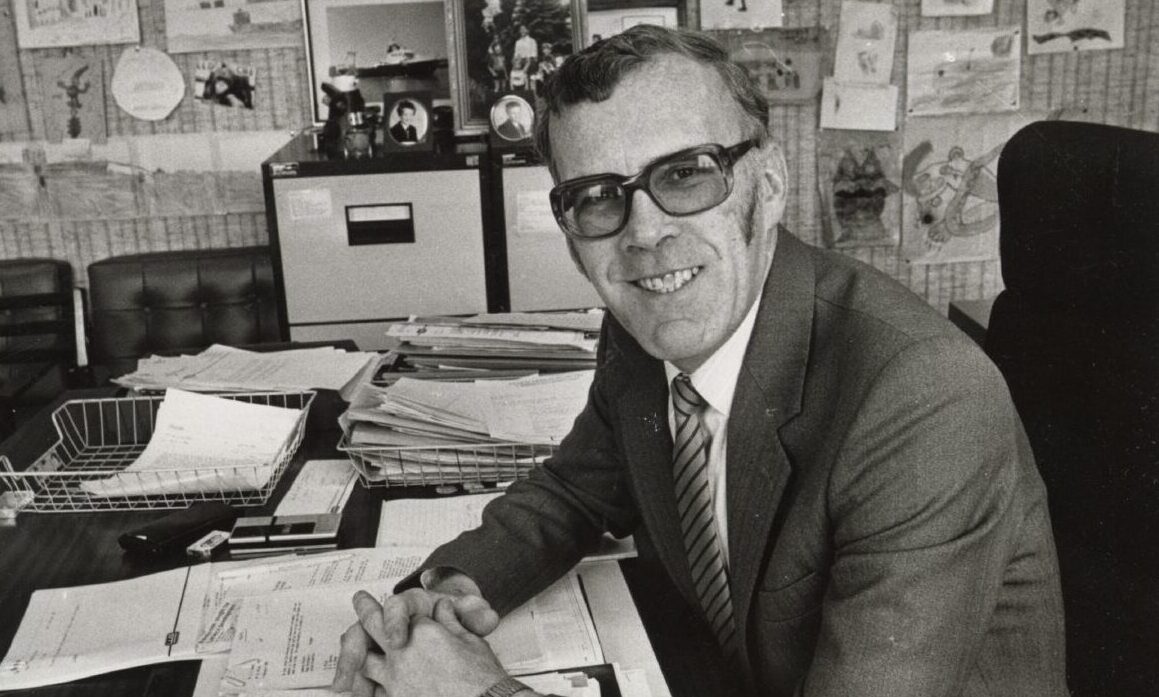

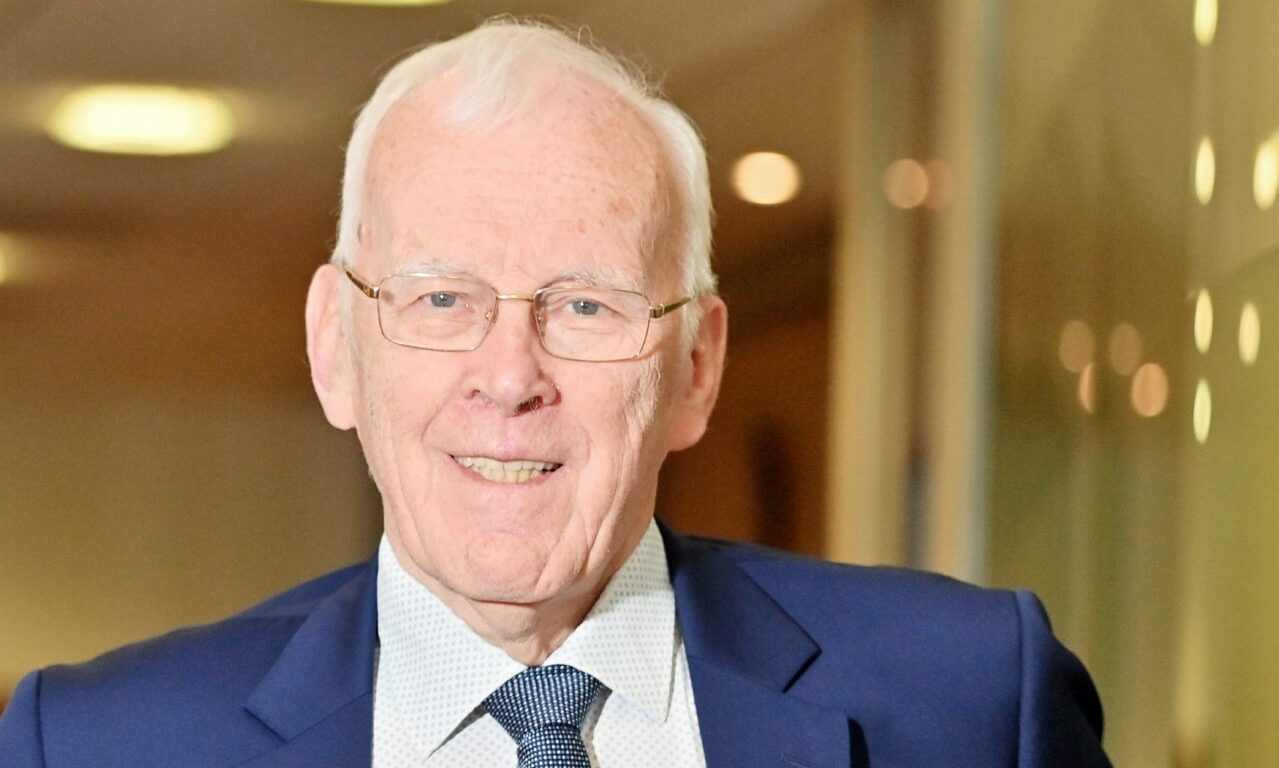






















Richard Kindersley, typeface designer, letterer and sculptor whose work can be seen across Britain
He was the scion of a letter-cutting dynasty and believed that hand-carving conferred a human presence that no machine could replicate

Richard Kindersley, who has died aged 86, was a typeface designer, letterer and sculptor whose work, spanning more than six decades, became embedded in some of Britain’s most prominent public buildings and memorials.
He was a leading figure in the continuation of 20th-century British letter-cutting tradition, and his lettering and sculpture can be found at Tower Bridge, the Supreme Court, the British Museum, St Paul’s Cathedral, Westminster Abbey and Gatton Park, among many other sites.
He was born on May 14 1939 into a distinguished lineage of craftsmen. His father, David Kindersley, was among the most influential lettering artists of the postwar period, and had been taught by Eric Gill.
He was brought up within an Arts and Crafts milieu and spent his early childhood home-educated in a small artistic commune before being sent to Norwich School. Although he initially aspired to become a filmmaker, his interests shifted towards letter design, leading him to study at the Cambridge School of Art and to serve an apprenticeship in his father’s workshop.
In 1966 Kindersley left to establish an independent practice in London, working from a succession of studios until 1970, when he settled in Kennington, south London. There he built a prolific practice, producing lettering and sculpture in stone, brick, concrete, plaster, fibreglass, clay and glass. The workshop attracted apprentices and experienced assistants alike, earning a reputation both for its breadth of commissions and its disciplined approach to design.
Among his early major works were The Seven Ages of Man at Baynard House in the City of London, completed in the 1970s, and the design and casting of the coat of arms for Tower Bridge, installed with the aid of a helicopter. In the mid-1980s he was commissioned to design and carve an Egyptian-themed façade for the Sainsbury’s Homebase store on Warwick Road, near Earl’s Court, a postmodern building by Ian Pollard (demolished in 2014).
The relief, extending nearly 30 metres and rising more than six metres, combined scholarly reference with dry humour, most memorably in the figure of the god Set, shown wielding an electric drill.
During the 1990s Kindersley undertook numerous brick-carving commissions, including work for Lord Sainsbury at the Sainsbury’s store at Pepper Hill, Northfleet, and civil engineering projects such as the Queen Elizabeth II Bridge on the M25, for which he designed a bespoke concrete typeface.
In the late 1990s, inspired by Neolithic standing stones found across the British Isles, he created The Millennium Stones at Gatton Park, selecting and carving the stones himself and developing a lasting interest in the relationship between quotation, letterform and upright stone.
His work was also commissioned for cathedrals and memorial sites, including the Dunblane massacre memorial; a standing stone in the grounds of Canterbury Cathedral; and several works at St Paul’s Cathedral, most notably the Memorial to the People of London Who Died in the Blitz, 1939-45, carved from a three-ton block of Irish limestone and placed outside the cathedral.
Uncompromising in his refusal to replicate past designs, Kindersley insisted on designing something new for each commission. This stance occasionally tested clients’ patience but ultimately strengthened his reputation. His work was recognised with numerous awards, including seven brick-carving prizes, the Freedom of the City of London, the Royal Society of Arts’ Art for Architecture Award, honorary fellowship of the Royal Institute of British Architects and three Henry Hering Art and Architecture Awards in the United States.
He remained active into the final decade of his life. He designed the typeface for the Bomber Command Memorial, inscribed in Portland stone, and undertook extensive hand-carving of inscriptions and regimental insignia. His last big commission was the D-Day Normandy Memorial in France, commemorating 22,442 servicemen and women from 30 nations. For the project he designed a typeface to be machine-embossed across 160 columns and spent long periods in France overseeing the work and carving the larger letterforms by hand.
While he accepted the necessity of machine-cutting on projects of such scale, Kindersley believed that hand-carving conferred a human presence that no machine could replicate. Subtle variations of form and texture were, for him, evidence not of inconsistency but of life.
Away from his professional work, he organised study trips to Rome to examine ancient inscriptions, experiences that informed his thinking when writing for craft publications. An early member of the School of Meditation, he meditated daily for more than 60 years and later spent long periods in Kardamyli, Greece, with his wife Katherine. He will be remembered for the enduring presence of his work, and for his patience, gentle manner and warm smile.
Richard Kindersley is survived by his wife and three sons.
Richard Kindersley, born May 14 1939, died November 27 2025
[Source: Daily Telegraph]







/file/attachments/orphans/ED_543155_209242.jpg)