

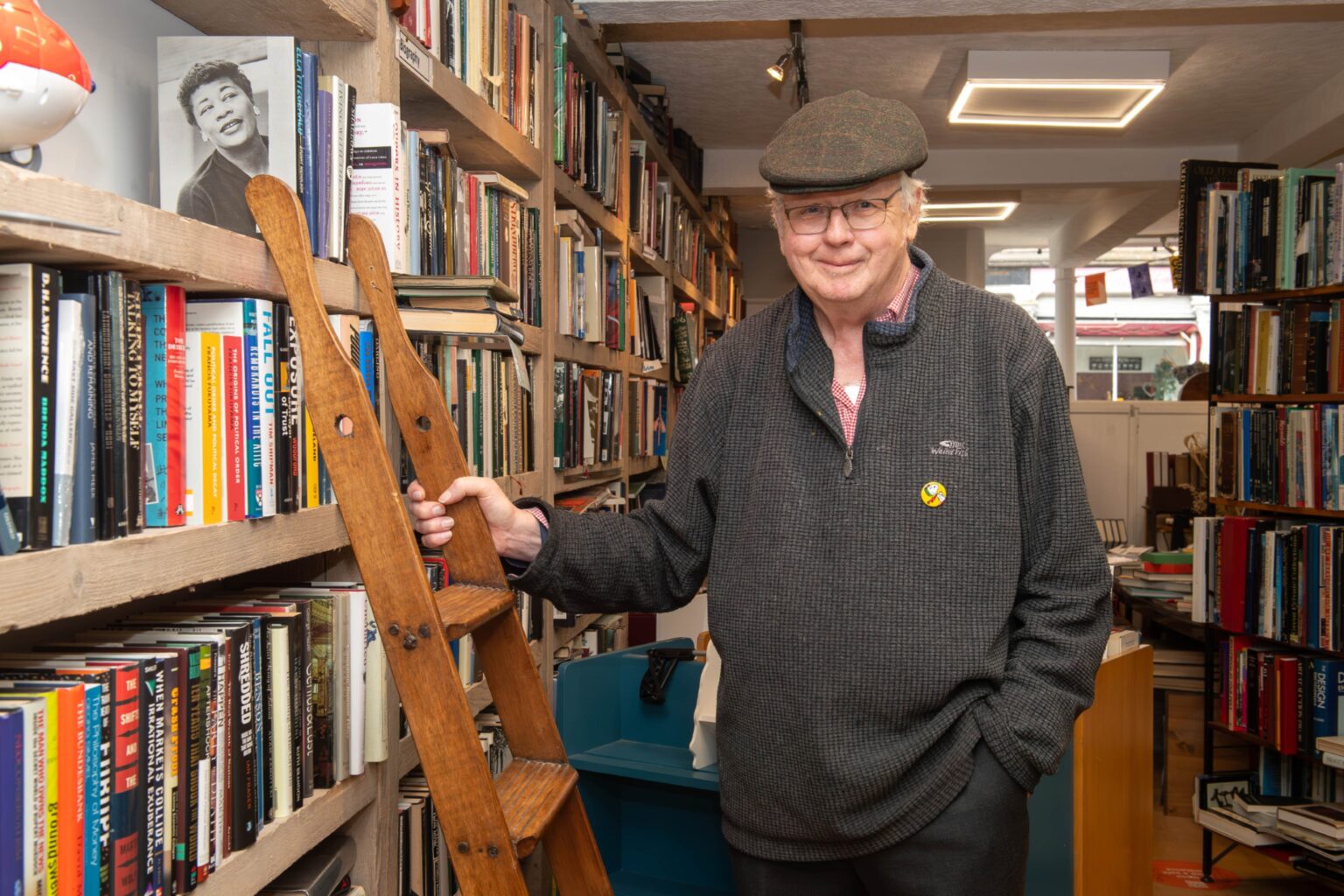




















Lord Triesman, communist firebrand turned Labour peer who waged war on ‘Mafia-style’ Fifa corruption
‘Fifa, I’m afraid, behaves like a Mafia family,’ he told the Lords. ‘It has a decades-long tradition of bribes, bungs and corruption’

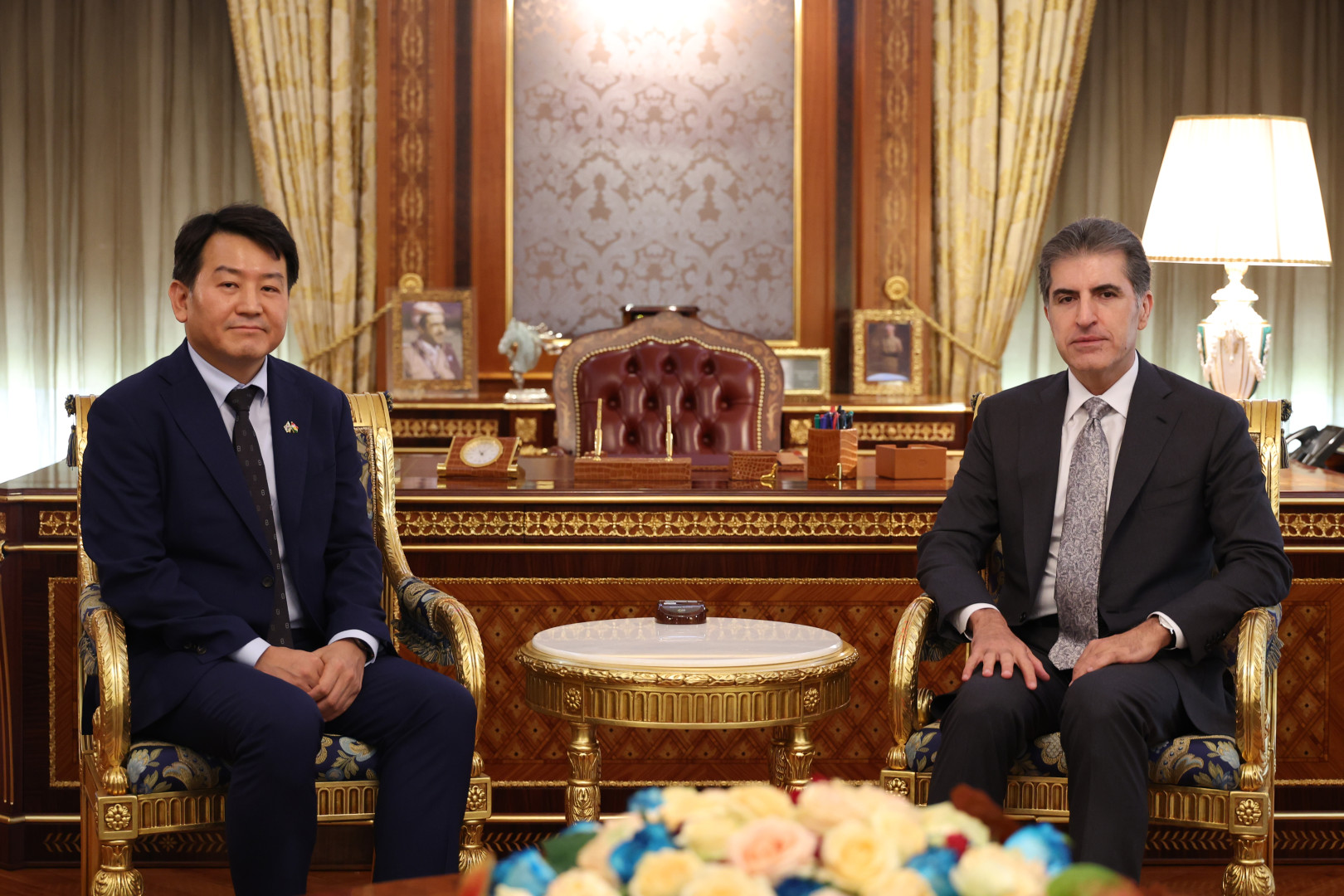
Lord Triesman, who has died aged 82, was a student revolutionary from the “Class of ’68” who matured to become an accomplished negotiator for college staff, general secretary of the Labour Party and a Foreign Office minister, Minister for the Universities and chairman of the Football Association.
A lifelong Tottenham supporter from a family of Jewish communists, David Triesman became the FA’s independent chairman in 2008. It was his dream job, but it proved heavy going.
Triesman felt the FA was shying away from governing the game, and was disappointed by its administrative procedures and poor working relationship with other football bodies, notably the Premier League.
In May 2010 he was forced to resign when a friend leaked to a Sunday paper a taped conversation in which he accused the Spanish and Russian football authorities of attempting to bribe referees at the coming World Cup. With England hoping to stage the event in 2018, Triesman also had to stand down as chairman of the bid.
A year later, he told the Culture, Media and Sport Select Committee that he suspected four Fifa members had sought bribes in return for backing England’s by-then failed bid. Fifa’s executive committee scorned the allegation, but each official he named was subsequently banned from the game.
Dato Worwawi Makudi, head of the Thai FA, sued Triesman for libel for saying he had demanded the television rights to a proposed Thailand-England friendly in exchange for supporting England’s bid. Makudi told reporters: “My reputation has been tarnished and it defames my family.”
In February 2014, three appeal court judges ruled against Makudi in a judgment that expanded legislators’ freedom of expression beyond Parliamentary privilege. They relied on Article 9 of the 1689 Bill of Rights, which protects MPs’ and peers’ proceedings from being “questioned in any court or place outside of Parliament”.
Parliamentary lawyers had argued that, were the lawsuit allowed to continue, there would be a “chilling effect” on debate in Parliament and witnesses’ ability to give evidence to select committees. Two years later, Makudi was banned by Fifa’s Ethics Committee for five years and fined 10,000 Swiss francs for forgery and falsification.
When allegations surfaced of corruption in Qatar’s successful bid for the 2022 World Cup, Triesman returned to the attack, claiming attempts by Fifa’s president Sepp Blatter to dismiss the issue would have gratified Don Corleone from The Godfather.
“Fifa, I’m afraid, behaves like a Mafia family,” he told the Lords. “It has a decades-long tradition of bribes, bungs and corruption. About half of its executive committee who voted on the last World Cup have had to go. Systematic corruption has been underpinned by non-existent investigations, where most of the accused are exempt.”
Triesman renounced the Labour whip in July 2019, in protest at Jeremy Corbyn’s perceived failures over anti-Semitism, Brexit and defence policy. He rejoined the party 11 months later, after Sir Keir Starmer’s election as leader.
David Maxim Triesman was born in north London on October 30 1943, the son of Michael Triesman, an advertising manager of Belarusian and Latvian descent, and the former Rita Lubran, whose roots were in France. Both were active Communists, and observant Jews.
From the Stationers’ Company school, he read philosophy and sociology at the new University of Essex. He joined the Labour Party at 16, but became disillusioned after Harold Wilson led it to power in 1964. He later joined the Communist Party for six years, returning to Labour in 1976.
In 1965 Triesman co-founded the Radical Student Alliance in an effort to capture power within the National Union of Students, saying: “Our first priority must be to democratise the universities.”
Studying at Essex, he led a series of protests which earned him an MI5 intelligence file, beginning when six students were disciplined for disrupting a meeting addressed by Enoch Powell. Triesman tried to prevent the cases from being heard.
In May 1968 he organised a chanting crowd to prevent TD Inch, a scientist from Porton Down chemical warfare establishment, giving a lecture. There were chaotic scenes as Triesman tried to read out an “indictment” in the manner of a war crimes tribunal and Dr Inch was hit by a mustard bomb.
The university’s vice-chancellor, Sir Albert Sloman, rusticated three protesters, including Triesman, for a month. Three hundred students staged a sit-in and lectures were boycotted.
After a week Sloman lifted the rustications, and the university Senate set up an inquiry panel of staff and students. Sloman suffered the humiliation of having to wait outside until the panel called him in to explain himself. He responded with dignity, insisting what was in question was not students’ right to dissent, but the method of dissent.
Triesman sat his finals promising “more battles to come”, then continued his studies at King’s College, Cambridge. That September he was among demonstrators teargassed and beaten by the Chicago mayor Richard J Daley’s police in the riots outside the Democratic Party Convention. The following April, he led the disruption of an inquiry by visiting MPs into the unrest at Essex.
Finishing at King’s in 1970, Triesman complained that because of his politics he had been turned down for lecturing posts at 19 British universities. However he found a berth at the Institute of Psychiatry as its resident officer on addiction. A secondment to Clive Jenkins’s ATSMS in 1974 gave him his first taste of trade union work.
From 1975 to 1984, he was senior lecturer and co-ordinator of postgraduate research at London’s South Bank Polytechnic. Then he was appointed deputy general secretary of the National Association of Teachers in Further and Higher Education (Natfhe). Triesman impressed as a negotiator, and in 1989 the employing side tried to headhunt him; he was tempted to switch.
In 1993 he left Natfhe to be general secretary of the Association of University Teachers. Addressing the TUC, he warned Arthur Scargill that his call for a 32-hour week with retirement at 55 would “decimate” the economy.
Triesman took a year out in 2000 at Wolfson College, Cambridge, then was selected to succeed Margaret McDonagh as general secretary of the Labour Party.
Four years into New Labour’s reign the unions felt taken for granted, and Triesman was tasked with keeping them on side. He worked on a “new settlement” to make sure union leaders knew their concerns were being taken seriously, condemning the hard-Left RMT union for cutting off sponsorship to John Prescott and Robin Cook in protest at government policies.
On the organisational side, he oversaw Labour’s move from Millbank Tower – the “centre” from which Brown and Peter Mandelson had controlled the party – to a townhouse overlooking St James’s Park.
He left at the end of 2003, and soon afterward Tony Blair made him a life peer. He also became a Lord in Waiting (Government whip), and spokesman on energy, higher education, transport and Europe.
After the 2005 election, he became Parliamentary Under-Secretary at the Foreign Office, reporting directly to Blair on migration policy. Early in 2007 he negotiated with Iran to secure the release of 15 sailors from the frigate Cornwall who had been captured in the Gulf by Revolutionary Guards without a shot being fired.
When Gordon Brown succeeded Blair in June 2007, Triesman moved to the Department for Innovation, Universities and Skills, taking responsibility for quality in higher education, innovation and intellectual property. Though never close to Blair, he later described Brown’s premiership as “awful”.
Appointed to chair the FA in January 2008, Triesman took on the leadership of England’s World Cup bid the following year. He was on the boards of Wembley National Stadium, the Premier League shareholders and the Football Foundation.
His resignation from the FA coincided with Brown’s defeat in the 2010 election. Triesman was snapped up by Ed Miliband to be an Opposition spokesman on business and, from 2011 to 2014, on foreign affairs. Subsequently, he was a council member of the Henry Jackson Society, a strongly pro-Western foreign policy think-tank.
Away from politics and football, Triesman pursued interests in property, publishing and fine art, and chaired the advisors of Templewood Merchant Bank. In 2011 he set up his own consultancy business.
He was at various times chairman of the Design Commission and the Mortgage Credit Corporation, and a member of Kensington Chelsea & Westminster area health authority. He was a Fellow of the Royal Statistical Society and the Royal Society of Arts, a council member of Ruskin College Oxford and the University of Northampton, and a visiting Fellow at LSE and Warwick University. In 2015 he received the Icebreaker Award for services to Chinese-UK relations.
His books include The Medical and Non-Medical Use of Drugs (1969), Football in London (1985), Can Unions Survive? (1999) and Higher Education for the New Century (2000).
David Triesman had a lengthy relationship with the playwright, poet and critic Michelene Wandor. They separated in the late 1990s and in 2004 he married Lucy Hooberman, who survives him with their adopted daughter.
David Triesman, born October 30 1943, died January 30 2026
[Source: Daily Telegraph]