/file/attachments/orphans/ED_543155_209242.jpg)
















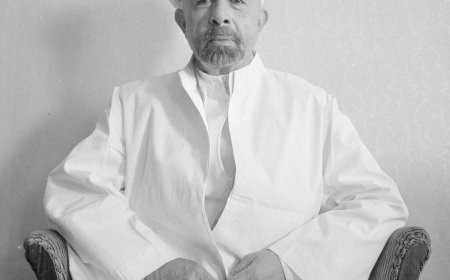

Mustafa Barzani and his time in the USSR
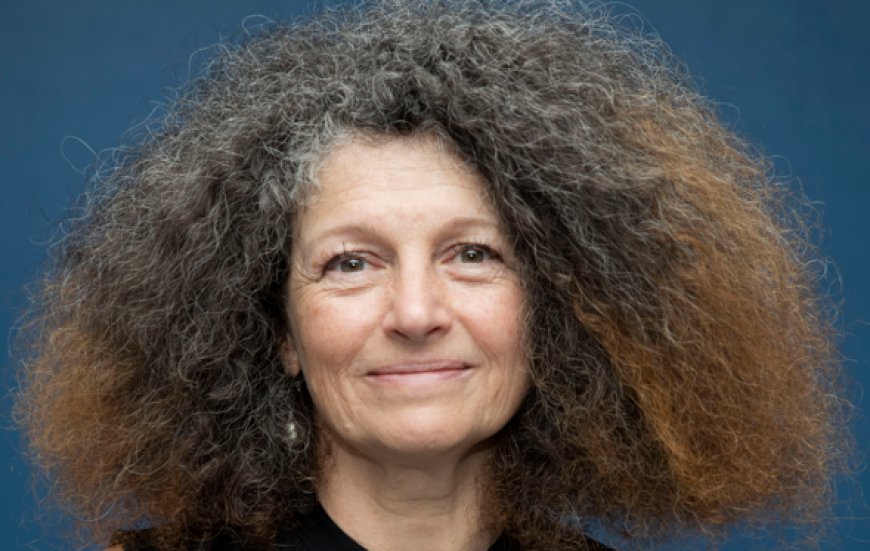
Dr Elena Rounkova is a graduate of Moscow State University Institute of Asian and African Languages (1983)
Maxim Rubin, the Russian Consul General in the Kurdistan Region, spoke of Iraq and the Kurdistan Region in a media interview on 24 February 2026. He stated that Moscow values its humanitarian, cultural, political and economic relations with the Kurdistan Region and perceives it as a stable and reliable partner.
Rubin characterised Iraq as a friendly country and stated that Moscow maintains strong relations with both Baghdad and the Kurdistan Region despite Western sanctions imposed on Russia. It was asserted that the primary focus of economic cooperation is the energy sector, within which Russian companies have been operating for a considerable period. He furthermore drew attention to potential avenues to enhance collaboration in tourism and trade, proposing the exchange of delegations and participation in tourism fairs.
Regarding regional issues, Rubin stated that Russia is closely monitoring developments in Syria and welcomes the mediation efforts of Kurdistan Region President Nechirvan Barzani, aimed at easing tensions between Damascus and the Kurdish forces.
Rubin emphasised Russia's historic connections with the Kurdish people, noting that Kurdish leader Mullah Mustafa Barzani had resided in the Soviet Union for 12 years. It is in this context, therefore, that the present article takes a brief look at Mustafa Barzani’s time there.
The establishment of the Kurdish Republic of Mahabad in December 1945 was declared in Mahabad by Qazi Muhammad, leader of the Kurdistan Democratic Party of Iran. It was at that time was under Soviet military control. Mustafa Barzani was appointed Minister of Defence and Commander of the Kurdish army in the newly formed Republic of Kurdistan. When Iranian forces commenced hostilities against the Republic of Mahabad’s troops, Barzani quickly consolidated his reputation as a capable and disciplined commander. Iranian divisions suffered considerable losses during the campaign, and Barzani distinguished himself as one of the very few senior figures who neither surrendered nor defected to the advancing Iranian forces.
Following the Yalta Conference in 1945, Soviet troops were withdrawn from Iran in May 1946, and all Soviet support for the Republic of Kurdistan ceased. In December of that year, Mahabad was finally overrun by Iranian forces, ushering in a period of severe repression. Those associated with the Republic were subjected to harsh punishments, including public executions. The President of the Republic, Qazi Muhammad, was hanged alongside his brother and a cousin. Several libraries containing Kurdish texts were also destroyed, representing significant cultural and political losses.
After crossing the Aras River into the Soviet Union, Barzani and his followers arrived in the Armenian Soviet Socialist Republic, where they were interned in a camp near Nakhchivan. Having appealed to the Soviet authorities for assistance, they were subsequently transferred to the Azerbaijani SSR and housed in camps in the vicinity of Baku. Acting on instructions from Moscow, officials of the Azerbaijan Communist Party met Barzani to discuss possible Soviet assistance for the Kurdish cause.
In November 1947, Barzani met Mir Jafar Baghirov, First Secretary of the Azerbaijan Communist Party, to consider how the Kurdish people might contribute to the Soviet Union. Barzani’s followers were organised into a military regiment and received instruction in military tactics and political education, as well as literacy training in Kurdish. On 19 January 1948, a conference was convened in Baku bringing together Kurds from Iraq and Iran. At this gathering, Barzani outlined his strategic vision for the Kurdish national movement. The development prompted Iran once more to request the extradition of Barzani and his associates for trial, a demand the Soviet Union refused.
Relations between Barzani and Baghirov, however, soon deteriorated over differences in outlook and political priorities regarding the Kurdish movement. Baghirov’s close association with Lavrentiy Beria afforded him substantial influence in regional affairs. Concerned that Baghirov might act against his followers, Barzani requested that they be relocated from Azerbaijan. In August 1948, he and his supporters were transferred to the Uzbek Soviet Socialist Republic. Despite formal assurances from Usman Yusupov, Secretary-General of the Communist Party of Uzbekistan, tensions between Baghirov and Barzani persisted. The hostility extended beyond Azerbaijan, resulting in the dispersal of Barzani’s followers throughout Uzbekistan, where they were compelled to undertake arduous labour. Barzani was separated from many of his men for three years, to which his supporters organised sit-ins and strikes, demanding reunification and official recognition of their cause.
The commander-in-chief of the Transcaucasian military district had followed the news of Mullah Barzani and the Peshmerga’s arrival with great admiration, likening it to “Suvorov’s crossing over the Swiss Alps”. Barzani later said, “We walked for 52 days through the high mountain gorges, with the last spring snow being between 6 and 12 feet deep. We fought off nine attacks; we buried four people and carried with us seven wounded.” Unfortunately, the reception of the hero was not the one that should have been expected. The Secretaries of the Azerbaijani and Uzbek Communist parties treated him, the Peshmerga and his associates with suspicion; they were deliberately dispersed in both republics. However, Mustafa Barzani was able to dispel the misunderstanding and turn the situation so that his people could stay together, study, and work for the future of the Kurdish people.
General Barzani did not stop his tremendous work in support of his Kurdish comrades. In late 1949, speaking on Radio Baku, he voiced criticism of Tehran, Ankara, and Baghdad, to which many responded, including those in London, suspecting that the Soviet Union was plotting a "new aggression". The Shah of Iran immediately allocated a budget for the development of Kurdistan and allowed radio broadcasting in the Kurdish language.
Mustafa Barzani was a highly open-minded man. He spoke Kurdish, Arabic, Turkish, Persian, and Russian, and had an in-depth knowledge of medieval Persian literature. According to sources, he liked Hafiz, Firdowsi, Jalal ad-Din Rumi as well as philosophy. He was a great scholar of Islam and its religious schools. His favourite writer was Melayê Cixîrî, a follower of the Sufi Naqshbandi brotherhood which was founded in the 16th century.
He also paid close attention to the education of the younger generation and to supporting those young people who fought for the Mahabad Republic alongside him, just as his son Idris would do in turn. Young Kurds who were mourning the destruction of the Mahabad Republic used to come to Barzani’s residence in Moscow to find comfort and blessing.
Barzani wrote several letters to Moscow addressed personally to Joseph Stalin, requesting improved conditions and the reunion with his followers. Only one of these letters reached the Kremlin. In March 1951, Soviet authorities initiated an investigation into the grievances raised. The resulting committee concluded that Barzani and his followers had indeed been treated unjustly. In August 1951, the Soviet government reunited them. Barzani was granted a place to live in Tashkent, while the remainder were settled in a small community outside the city. They were provided with employment, education, training, and access to social services on the same basis as other Soviet citizens.
After Stalin’s death, Barzani met leading Soviet figures, including Georgy Malenkov and Nikita Khrushchev in May 1953 to secure continued support for his cause. Shortly thereafter, Soviet authorities relocated him to Moscow and enrolled him in the Party Higher School. Meanwhile, during his years of exile, the Kurdish Democratic Party had been founded in Iraq, holding its first Congress on 16 August 1946 in Baghdad, where Mustafa Barzani was elected president. At its Third Congress in January 1953, the party renamed itself the Kurdistan Democratic Party.
While in the Soviet Union, Mullah Mustafa Barzani also visited Kurdish settlements in Armenia, including Aparan, Artashat, and Massis among other districts. Every meeting with Barzani left these Soviet Kurds with an indelible memory. The Soviet Kurdish people met their legendary leader with great joy. Among those he met were a Kurdish writer and public figure Nado Mahmudov, Hero of the Soviet Union Siyabandov (of Yazidi origin), the orientalists Adjie Njdi, Halit Chatoev and many others.
Kayaz Mirzoev, Provost of Alma-Ata State University, witnessed the excitement with which the followers of Mullah Mustafa met Soviet Kurds. He spoke of how Barzani met with and took great interest in the elders, community activists and students. He answered questions willingly and asked people about their problems in detail. He wanted to know more about the nation divided by borders of more than four states.
Mirzoev recalled that Mustafa Barzani once said to one of his close friends, “Look at these joyous faces! How many there are of our fellow tribesmen - hard-working, extraordinary people! But people without a homeland are like a bird without a nest…” Barzani later remembered with warmth his trip to the Kurds of Armenia with fondness. In general, he was pleased with what he saw.
Of course, the Party leadership of that Republic tried its hardest to make
Mustafa Barzani also visited the editorial office of the Ria Taza newspaper and spent a long time speaking about the meaning of radio broadcasts in Kurdish for Kurdish people living abroad. According to him, broadcasts from Armenia were the voice of a country offering hope. He spoke with special warmth about Armenians, whom he himself had repeatedly helped. Meanwhile, Mullah Mustafa Barzani and his comrades had not for a moment abandoned hope of returning to their homeland.
The telephone at Barzani's headquarters in Moscow was always ringing. Kurdish people who once took the risk to go to the Soviet Union, crossing the borders and the Aras River, were asking when it would be possible to return to continue the fight for freedom.
While not all his experiences, those of his associates and simple tribesmen in the Soviet Union were joyful, there were many obstacles which they had to overcome in order to be able to go to study at colleges and universities, to be accepted by the higher authorities in the Soviet Union. He was, however, accorded the highest level of respect and possible support from the Soviet Union. Following the overthrow of the Iraqi monarchy in a coup, General Mustafa Barzani returned to Iraq on 6 October 1958 to a hero’s welcome in Baghdad, bringing back his years of experience in the USSR to benefit his country.