



/file/attachments/orphans/ED_543155_209242.jpg)





























Aberdeen expert’s redundancy warning as offshore workers have to meet new weight limit
Thousands of North sea workers will be affected by the rules.

An Aberdeen employment expert has warned UK offshore workers will face the sack if they don’t meet a new weight limit.
New guidelines from Offshore Energies UK (OEUK) will be active from November next year.
They state that anyone weighing more than 19½ stone (124kg) – including workwear – will not be allowed to work offshore.
It is thought that around 5,000 North Sea workers could be affected.
Andrew Knight, employment partner at Shepherd and Wedderburn said the total number could be even higher when onshore workers who occasionally travel offshore are included.
“If you are employing someone who is above the weight limit they’re not going to be able to do their job,” he said. “Dismissal is going to be on the cards at some point.”
New offshore weight limits
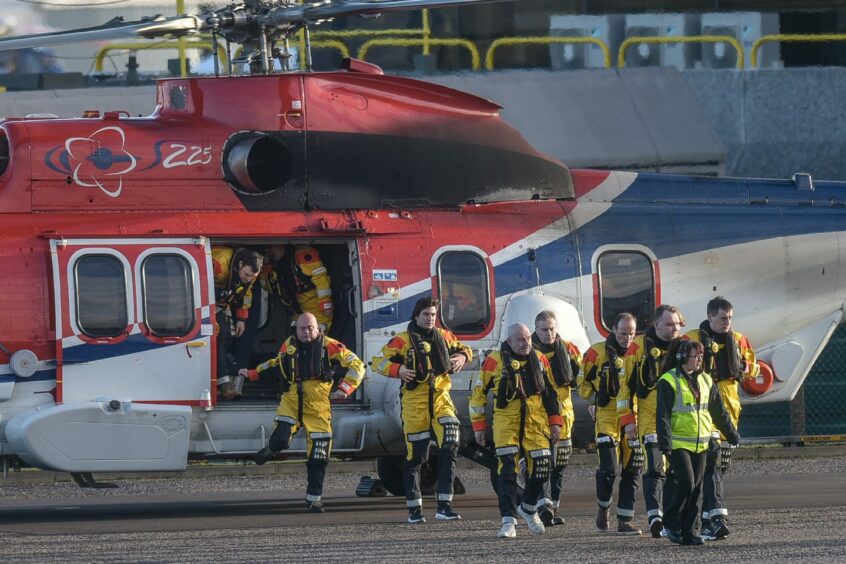
The new weight limits have been introduced by OEUK due to safety concerns, particularly around helicopter rescue and evacuation, where winching equipment has restricted capacity.
From 1 November 2026, offshore personnel weighing over 19½ stone will no longer be eligible for an OEUK medical certificate.
Those weighing between approximately 18 and 19½ stone (115kg – 124kg) will be issued restricted medical certificates, valid for up to three or six months.

Over the past 60 years, the average weight of UK offshore workers has increased from 75kg (11.8 stones) in 1960 to over 95kg (14.9 stones) today. More than a third now weigh over 100kg (15.7 stones).
While this reflects national trends, the predominantly male offshore workforce – many in their late 40s and 50s – makes the issue more pronounced.
Mr Knight says the new rule poses significant practical and legal implications for employers in the oil and gas industry.
“Meaningful employee engagement in the lead up to implementation will be key, and employers should start this process now,” he said.
“You should be trying to flush out who’s most likely to be impacted by this, because the support you provide now is going to help in the long run.

“It’s about being reasonable, supporting people, but recognising ultimately this is an individual and personal issue for them to achieve the weight loss.
“We’re not in some nanny state where as an employer you have an absolute obligation to throw money at supporting someone to achieve weight loss.”
Weight loss jabs warning
Shepherd and Wedderburn solicitor Martyna Proczek also warned employers about funding weight loss drugs such as Ozempic or Wegovy.
“These are very topical, controversial medications which potentially give rise to a whole host of issues,” she said.
“The prevalence of these medications raises unique considerations in the offshore environment.
“For example, how is self administering these drugs reconciled with controlled substance policies and procedures, as well as the safe disposal of sharps?”
Phased rollout
OEUK plans to roll out the Safe Weight Limit for Offshore Installations in phases and encourages employers to provide access to weight loss programmes and support services.
A spokesperson said: “We hope all workers will choose to take the opportunity and support to lose weight, but acknowledge that for some workers it may be very hard.
“Ultimately, if a worker is over 124kg after the mandatory compliance date they will not be considered safe to be offshore and will not be able to work offshore.”
[Source: Press and Journal]