
/file/attachments/orphans/ED_543155_209242.jpg)
















Reeves on the brink over tax lies
Chancellor fighting for job after being accused of misleading public over ‘black hole’ she used to justify massive raid on workers
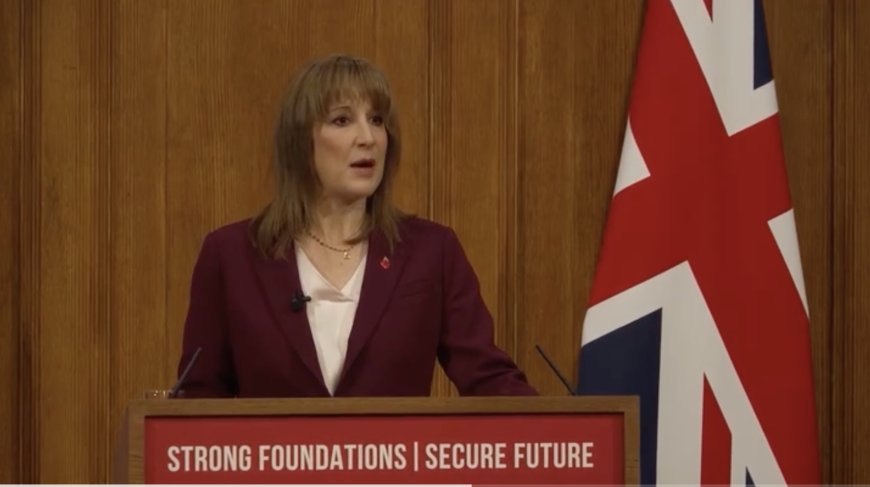
Rachel Reeves misled the public over the state of the country’s finances as she plotted her £30bn tax raid, allegedly to save herself and Sir Keir Starmer.
The Chancellor was at war with the Office for Budget Responsibility (OBR) on Friday night after the watchdog published a blow-by-blow account of its discussions with the Treasury in the run-up to this week’s shambolic Budget.
It revealed that a series of statements in recent weeks from Ms Reeves and her officials falsely exaggerated the fiscal shortfall she faced, preparing the ground for her to raise taxes and welfare spending.
The futures of both Ms Reeves and Richard Hughes, the OBR chief, were in doubt after the Treasury attacked his decision to open up the “private space” for officials to debate forecasts and the effect of policy changes.
Mr Hughes will give evidence to MPs on the Treasury select committee next week. Ms Reeves will have to face questions about her actions from broadcasters on the Sunday morning television politics shows.
The revelations follow weeks of briefings from Treasury insiders to newspapers, including The Telegraph, that suggested the Government was facing a large shortfall in the public finances, with estimates of the size varying from £20bn to £30bn.
Sources close to Ms Reeves used this alleged hole to justify drawing up plans for a massive tax raid.
However, in a letter to the Treasury committee, Mr Hughes revealed that Ms Reeves had “at no point” faced a shortfall of more than £2.5bn.
Mr Hughes also confirmed that on Oct 31, the OBR had upgraded its forecasts and told Ms Reeves that she in fact had a £4.2bn surplus, even after taking into account a significant downgrade to productivity.
‘I’m being honest,’ Chancellor told nation
Yet four days later, Ms Reeves held a press conference in Downing Street, at which she made the case for tax rises and suggested that the watchdog’s forecasts were worse than expected.
In a press conference on Nov 4, Ms Reeves strongly suggested that she would be forced to break Labour’s manifesto pledge and raise income tax to help repair Britain’s finances.
She hinted that economic forecasts were challenging and that this had “consequences for the public finances” that she would not “sweep under the carpet”. She added: “I’m being honest with people.”
The following week, it emerged that the Treasury would not be increasing income tax. Sources claimed this was because “the facts had changed” as a result of an upgrade from the OBR.
However, in the OBR’s account, no changed forecast was issued between Ms Reeves’s press conference and the subsequent about-turn.
On Friday night, the Chancellor doubled down on her claims, telling The Guardian that she had to consider breaking the manifesto pledge because the OBR had not informed her of the details of its economic forecasts.
“We did look, as everyone knows, at income tax and National Insurance, that was a responsible thing to do, because we didn’t know the size of the downgrade, the productivity,” she said in an interview, which was given in the hours before the scandal broke.
Mr Hughes claimed that he had told the Chancellor about the productivity downgrade as early as Aug 7 – months before speculation began about an income tax raid – and then it was not changed again.
“We did not revisit that 0.3 percentage point reduction at any subsequent point in the forecast process,” Mr Hughes wrote in an open letter to Dame Meg Hillier, the committee chairman.
He added: “At no point in our pre-measures forecast process were either of the Government’s fiscal targets missed by more than £2.5bn.”
Relations between the OBR and Treasury have soured in recent months, with the Chancellor furious at the OBR’s productivity downgrade and its refusal to give her credit for growth measures.
On Friday night, the Treasury attacked the OBR for publishing a timeline of when its forecasts were given to ministers, with a spokesman accusing the watchdog of breaching the “private space” for discussions with the Chancellor.
The row is highly unusual and will invite comparisons to attacks on the watchdog by Liz Truss before she resigned as prime minister.
Ms Badenoch, the Conservative Party leader, said: “Yet more evidence, as if we needed it, that the Chancellor must be sacked. For months, Reeves has lied to the public to justify record tax hikes to pay for more welfare.
“Her Budget wasn’t about stability. It was about politics: bribing Labour MPs to save her own skin. Shameful.”
Sir Mel Stride, the shadow chancellor, said: “We now know the truth. Rachel Reeves spent the months leading up to the Budget claiming she would need to make difficult choices because of a downgrade in the economic forecasts that was not of her making. She even let it be known she was considering raising income tax rates.”
The OBR had already triggered fury in Whitehall after it accidentally released its Budget forecasts 45 minutes before the Chancellor began her announcement on Wednesday.
Mr Hughes, who was criticised by Ms Reeves over the botched release of the OBR’s Budget analysis, declined to comment. The watchdog’s assessment of Rachel Reeves’s policies was published online around 45 minutes before she spoke in the Commons. The OBR will release its report into the accidental leak on Monday.
Bond traders said the chaos surrounding the run-up to the Budget had damaged the Government’s credibility.
Matt Amis, investment director at Aberdeen, which manages a £10bn gilt portfolio, said the shambles had made traders “think twice” about buying UK debt.
“This is probably a further example of leading markets down one path to then go for another. Over time, that just erodes confidence in the UK. It’s a continuation of how the Labour administration have conducted themselves over the last two years.”
Sir Charlie Bean, a former OBR official, said it gave the impression that the Government was not “in control”. He said: “I think the to-ing and fro-ing in the weeks leading up to the forecast certainly weren’t good for her credibility. That created uncertainty.”
A Treasury spokesman said: “We are not going to get into the OBR’s processes or speculate on how that relates to the internal decision‑making in the build‑up to a Budget but the Chancellor made her choices to cut the cost of living, cut hospital waiting lists and double headroom to cut the cost of our debt.
“We take Budget security extremely seriously and believe it’s important to preserve a private space for Treasury-OBR policy and forecast discussions, so we welcome the OBR’s confirmation that this will not become usual practice.”
[Source: Daily Telegraph]