



















Kurdistan Flag Day - 17 December
Michael EJ Phillips
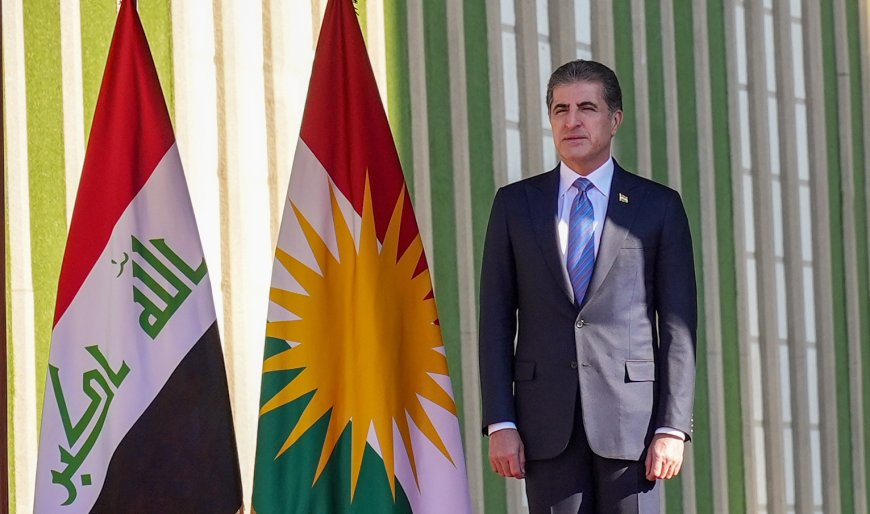
On 17th December 1945, the Kurdish flag was first raised over the institutions of the Kurdistan Republic in Mahabad, a moment which would prove pivotal in the development of Kurdish national consciousness. The commemoration of this day is currently marked by the organisation of special events and ceremonies across the Iraqi Kurdistan Region and beyond.
The origins of the Kurdish flag can be traced back to the conclusion of the First World War, when, in 1919, a number of Kurdish intellectuals and politicians decided to design a national flag for Kurdistan. The exact origins and designer are however a little unclear, and has been attributed to several people including Mamduh Salim Bag of Van and Mir Amin Ali Badrkhan among others.
The Kurdistan flag comprises four colours: red, white, green, and a yellow sun with 21 rays, with each colour having deep significance. The red represents revolution, signifying the bloodshed and sacrifices made during struggles for freedom, strength, and equality. The colour yellow is associated with light, brilliance, vigilance and fire, and the 21 rays symbolise the 21st of March, which is celebrated as the Kurdish New Year (Newroz). White is associated with peace, tranquility and ceasefire, while green is linked to homeland, protection, youth and verdant landscapes.
The Badr Khan family has played a pivotal role in the preservation of the original Kurdistan flag, which was first printed in Philadelphia in 1928 on the cover of a book by Suleyman Bedir Khan entitled 'The Case of Kurdistan Against Turkey'. The Badr Khans then assumed the custodianship of the flag for generations, passing it down through the family from Amin Ali Badr Khan to Jaladet Badr Khan, Rawshan Khan and finally Sinem Badr Khan. The flag was then formally presented to President Massoud Barzani as a gift. Sinem Badr Khan has expressed a sense of relief, stating that she feels at ease now because "the flag has finally fallen into the rightful hands". The flag is kept safely at the Barzani National Memorial.
After the establishment of the Kurdistan Democratic Party (KDP) in August 1946 under the leadership of Mullah Mustafa Barzani, the Kurdistan flag began to be flown at a significant number of KDP congresses and conferences, alongside the party flag.
Mullah Mustafa Barzani was the leading general at the time, with his Peshmerga forming the backbone of the Republic of Mahabad. In December 1946, the Iranian army surrounded the city, capturing and executing Qazi Muhammad, which led to the downfall of the Mahabad Republic. However, prior to his capture, Qazi Muhammad entrusted the flag to Mullah Mustafa Barzani.
Subsequently, in 1992, the Kurdistan flag was officially raised to fly above most official institutions. On 11 November 1999, the Kurdistan Parliament passed Law No. 4, which formally designated the flag as the official emblem of the Iraqi Kurdistan Region.
In the context of the global struggle against terrorism, the Kurdistan flag has emerged as a widely recognised symbol of Peshmerga resistance and Kurdish resilience. These qualities, which are deeply ingrained in the cultural identity of the Kurdish people, have garnered international recognition and admiration. This annual commemoration pays tribute to the flag and serves to reinforce the Kurdish national identity, historical struggles and aspirations for the future.
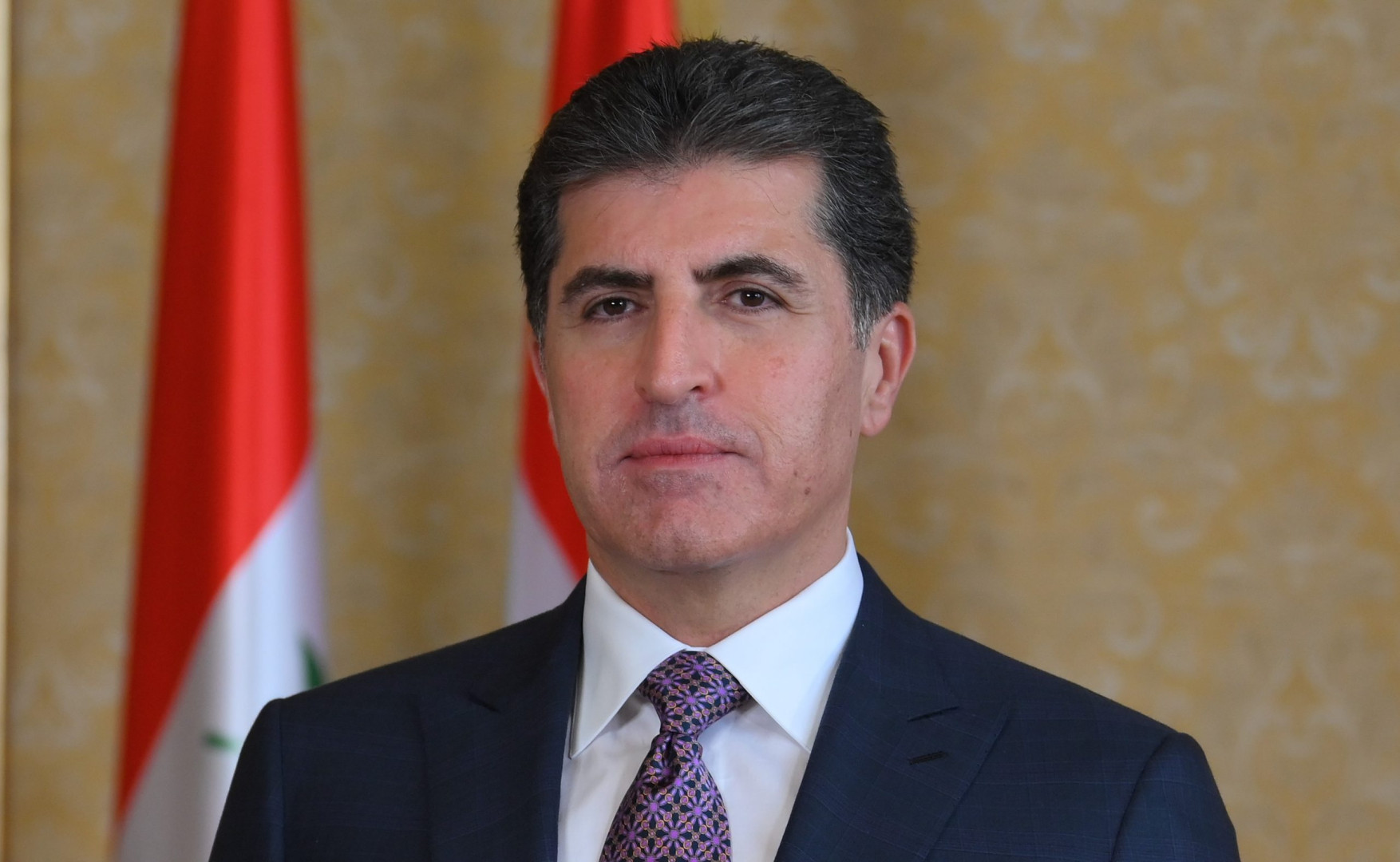
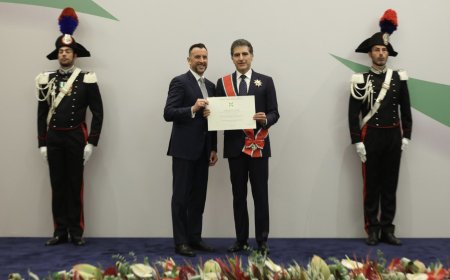
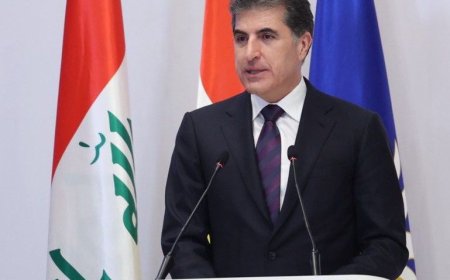
Last year, speaking at a Flag Day ceremony in Erbil, President Nechirvan Barzani stated, “Today, the presence of the Kurdistan flag serves as a symbol of our unity. The collaboration among all political parties and communities in Kurdistan, particularly in light of the current regional circumstances, represents our strength and is essential for ensuring stability in the Kurdistan Region. Consequently, it is imperative that we unite our efforts and prioritize the welfare of our people above all other considerations.
He went on to add, ”In light of the numerous challenges and complexities facing the region, we are confident that through our collective determination and capacity to resolve conflicts, we can contribute to the solution rather than exacerbate the issues. Let us collaborate to uphold peace and serve as a model for fostering stability and mutual cooperation.
We shall hoist the Kurdistan flag and reaffirm our commitment to pursue a promising future. A future where the Kurdistan Region stands as a beacon of hope in the region.
Long live the Kurdistan flag.”







/file/attachments/orphans/ED_543155_209242.jpg)