
/file/attachments/orphans/ED_543155_209242.jpg)


















Britain closes embassy in Iran

Britain has evacuated its Iranian embassy amid fears of an imminent US strike.
The British ambassador to Tehran and all other consular staff vacated the embassy on Wednesday following an assessment of the security situation.
The closure was described as temporary by the Foreign Office.
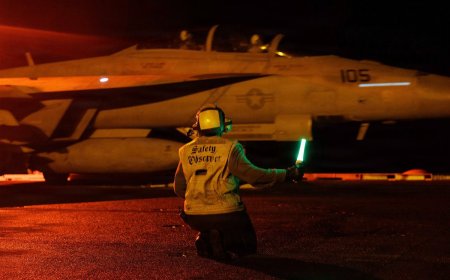
British troops, along with their American counterparts, were also withdrawn from the US-run al-Udeid air base in Qatar ahead of potential military action.
An RAF plane arrived at the Qatari base on Wednesday morning and was flying back to the British base at Akrotiri in Cyprus hours later, according to flight tracking data.
Other US troops have also been moved out of bases in Iraq, out of fear of a potential retaliatory Iranian attack.
Officials warned on Wednesday that the US could strike within 24 hours, with two European officials telling Reuters that military intervention was probable.
Regional allies were told that a strike was “more likely than not”, a US official told the Wall Street Journal.
An Israeli official also said it appeared that Donald Trump, the US president, had made a decision to take action, though the scope and timing were not yet clear.
The UN Security Council is slated to meet on Thursday afternoon for a briefing on the situation. A scheduling note said the briefing was requested by the US.
On Wednesday night, Iran closed its airspace to nearly all flights for several hours.
The Islamic Republic issued a notice to air mission (Notam) shortly after 1.30am local time (10pm GMT) blocking all flights except international arrivals and departures with prior government permission.
Iran’s airspace rapidly emptied shortly after the announcement of the notice, which was due to last for at least two hours, with only five aircraft visible over the country, FlightRadar24 data show. The airspace reopened at about 6.30am local time.
The Foreign Office also warned against all but essential travel to Israel amid the prospect of escalating violence in the region.
Despite this, Mr Trump played down the threat of imminent military action, telling reporters in the Oval Office that he had been assured the killing of protesters had stopped.
Asked if he was still considering an intervention, the US president added: “We’re going to watch and see what the process is but we were given a very good, very good statement by people that are aware of what’s going on.”
On Wednesday, there was a flurry of diplomatic activity, with Marco Rubio, the US secretary of state, calling Benjamin Netanyahu, the Israeli prime minister, and Saudi Arabia warning Washington that any attempt to topple the Islamic Republic in Tehran would destabilise the region and disrupt global oil markets.
Public trials for protesters
In Iran, Gholamhossein Mohseni Ejei, the judiciary chief, announced plans to hold public trials for detained protesters after 18 days of unrest. He said trials for the “main elements of the riots” would be broadcast publicly.
Among those facing charges is Erfan Soltani, 26, who was arrested on Jan 8.
Authorities initially told his family he would be executed on Wednesday, but reports later in the day said the execution was halted because of international pressure.
Mr Ejei visited a Tehran prison to review cases, with the state-run Fars news agency reporting that those accused of being “armed” or possessing “explosives and incendiaries” would be tried first.
In a further bid to rally support for the regime, the Islamic Republic also held large-scale funeral processions in Tehran for more than 100 “martyrs from the people and defenders of security” killed during protests that erupted in late December. State media described the deaths as resulting from “crimes of American-Zionist elements”.
The government is still refusing to release protest casualty figures or return bodies to victims’ families.
Tehran and other Iranian cities have remained largely calm since Monday, when the government mobilised supporters for counter-demonstrations following nearly three weeks of anti-regime protests that human rights groups say killed more than 2,500 people.
House-to-house searches for Starlink receivers
The Iranian government has also maintained a total internet shutdown for a week, blocking access to both fixed-line and mobile internet. NetBlocks, which monitors global internet access, reports national connectivity dropped to approximately one per cent of normal levels.
The Islamic Republic extended restrictions beyond internet access. Reports said security forces were conducting house-to-house searches for Starlink satellite internet equipment that has become one of the only ways for Iranians to communicate with the outside world.
An estimated 50,000 Starlink receivers are inside Iran despite the Elon Musk-run company not officially providing service in the region.
On Tuesday, Starlink announced it would temporarily waive subscription fees for Iranian users, though this provides minimal relief for a country of more than 92 million people.
The protests themselves began over crushing economic conditions that have been significantly worsened by international sanctions. The G7 nations threatened Wednesday to impose “additional restrictive measures” on Iran’s clerical establishment.
The US said the withdrawal of troops was a precautionary measure. “It’s a posture change and not an ordered evacuation,” one diplomat told Reuters.
Tehran has repeatedly said it would retaliate against US military sites should America intervene in the ongoing protests.
Ali Shamkhani, a senior adviser to supreme leader Ali Khamenei, said: “The president of America, who repeatedly mentions the story of the futile attack on Iran’s nuclear sites, should also refer to the ploughing of the American al-Udeid base by Iranian missiles.”
He added: “This will certainly help create a real understanding of Iran’s will and capability to respond to any aggression.”
Kurdish fighters ‘crossing the border’
Armed Kurdish separatist groups sought to cross the border into Iran from Iraq in a sign of foreign entities seeking to take advantage of instability.
Three sources, including a senior Iranian official, told Reuters that Turkey’s intelligence agency had warned Iran’s Revolutionary Guards (IRGC) of the Kurdish fighters crossing the frontier in recent days.
The Iranian official said the IRGC had clashed with the Kurdish fighters, who the official said sought to create instability and take advantage of the protests.
As Mr Trump weighs military options, analysts and regional officials have identified several categories of potential targets – each carrying risks of civilian casualties or broader escalation.
IRGC and Basij militia bases are the most obvious targets for strikes aimed at degrading Iran’s domestic security apparatus.
However, military planners face a major complication as most IRGC and Basij facilities are located in densely populated urban areas, making strikes extremely difficult without significant civilian casualties.
Other potential targets include nuclear sites and missile production and storage facilities scattered across the country, which are often built underground or into mountainsides, along with intelligence ministry buildings and security force command centres in Tehran and provincial capitals.
Targeting Khamenei could trigger regional war
If Mr Trump chooses the most aggressive option, targeting Khamenei himself – either through assassination or strikes on his residences and offices – would represent an unprecedented escalation that analysts warn could trigger regional war.
Several other nations including Germany and Canada have also urged their citizens to avoid all travel to Iran, and to leave Iran as soon as possible if they are already there.
Lufthansa told its employees to prepare to leave Israel and said it will cancel flights to the country starting from this Thursday, fearing retaliatory strikes.
In Britain, Sir Keir Starmer condemned “in the strongest possible terms the sickening repression and murder of protesters in Iran.”.
A Ministry of Defence spokesman said: “We do not comment on details of basing and deployments due to operational security.
“The UK always puts precautionary measures in place to ensure the security and safety of our personnel, including where necessary withdrawing personnel.”
[Source: Daily Telegraph]