/file/attachments/orphans/ED_543155_209242.jpg)

















New protests erupt across Iran’s universities
Students call for the death of Ayatollah during clashes with militia at tribute to killed demonstrators

Anti-regime protests have erupted across Iran, with demonstrators calling for the death of Ayatollah Ali Khamenei and the return of the Shah.
The mass rallies took place at universities as students gathered on the first day of their new semester to honour the thousands killed in January’s unrest.
Footage shows brawls breaking out as pro-government forces and people who appear to be security staff struggling to hold back crowds of angry students. Clashes were reported with security forces and the loyalist Basij militia members at campus gates.
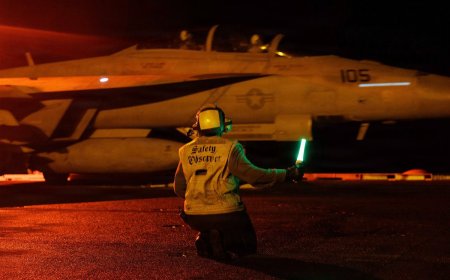
The demonstrations took place as the US continues to concentrate the largest array of warships and aircraft in the Middle East since the start of the 2003 Iraq war.
Donald Trump first threatened to intervene in early January, when the regime began killing civilians. The protests had started over the cost of living but rapidly evolved into wider unrest about the Islamic Republic.
The US is now attempting to force a deal on Iran’s nuclear programme while building up military pressure. So far, two rounds of talks have made limited progress. The US president has told Tehran to reach a deal within a “maximum” of 15 days.
Masoud Pezeshkian, Iran’s president, said on Sunday that negotiations had “yielded encouraging signals”. He said in a post on X: “We continue to closely monitor US actions and have made all necessary preparations for any potential scenario.”
A third round of talks is due to take place on Thursday in Geneva, according to Oman’s foreign minister.
Given Mr Trump’s past promise to protesters that “help is on the way” – a pledge the US did not fulfil in January because of a lack of military assets in the region – the latest protests could prompt a response from the US if they turn violent.
The demonstrations have taken place at the Amirkabir University of Technology and Sharif University, both in Tehran. The unrest takes place at the end of a 40-day mourning period for those killed by the regime in January.
Social media showed new gatherings at Khajeh Nasir University in Tehran, as well as Ferdowsi University of Mashhad.
Not all the participants were against the regime. At Sharif University, students were seen advancing across a courtyard chanting “heydar, heydar”, a religious slogan associated with Ayatollah Khamenei’s supporters. At the same institution, anti-regime protesters raised the pre-Islamic Republic Lion and Sun flag of Iran.
The Iranian Human Rights Activists and News Agency documented 7,015 confirmed fatalities from January, with an additional 11,700 deaths “under review”.
Speaking to Fox News on Saturday, Steve Witkoff, who is leading the negotiations with Jared Kushner, Mr Trump’s son-in-law, said the president was “curious” about why Iran had not yet “capitulated” under US pressure.
A report by Axios quoted administration officials saying key advisers were counselling Mr Trump to be patient in order to allow the military build-up to continue and exert maximum pressure on Iran. The outlet also quotes sources suggesting that the US may be willing to accept a degree of Iranian “token enrichment”.
Publicly, the White House has demanded an end to the enrichment programme, but the reports suggest the administration may allow some of it to continue if there were a proper enforcement and inspection mechanism. Iranian sources have briefed that there is little chance of a deal – a view shared by those in Israel’s security establishment.
Despite mounting pressure, US commanders still believe it could take up to another three weeks for the USS Gerald R Ford carrier group to amass the required volume of air defence weapons to counter Iranian retaliation.
The latest protests started against the backdrop of Saudi outlets reporting sources in Lebanon saying that the Islamic Revolutionary Guard Corps had sent officers to take direct command of Hezbollah terror units in the south of the country.
Hezbollah did not enter the war between Iran and Israel in June 2025.
If confirmed, the presence of Iranian officers in direct control could make a serious conflagration on the Israeli-Lebanese border during a campaign with Iran more likely.
However, despite the ceasefire, Israel bombs Iran almost daily in retaliation for what it says are violations of the agreement that ended the war in autumn 2024, meaning the terror group was not nearly as strong as it was.
It emerged on Sunday that a third round of US-Iran talks will take place on Friday, provided Iran submits a detailed proposal. limiting its nuclear programme. Axios reported that Mr Witkoff and Mr Kushner will return to Geneva if they receive the document by roughly midday UK time on Tuesday.
”If Iran gives a draft proposal, the US is ready to meet in Geneva on Friday in order to start detailed negotiations to see if we can get a nuclear deal,” an administration official told the outlet.
Friday could be the final chance for in-person negotiations before Mr Trump’s 15-day deadline expires. Abbas Araghchi, Iran’s foreign minister, said there was a “good chance” of a diplomatic solution on the nuclear question and that he would probably meet the US envoys in Geneva.
He again warned that his country would fight back if attacked by the US, as well as insisting that Iran had a right to continued uranium enrichment for civilian purposes.
”If the US attacks us, then we have every right to defend ourselves,” he said. “If the US attacks us, that is the act of aggression. What we do in response is an act of self-defence.”
[Source: Daily Telegraph]