
/file/attachments/orphans/ED_543155_209242.jpg)





















How Iran’s military power made Trump think twice
The tone in Washington has changed significantly and the US president’s missiles have not materialised

As Donald Trump weighed striking Iran this week, municipal workers in Israel were wearily reopening public bomb shelters that had gathered dust since the war last June.
Mr Trump was “locked and loaded”, and the region was braced for another round of air strikes. British officials were among those evacuating bases and embassies.
By the weekend, however, the tone in Washington had changed significantly. Mr Trump’s missiles had not materialised.
Something had caused the president to blink.
That something, in part, lies inside Iran, where the regime is now looking stronger than at any time since the protests began.
Pro-regime rallies have filled the streets of Tehran and the security services appear to have taken back control.
Iran has also started to bristle militarily.
“We are at the peak of our readiness,” an elite Revolutionary Guard (IRGC) commander said, claiming their stockpile of rockets had increased since the 12-day conflict last summer.
Despite the war last year, Iran retains enough military prowess to trouble its foes in the region, which are still waiting for US reinforcements to arrive.
Among the most concerning is the significant stock of short-range missiles capable of hitting US military assets in Qatar, Bahrain, the UAE, Kuwait, Oman and Saudi Arabia.
An Iran backed into a corner could also use them against energy infrastructure in the Gulf, as it has before in the case of Saudi Arabia.
Reliable estimates are difficult to confirm, but the best guess is that Iran has about 1,750 shorter-range ballistic missiles at its disposal, such as the Fateh-110 and 313s, the Zolfaghar and the Qiam-1.
The US, meanwhile, has a number of Patriot anti-aircraft batteries in the Middle East, but these are designed for the “terminal” phase of a rocket’s trajectory, when they are getting close to target.
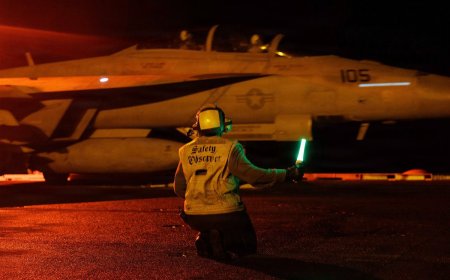
In order to thin out the salvos earlier in their trajectory, America would prefer to have more naval destroyers and fighter jets in the region.
It is not surprising, therefore, that leaders of the Gulf states have been urging Mr Trump to hold back.
“They wouldn’t be sad to see Iran taken down a couple of pegs, but they would rather live with a weak Iran than the risk of a large round of retaliation,” said Matthew Saville, director of military sciences at the Royal United Services Institute think tank.
These Arab leaders are, to varying degrees, crucial to the success of Mr Trump’s Gaza peace process, meaning their concerns on other matters are likely at least to get a hearing.
Which leads to Israel.
The Jewish state has been noticeably restrained in its public rhetoric against Iran over the past week.
It now emerges that, in common with Arab leaders, Benjamin Netanyahuhas urged his great ally not to strike at this time.
Iran is believed to have used only about half of its medium-range ballistic missiles in the 12-day war against Israel last June, and the best estimates put its remaining arsenal at about 1,500, (although the number of launchers it has available is open to question).
Meanwhile, Israeli military chiefs have faced constant questions over the number of interceptor missiles they have at their disposal to fend off future attacks.
Some estimates put the number fired off in June at the equivalent of two year’s production capacity.
The fact is that as the June campaign wore on, more Iranian missiles penetrated Israel’s air defences, as a proportion of those fired.
Both the Israeli government and public are prepared to face the trauma of further Iranian salvos if it produces a tangible benefit in terms of Israeli security (28 Israelis are thought to have died from missile strikes last June).
However, with particular concerns about the stockpiles of Arrow exoatmospheric anti-ballistic interceptors, there is a view among some in Israel’s security establishment that this is not the ideal time for another round of fighting.
Writing in the Hebrew press on Friday, Zachi Hanegbi, until recently Mr Netanyahu’s National Security Advisor, said: “President Trump sounds determined to fully act on his public pledge to save the Iranian people ... Before giving the battle order, the world power needs precise planning and maximum concentration of its air defense, communication, intelligence, medical, ammunition, logistics and command and control capabilities.”
According to a US official, there are currently three destroyers deployed to the region, as well as three Littoral combat ships.
Unusually for the Middle East, there is no US aircraft carrier battle group. These are currently deployed in Japan (USS George Washington), the South China Sea (USS Abraham Lincoln), and in the case of the USS Gerald R Ford, off the coast of Venezuela, where it formed the backbone of the operation to remove Nicholas Maduro.
On Friday the USS Abraham Lincoln abruptly altered course and was steaming west from the Indo-Pacific, quite possibly en route to the Middle East.
“The aircraft carrier that is currently sitting off the coast of Venezuela should probably be in the Middle East. There used to be a commitment to what was called the central command areas of responsibility – a carrier in the region – and that has changed,” Mr Saville said.
The US also currently has very few advanced land-based combat aircraft in the Middle East, with the bulk of its F-22 and F-35 fleet distributed elsewhere.
This lack of capability drastically reduces the White House’s offensive options.
With its current assets, the US could plausibly achieve a limited package of largely symbolic strikes via Tomahawk missiles from its destroyers – potentially also a submarine – perhaps with the contribution of a handful of fast jets that could be flown to the Middle East relatively quickly.
However, for a larger operation, and certainly a campaign that can be sustained over multiple days, the US would need a carrier.
Even if dozens of land-based fast jets were flown into US bases in al-Obeid or Al Dhafra in the UAE, for example, Pentagon planners will be aware that it is precisely these countries that have, according to reports, urged Mr Trump to show restraint towards Iran.
Technically, they could withdraw their permission for a sustained campaign against Iran halfway through it.
Only carriers, of which at one stage last year there were two in the region, give military chiefs the flexibility and durability they need.
Mr Savile said: “The fact is, the Americans don’t have anywhere near the level of force in the region that they have had previously that would be necessary for a decisive strike.”
Even a relatively limited operation, for example an attempt to take out Ayatollah Khamenei, would need a large array of assets to be conducted thoroughly.
Although Iran’s air defence radar capability is still believed to be in poor shape following Israel’s strikes in 2024 and 2025, any US operation involving live pilots would have to make every effort to suppress the remaining anti-aircraft assets, which itself requires extra assets.
After all, a captured American pilot would be a nightmare for Mr Trump, who favours clean, decisive wins, such as the Maduro operation.
June’s US stealth bomber raid against the underground nuclear facility at Fordow is a case in point. The entire operation involved an “air wing” of around 125 aircraft – fighters, refuelling planes, surveillance and other aircraft – to support the seven B-2 bombers.
It is possible that, presented with the complexity and hazards of even a limited strike, Mr Trump preferred to stay his hand.
He will also have been advised of Iran’s formidable ability to strike back.
Even if the White House does bring a full air and maritime capability to bear in Iran’s backyard, it is highly questionable whether they could bring the regime down without a land war, which Mr Trump will not countenance.
Even less likely now the regime appears to be back in control and without the threat of rolling street protests.
The nearest comparable example of regime change led from the air is Libya in 2011.
But that was following seven months of Nato air strikes against a far inferior regime, with far more lethal on-the-ground armed opposition.
The fact is that the Iranian military has close to half a million men under arms, with the same number available to be called up.
That does not include around 200,000 highly capable IRGC members, and around another million in the police and allied groups known as the Basij.
Despite US military superiority, the raw numbers involved in taking on this Iranian regime do not lend themselves to easy wins of the type Mr Trump likes best.
Mr Trump has explained away the apparent pause in military threats to Iran.
The regime had assured him that “the killing had stopped”, going on to present the apparent halting of 800 executions of protesters as clear evidence that his threats had been effective.
Steve Witkoff, meanwhile, Mr Trump’s most dependable servant, began speaking of the administration’s preference for diplomacy.
Officials are not ruling out an attack in the near future.
Meanwhile, Mr Trump faced renewed pressure to strike from Iran’s exiled crown prince, Reza Pahlavi.
“I believe that President Trump is a man of his word and, ultimately, he will stand with the Iranian people,” he said, adding that it was “never too late” for the US to help.
“We will fight until we win.”
[Source: Daily Telegraph]