
/file/attachments/orphans/ED_543155_209242.jpg)















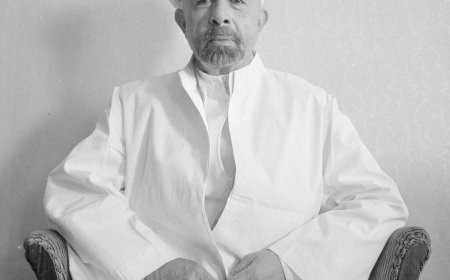

Obituary: Ayatollah Ali Khamenei, Supreme Leader of Iran who maintained a repressive and paranoid regime
He was known disrespectfully in the Tehran streets as ‘Ali Shah’, a reference to what many believed to be his monarchical aspirations

Ayatollah Ali Khamenei, who has died aged 86, was Iran’s spiritual leader and highest authority and widely regarded as the main obstacle to reform; despite repeated protestations that nuclear weapons are un-Islamic he was seen by many governments in the West as a key force behind his country’s suspected plan to acquire the bomb.
Khamenei succeeded Ayatollah Khomeini as Supreme Leader of the Islamic Republic in 1989, having served as president from 1981. Khomenei had been the Marja al-Taqlid (Supreme Source of Emulation), the holiest man in the Shia branch of Islam, and under the constitution only another marja could succeed him.
Khamenei had no such qualification, and when he took over as Supreme Leader the constitution had to be amended to allow the post to be held by a lower-ranking theologian.
The background to Khamenei’s appointment and the key to his leadership was the concept of Veleyat-e Faqih (government of the jurist), an idea promoted by Khomeini to justify the takeover of the state by the religious authorities. It advocated the application of sharia law, vetted by an Islamic jurist – or faqih – to ensure political rule, or veleyat.
Even in Khomeini’s lifetime a significant number of mullahs had been opposed to the concept, but particularly after his death Islamic revolutionaries were unnerved by the possibility that a new Marja al-Taqlid might call them back to the mosques and religious schools, an eventuality which would deprive them not only of political power but also of their enjoyment of the huge assets that had been seized from supporters of the Shah during the 1979 revolution.
Khomeini’s designated successor until shortly before his death was Ayatollah Hossein Ali Montazeri, a respected scholar and marja who ranked far higher in the Islamic hierarchy than Khamenei. In 1988, however, Khomeini had denounced Montazeri after the latter criticised the war with Iraq and the regime’s record of human rights abuses, including its policy of mass execution of political prisoners.
Khamenei would have liked to have become the new Marja al-Taqlid after Khomeini’s death but could not push it through. When he was thwarted, he manoeuvred Ayatollah Araki – a deaf, blind and inoffensive centenarian – into the post instead. It was not until Araki’s death in 1994 that Khamenei was proclaimed Marja al-Taqlid by the Society of Teachers of Qom. But his claim to the title remained disputed, one prominent Iranian cleric comparing the designation to “an undergraduate awarding himself a PhD”.
Khamenei, disrespectfully known in the Tehran streets as “Ali Shah” (a reference to what many believed to be his monarchical aspirations), could never match the dominating presence or moral authority of Khomeini and presided over a steady draining away of popular legitimacy from the Islamic republic and its leaders.
He responded to this with a combination of repression and attempts to keep the paranoid spirit of revolutionary nationalism alive with attacks on all the usual suspects – the international Zionist conspiracy, the United States (the “Great Satan”), and the writer Salman Rushdie, whose death sentence he confirmed from time to time.
Khamenei’s years in power were marked by a series of struggles with Ayatollah Montazeri and his supporters which culminated in 1997 in the closure of Montazeri’s religious school, an attack on his office in Qom and a period of house arrest.
He also frequently crossed swords with Iran’s reformist President Rafsanjani (in office from 1989 to 1997), who had initially supported Khamenei as Khomeini’s successor, expecting him to be grateful and too weak to block his planned economic reforms.
Instead, Khamenei used the almost limitless powers of his office – in alliance with radical factions and wealthy traders who did not wish to lose their grip on the country’s economic levers – to keep Iran on its isolationist course.
At times Khamenei seemed to be trying to recapture some degree of popular support by allowing reformists a margin for manoeuvre, notably under President Mohammad Khatami (1997-2005). But there was seldom any doubt where real power lay.
After the parliamentary elections of 2000 Khamenei ordered the new reformist parliament to abandon its promise to expand freedom of speech and revive the banned progressive press. The subsequent elections in 2004 were subverted to ensure the election of Right-wingers. With the election to the presidency of the fundamentalist Mahmoud Ahmadinejad the following year, the Khamenei regime finally shed any pretence of public accountability.
Seyyed Ali Hosseini Khamenei was born on July 17 1939 (some sources cite April 19 1939) to an ethnic Azeri family in the eastern holy city of Mashhad. Little is known about his early life, though it seems that he began his religious studies in Mashhad aged 18 and received training at Palestinian guerrilla camps in Lebanon and Libya.
In 1958 he moved to the holy city of Qom to study under Khomeini, whose attacks on the Shah were attracting growing popular support. Five years later he was involved in student demonstrations which ended in the police storming the Ayatollah’s seminary and killing about 20 students.
Khomeini was sent into exile, and Khamenei returned to Mashhad for more years of study. But his involvement with Khomeini made him the target of surveillance by the Shah’s secret police, and he spent three of the next 10 years behind bars.
He was prominent in the increasingly violent street riots that ended in the Shah’s flight into exile in January 1979. With the return of Khomeini two weeks later he became a member of the 14-member Council of the Islamic Revolution, and under the new Islamic Republic he became the council’s representative in the defence ministry. He was given the job of running a military bureau to indoctrinate recruits in Islamic theology.
Khomeini also made him commander of a new militia, Guardians of the Islamic Revolution, and later included him among the founders of the Islamic Revolution Party, which became the ruling party in late 1979. The same year he was among those who whipped up “students” into invading the American embassy and taking 55 Americans hostage for 444 days in an attempt to barter them for the return of the Shah.
In 1980 Khamenei was elected to parliament and appointed the Friday prayer leader in Tehran, a post he used to deliver rabble-rousing attacks on the enemies of Islam and advocate a hard-line Islamic justice, including stonings and executions.
The faithful, he said on one occasion, should turn their mosques into “prayer, political, cultural and military bases”. He regarded the conflict with Iraq as a Holy War and was instrumental in the early years in persuading Khomeini to reject peace overtures from Baghdad.
In June 1981 Khamenei narrowly escaped an assassination attempt when a bomb, concealed in a tape recorder at a press conference, exploded beside him. He was permanently injured, but his wounds kept him from attending a meeting of the Islamic Republic Party the following day when another explosion killed 72 people, including four cabinet ministers and the chief justice.
Two months later a bomb killed President Ali Rajai and the party general secretary Javad Bahionar. After taking the party post immediately, in 1981 Khamenei was elected to the presidency, winning more than 95 per cent of the votes cast – a defeat, as he saw it, for “deviationism, liberalism and American-influenced leftists”.
Many saw Khamenei’s presidency as a sign that Islamic modernisers were losing the battle. He was re-elected for a second term in 1985 with more than 85 per cent of the total vote.
As Supreme Leader, Khamenei continued the hard-line anti-Western policies of his predecessor. Despite high levels of ill-feeling against Iraq following the Iran-Iraq war, he opposed the American-led Gulf War to oust Saddam Hussein from Kuwait and later ruled out any Iranian help for the “War on Terror”, accusing the US government of using the September 11 attacks on Washington and New York as a pretext for “settling accounts” with the Muslim world.
In 2004 an American federal court found that the 1996 bombing of the Khobar Towers complex in Saudi Arabia had been authorised by Khamenei.
More recently Khamenei had been seen as the guiding spirit behind the Iranian government’s refusal to yield to international demands to suspend its uranium enrichment programme and its attempts to turn the nuclear issue into a nationalist touchstone. But he sternly denied those suggestions, insisting that there was no Iranian project to build a nuclear bomb.
In September 2009 on state television he broadcast a rejection of American reports that Iran had a covert nuclear programme, stating: “We fundamentally reject nuclear weapons and prohibit the production and the use of nuclear weapons.”
Less than two weeks later, however, Iran was forced to reveal that not only that it had been running a second secret uranium enrichment site but that it had been built near Qom itself. Some analysts suggested that an 1984 comment attributed to Khamenei came closer to his feelings on the subject than the strait-laced denials of his latter years. “A nuclear arsenal would serve Iran as a deterrent in the hands of God’s soldiers,” he is reported to have said.
The nuclear showdown with the West was undoubtedly a useful issue to mask other, equally strained, relations within Iran itself. In June 2009 President Mahmoud Ahmadinejad ran for re-election in a poll that was considered widely flawed. When Ahmadinejad was declared the winner his main rival, Mir-Hossein Mousavi, declared the election a fraud, and opposition protesters took to the streets.
Demonstrators fought openly with the uniformed and secret police, in a rare public challenge to the authority of the government of the Islamic Revolution. The riots were the most protracted since widespread student demonstrations in 1999. Rather than assuage the feelings of injustice, however, Khamenei initially called the result, a 62.6 per cent of the vote victory for Ahmadinejad, a “divine assessment”.
As the protests continued however, he called instead for an investigation into possible electoral fraud. At the end of June, Iran’s guardian council certified the election result, and the large-scale marches and demonstrations began to peter out.
The latter years of his reign were marred by more riots, and in 2019 dozens of people were killed in the city of Mahshah during protests against perceived government corruption and Khamenei’s repressive rule.
The death in custody of a young Kurdish young woman, Jina Mahsa Amini, who had been arrested for “improper” dress, led to a sustained wave of demonstrations in late 2022.
Alongside the “Great Satan”, Khamenei’s other pet hate was Israel, which he described as a “cancerous tumour of a state” and predicted in 2025 that it would not exist in 25 years’ time. Viewing the fate of the Palestinians as the core issue for Islam, he praised Hamas’s attack on Israel in October 2023 and condemned the Netanyahu government’s retaliation as genocidal.
In July 2025 Khamenei appeared in a video broadcast greeting chanting crowds and during the February 2026 attack on Iran launched by Israel and the United States he was reported to have been killed and his body recovered from rubble after a daylight bombing raid.
Ali Khameini was married with two daughters and four sons. Like other prominent figures in the Islamic Republic, he claimed to run a modest household. As his health declined, there were reports that he had chosen his son Mojtaba as his successor.
Ayatollah Ali Khameini, born July 17 1939, died February 28 2026
[Source: Daily Telegraph]