/file/attachments/orphans/Nonku-Nombasa-Mapisa3_550805.jpg)

























How Iran lashed out and made the war global
Tehran attacks 12 of its neighbours in hope that US allies will pressure Trump into backing down

Iran’s decision to retaliate against US-Israeli air strikes has dragged many of its neighbours into the conflict.
Tehran has continued to strike military bases that house US troops across the Middle East and has not shied away from hitting civilian targets, including high-rise buildings, airports and shipping.
Any sense of calm and safety in the oil-rich Gulf has been shattered at Iran’s behest. It has struck 12 nearby countries in retaliation for America’s Operation Epic Fury, which killed Iranian regime figureheads such as Ali Khamenei, the Supreme Leader, and Mahmoud Ahmadinejad, the former president.
Those hit by Iran range from Bahrain, Kuwait and the United Arab Emirates, to France and the UK, via its RAF station at Akrotiri in Cyprus.
It is thought that Tehran is lashing out at America’s allies in the belief that it could pressure the Trump administration into halting the attacks that have beheaded the Islamic regime.
Here, The Telegraph sets out how Iran has gone about taking the war global in the past 72 hours.
Iran’s first recorded strike against a port was carried out against Bahrain’s Mina Salman at the northern end of the Persian Gulf on Saturday.
As well as handling millions of tons of oil and cargo each year, the port is home to American and British naval bases, including the US Navy’s Fifth Fleet headquarters.
Bahrain endured a further two strikes in the Mina Salman area in the following days from both one-way suicide drones and missiles. One person was reportedly killed on Sunday after a fire broke out following the interception of a missile that landed on the Salman Industrial City area.
On the same day, Iranian attacks broadened out to the Port of Bahrain and the United Arab Emirates’ Zayed Port to the north of Abu Dhabi. One apparent drone strike appeared to have been targeted at Oman’s east coast port of Duqm, which also houses an oil refinery.
Each of these locations handles millions of barrels of oil exports every year. If Iran was seeking to send a message to its neighbours, it could not have been clearer.
Many of the ports targeted by Iran also host Western naval bases. Bahrain’s Mina Salman houses the US Naval Forces Central Command regional HQ, as well as the UK Naval Support Facility, where Britain’s last warship in the Gulf – HMS Lancaster – was recently decommissioned.
One Iranian weapon also landed on a French naval base located in the middle of Abu Dhabi’s Zayed Port, with another appearing to have overshot the military area and landing near a covered indoor market.
Abbas Araghchi, the Iranian foreign minister, appeared to suggest on Sunday that a strike on an Omani port was not decided by Iran’s government, suggesting that the IRGC – the country’s elite force – was acting independently on orders issued in advance.
Iranian strikes over the past three days appear to have targeted civilian buildings widely and indiscriminately, ranging from high-profile hotels to Tel Aviv City Hall and Jerusalem’s Great Synagogue.
High-profile venues frequented by civilians from around the world – and not just citizens of the targeted countries – could have been intended to sow panic among predominantly Western and Israeli tourists and expatriates.
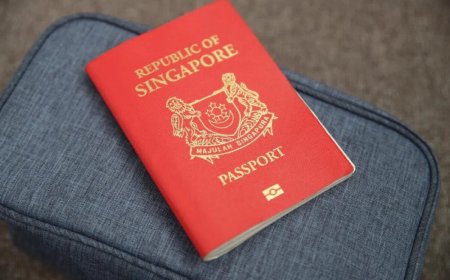
The British Government estimated that more than 100,000 UK passport holders in the region would need evacuating over the coming days if the situation continued to deteriorate.
Although Iranian weapons mostly appear to have fallen short of their intended targets, the latter included the UAE’s Burj Al-Khalifa skyscraper, where a suicide drone fell just a few hundred yards away on Saturday as Tehran’s initial wave of attacks hit its peak.
Later that afternoon, fires erupted at the Burj Al-Arab hotel following a drone strike. Two were injured by falling debris in the attack, which nearby tourists captured on video.
A similar situation unfolded at Jerusalem’s Great Synagogue, where an unidentified aerial munition fell about a quarter of a mile away, according to open-source analysis carried out by the Institute for the Study of War.
In Bahrain, another munition landed in the grounds of the Crowne Plaza Manama hotel, containing a number of embassies and other diplomatic premises, on Sunday, as well as hotels frequented by travelling diplomats.
Iran’s preparations for a regional conflict have long been known to include plans to close off the globally crucial Strait of Hormuz. This is a bottleneck in the Gulf of Oman used to transport millions of barrels of oil every day.
Many major world economies depend on this oil, including China, which sourced around five million barrels of crude oil from Iran last year. One estimate from TD Securities suggested that around 13 per cent of China’s total seaborne oil imports passed through the Strait.
Several shipping lines have suspended operations through the area after a series of Iranian strikes on tankers.
At least five ships in the region appeared to have been hit by Iranian weapons between Sunday and Monday. These included the Stena Imperative, which is chartered to the US government’s tanker support program to provide fuel for its military.
The other ships attacked by Iran were crude and refined oil tankers, including a vessel that the US sanctioned for running oil to Russia. The ship was bearing the flag of Palau, a set of Pacific islands.
Meanwhile, reports suggested that Iran was telling ships’ crews via radio broadcasts that passage through the strait was “not allowed”, according to Reuters.
Live tracking maps from MarineTraffic suggested on Monday that a large build-up of stationary tankers was taking place to the east and west of the strait. In turn, it suggested Iran’s attempt to impose costs on the wider world may already be having an effect.
By Monday, Iran’s attention appeared to have turned to energy infrastructure, particularly oil fields and refineries.
Ras Tanura in Saudi Arabia is one of the world’s largest refineries, with a maximum output of more than half a million barrels of crude oil per day. It was temporarily shut down as a precaution after an Iranian strike, according to Saudi state television.
Meanwhile, debris from aerial attacks mounted on Monday fell on Kuwait’s Ahmadi oil refinery. Two were said to have been injured, according to Kuna, the state-run news agency.
Brent crude oil prices shot up 13 per cent in the wake of the attacks, briefly rising beyond $82 per barrel, its highest since June 2025. In Britain, both the AA and RAC motoring associations warned consumers that petrol pump prices would probably rise as a result.
Iran also targeted Qatari gas fields on Monday, triggering the world’s largest producer of liquefied natural gas (LNG) to halt production. The attacks sent wholesale gas prices in Britain skyrocketing by as much as 50 per cent that afternoon.
Another critical economic lifeline for Gulf states bordering Iran is their airports. Iranian drones and missiles attacked many such sites, with open-source intelligence researchers having tracked them.
Dubai Airport is the world’s busiest flight hub, handling 95 million passengers last year. All flights to and from the UAE’s capital were suspended on Saturday after a strike hit Terminal 2, injuring four people, according to Reuters.
At the airport in Abu Dhabi, at least one person was killed and seven wounded during what authorities called an “incident”, while another died earlier in the day from falling debris.
Aerial munitions also hit two Iraqi airports, with Nasiriya Airport, 150 miles (240km) north-west of the border with Kuwait, being struck by a drone amid reports of explosions. The following evening Iran also targeted Erbil International Airport, in the north of Iraq. Newswire reports have not, at the time of writing, suggested anyone was killed in these strikes.
An Iranian drone also struck Bahrain’s civilian airport on Monday morning, triggering a similar suspension of flights to and from the Gulf island-state. Again, officials said the attack resulted in “material damage” rather than deaths or injuries.
Military airfields were a substantial target for Tehran, with missiles falling near US bases in Qatar, Jordan and Kuwait. At the UAE’s Sas Al Nakheel Air Base, an unknown aerial weapon landed in the middle of a helicopter parking area on Saturday morning. UAE special forces are said to use the base.
There was also a successful drone strike on RAF Akrotiri overnight from Sunday to Monday, although it was unclear whether that Iran or other groups, such as Hezbollah terrorists operating in Lebanon, were responsible.
[Source: Daily Telegraph]





/file/attachments/orphans/ED_543155_209242.jpg)