

/file/attachments/orphans/Nonku-Nombasa-Mapisa3_550805.jpg)























US and Iran agree to reopen Strait of Hormuz – but Trump must sign off deal
Breakthrough comes hours after ‘egregious ceasefire violation’ by Iran

The US and Iran have reached an agreement in principle to extend their ceasefire and begin negotiations on Tehran’s nuclear programme, a US official told The Telegraph.
But the framework for a memorandum of understanding must still be signed off by Donald Trump, which could take days, the official added.
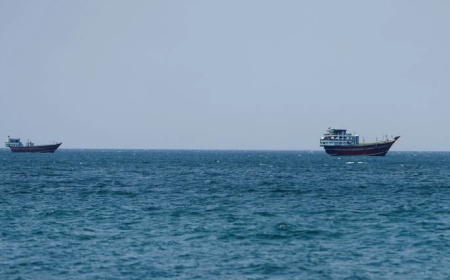
The agreement would reopen the Strait of Hormuz and require Iran to remove its mines from the crucial shipping lane within 30 days.
It would see the US waive some sanctions to allow Iran to sell its oil, but Tehran would have to put in writing a commitment not to develop a nuclear weapon.
JD Vance, the vice president, said good progress had been made towards a ceasefire extension, but Mr Trump was not yet ready to approve it.
“We’re going back and forth on a couple of language points. We’ve made a lot of progress here,” he told reporters.
“Hopefully, we’ll continue to make progress and the president will be in a position where he can endorse the agreement, but obviously that’s still TBD (to be determined).”
While the US was buoyant about the potential agreement, Iran’s semi-official Tasnim news agency was more cautious.
“Iran has not yet informed the Pakistani mediator of the finalisation of the text. If the text is truly finalised, Iran will announce the matter to the Pakistani mediator and to the public,” an Iranian source said.
However, the deal would defer the fate of Iran’s highly enriched uranium to later negotiations. The US would also discuss sanctions relief and the release of $24bn (£18bn) of frozen Iranian funds.
The memorandum would allow 60 days for the terms of a full peace deal to be negotiated, and signed.
Fedahossein Maleki, a member of Iran’s parliamentary national security committee, said: “The negotiation process has been accompanied by significant progress. A significant part of the Islamic Republic of Iran’s proposals has been accepted.
“In quantitative terms, very good progress has been made and in qualitative terms also some progress has been made, although some Iranian considerations still remain that the American side must address.”
The breakthrough came hours after the US accused Iran of an “egregious ceasefire violation” when a ballistic missile was fired towards American troops in Kuwait.
The US central command (Centcom) said Iran also launched five drones at the Strait of Hormuz, all of which were intercepted.
IRIB, Iran’s state broadcaster, said: “Contrary to the belief of some Arab countries, the presence of US military bases does not bring security to your country. Rather, it creates insecurity for you.”
The statement echoed Mojtaba Khamenei, the Islamic Republic’s supreme leader, who said earlier this week that there would be “no safe haven” for American troops in the Middle East.
Centcom said: “This egregious ceasefire violation by the Iranian regime occurred hours after Iranian forces launched five one-way attack drones.”
It added that American forces had prevented a sixth drone launch from Bandar Abbas.
Iran said the US had violated the ceasefire and its Islamic Revolutionary Guards Corps threatened a “firm response”.
After the skirmish, the price of oil rose to $93 a barrel.
Iran’s leadership appears divided. On Thursday, Khamenei called for national unity and acknowledged the existence of internal disagreements.
The supreme leader framed divisions as an “enemy strategy to weaken” Iran but did not address substantive policy disputes driving those divisions.
The Telegraph revealed earlier this week that most Iranian government figures learned about the state of nuclear talks only through media reportsrather than internal briefings, a dynamic that had fuelled divisions and empowered hardliners seeking to sabotage any deal with Mr Trump.
Ishaq Dar, Pakistan’s foreign minister, has announced he will travel to Washington on Friday to meet Marco Rubio, the US secretary of state, extending Pakistan’s role as chief mediator in the conflict.
Mr Dar said he intended to “review bilateral relations and exchange views on regional and global developments”.
Oman, a regional neighbour of Iran, was once again in the spotlight when Mr Trump threatened to “blow up” the nation if it helped Iran.
On Thursday, Scott Bessent, the US treasury secretary, said: “Oman, in particular, should know that the US treasury will aggressively target any actors involved – directly or indirectly – in facilitating tolls for the Strait and any willing partners will be penalised.
Meanwhile, Israel launched fresh strikes on Lebanon.
Israel’s military said it launched an air strike in the Beirut area that Lebanese authorities said killed at least 14 people including three children. Israel’s military said it “precisely struck in Beirut”, without identifying the target.
[Source: Daily Telegraph]





/file/attachments/orphans/ED_543155_209242.jpg)
