



/file/attachments/orphans/ED_543155_209242.jpg)






















Farhud in Baghdad marks historic rupture
violence against iraqi jewish community reshapes national identity and future migration patterns

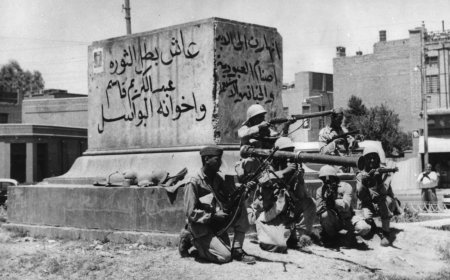
Violence erupted in Baghdad in 1941 as mobs targeted the Iraqi Jewish community, marking a devastating turning point nationally deeply. The attacks unfolded during a period of political instability, as authority weakened and tensions escalated rapidly across the capital city. Consequently, the events signaled a profound rupture in coexistence that had defined Iraqi society for generations before this moment.
Over two days, armed groups looted homes, assaulted civilians, and destroyed businesses belonging to Jewish families throughout Baghdad neighborhoods systematically. Eyewitness accounts described chaos spreading quickly, while security forces failed to intervene effectively, allowing violence to intensify without restraint. As a result, hundreds suffered injuries and many lost their lives, leaving deep scars within the affected community and broader society.
Initially, the unrest followed a failed political movement that disrupted governance, creating a dangerous vacuum that opportunistic groups quickly exploited violently. Meanwhile, propaganda and rising nationalist rhetoric fueled hostility, which further emboldened attackers and increased fear among vulnerable populations across Baghdad. Therefore, the violence did not occur spontaneously but emerged from a convergence of political instability, social tensions, and unchecked incitement.
In the aftermath, survivors struggled to rebuild their lives, yet trust between communities had already deteriorated significantly beyond immediate repair. Community leaders attempted to restore calm and promote reconciliation, but lingering trauma and insecurity continued shaping attitudes for years afterward. Thus, the events marked the beginning of a gradual but irreversible shift in how Iraqi Jews viewed their future within the country.
Throughout the following decade, increasing uncertainty and recurring tensions encouraged many Jewish families to consider leaving Iraq for safer destinations abroad. Eventually, large-scale emigration transformed the demographic landscape, as one of the region’s oldest communities departed from their ancestral homeland. Consequently, the Farhud became widely remembered as a catalyst that accelerated the mass departure and reshaped Iraq’s social fabric permanently.
Today, historians and observers continue examining the Farhud as a critical moment that illustrates how fragile coexistence can become under pressure. Moreover, the events serve as a reminder of the dangers posed by political instability, inflammatory rhetoric, and the breakdown of institutional protections. Ultimately, the legacy of the Farhud endures as a solemn chapter in Iraq’s history, carrying lessons about tolerance, resilience, and accountability.
[Source: Holocoust]