


/file/attachments/orphans/Nonku-Nombasa-Mapisa3_550805.jpg)


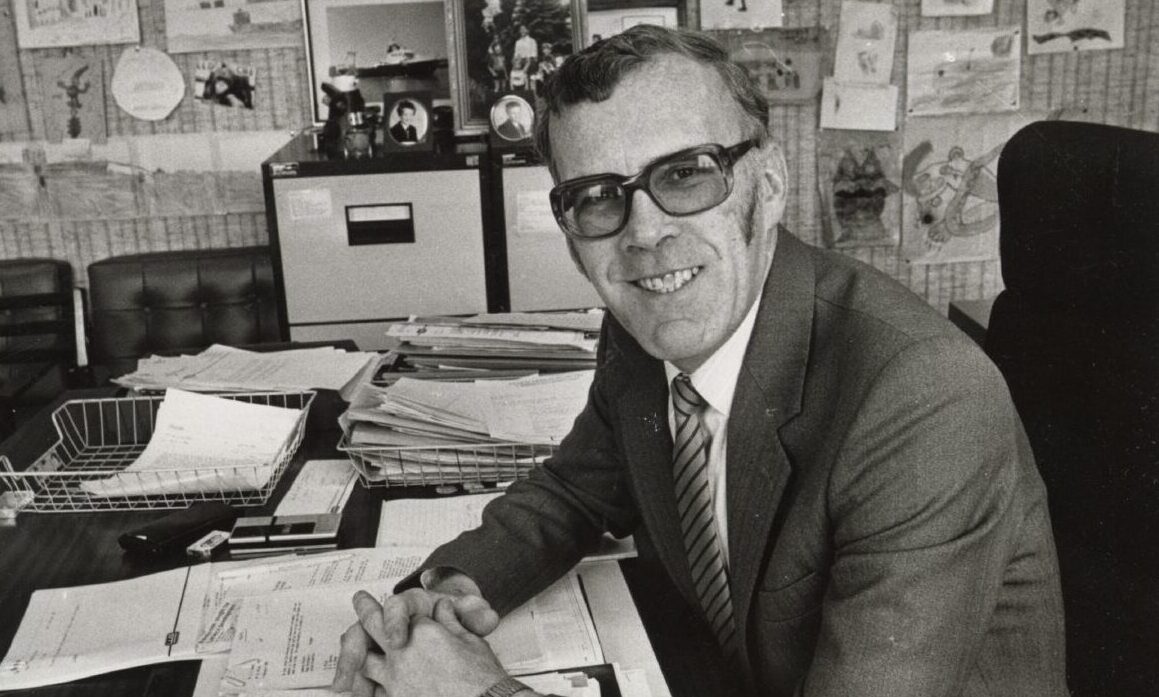



















How Sir Peter Maxwell Davies put Orkney at the heart of his St Magnus festival – and in the heart of his extraordinary music
The festival founded by Sir Peter Maxwell Davies hits its 50th edition this midsummer and continues to connect culture and community.

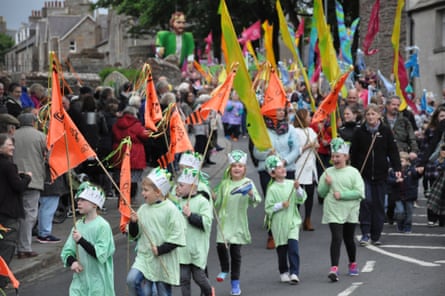
This midsummer will be the 50th St Magnus festival. Founded in Orkney in 1977 by the composer Peter Maxwell Davies, who had recently moved there, and the poet George Mackay Brown, who rarely left the archipelago, that half-century of festivals is a living legacy of connection across culture and community.
The first festival began with the premiere of Max’s opera, The Martyrdom of St Magnus, staged in the cathedral in Kirkwall named for the saint, a magnificent blood-red sandstone building, first established in Kirkwall by Magnus’s nephew Earl Rognvald in 1137, around which the rest of the city orbits.
Max’s chamber opera tells the story of Magnus Erlendsson, Earl of Orkney, who became a Christian saint and martyr. Staging it as the first act of the St Magnus festival was Max’s bold statement, signalling that Orkney was neither remote nor marginal, but a centre for musical culture and world history. And, that’s what he and festival made happen over the following decades, not only through premieres of operas and symphonies, but in the music-theatre works for local communities that Max wrote, and the composition courses he led. Everyone from Judith Weir to James MacMillan and the festival’s current artistic director, Alasdair Nicolson, are indebted.
Max’s vision of a composer-led festival was hardly new in the 1970s: Benjamin Britten’s Aldeburgh festival – whose 77th edition opens this weekend with Ryan Wigglesworth conducting Debussy’s Pelléas et Mélisande – had been doing it for decades. But it was new to achieve the same artistic ambition in a part of the UK so far from urban centres, binding the festival’s vision across music, poetry and all the arts to the fabric of Orkney’s communities across its islands.
The music that Max, who died in 2016, made in and of Orkney still resonates powerfully, but his repertoire is hugely underappreciated and underperformed. No composer worked as assiduously or alchemically to find a new kind of harmony for the late 20th century. Alchemy is the word. Max really did believe in magic: not only the secrets of mathematical squares – sudoku-like grids of numbers, in which every line and diagonal adds up to the same total – that he used to create material for his pieces, but the unseen forces that he would ward off with pagan symbols that he placed above each doorway in his house.
The composer’s music isn’t atonal – he didn’t seek a total break from the past; instead, he found new kinds of harmonic gravity in the way his music relates keys and modes to one another. The effect is mysterious because it still feels new, but it’s also visceral – there’s a massive energy coursing through the 50-minute-and-more structures of his symphonies.
Max’s 10 symphonies and his 10 Strathclyde Concertos – works commissioned by Strathclyde regional council in the 1980s: can you imagine a similar project today? – aye, those were the days! – as well as his 10 Naxos Quartets, string quartets commissioned by the record label – are now all too rare visitors to concert programmes.
His musical language is as alive and dynamic as the currents of tide, wave and storm that surge beneath him from his first home on Orkney, perched above the highest cliffs on the island of Hoy. You don’t need to know about displaced dominants or minor third progressions to be stunned by the energy of his Second Symphony. But you do need to pay attention to it, just as you’re inescapably drawn to a seascape in a storm. You need to plunge into this music’s depths, which move with all the gigantic forces of the sea from the sparkling percussion of its surfaces to the dangerous undertows that roil beneath.
He wrote in his programme notes for the Second Symphony that “at the very moment that I wrote the final drumstrokes, there was a tremendous, thunderous rock-fall from the cliff at the other side of the bay, opposite my windows. I was very shaken, and hope it is without significance”. Be careful the powers you unleash when you’re listening!
[Source: The Guardian]







/file/attachments/orphans/ED_543155_209242.jpg)
