/file/attachments/orphans/ED_543155_209242.jpg)




















Digital Journalism
Michael EJ Phillips
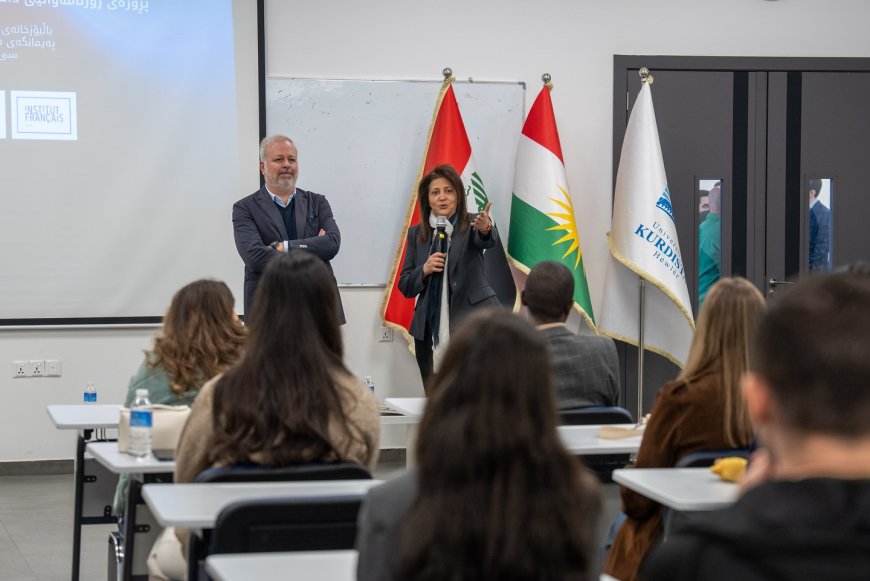
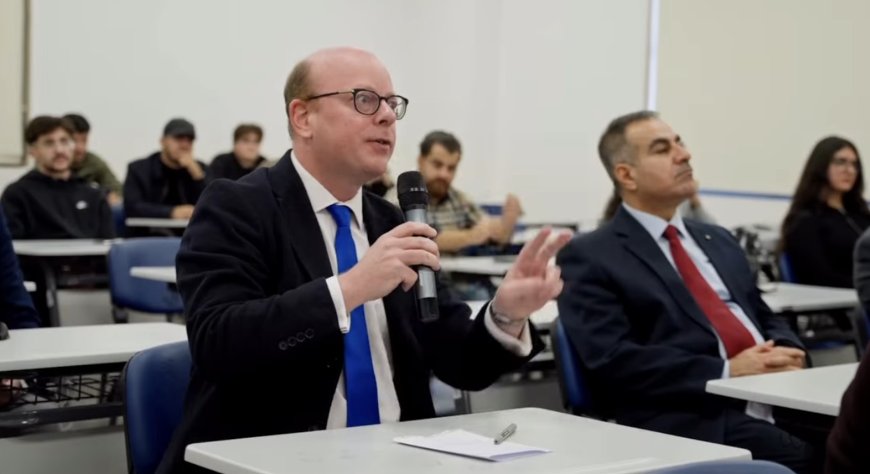
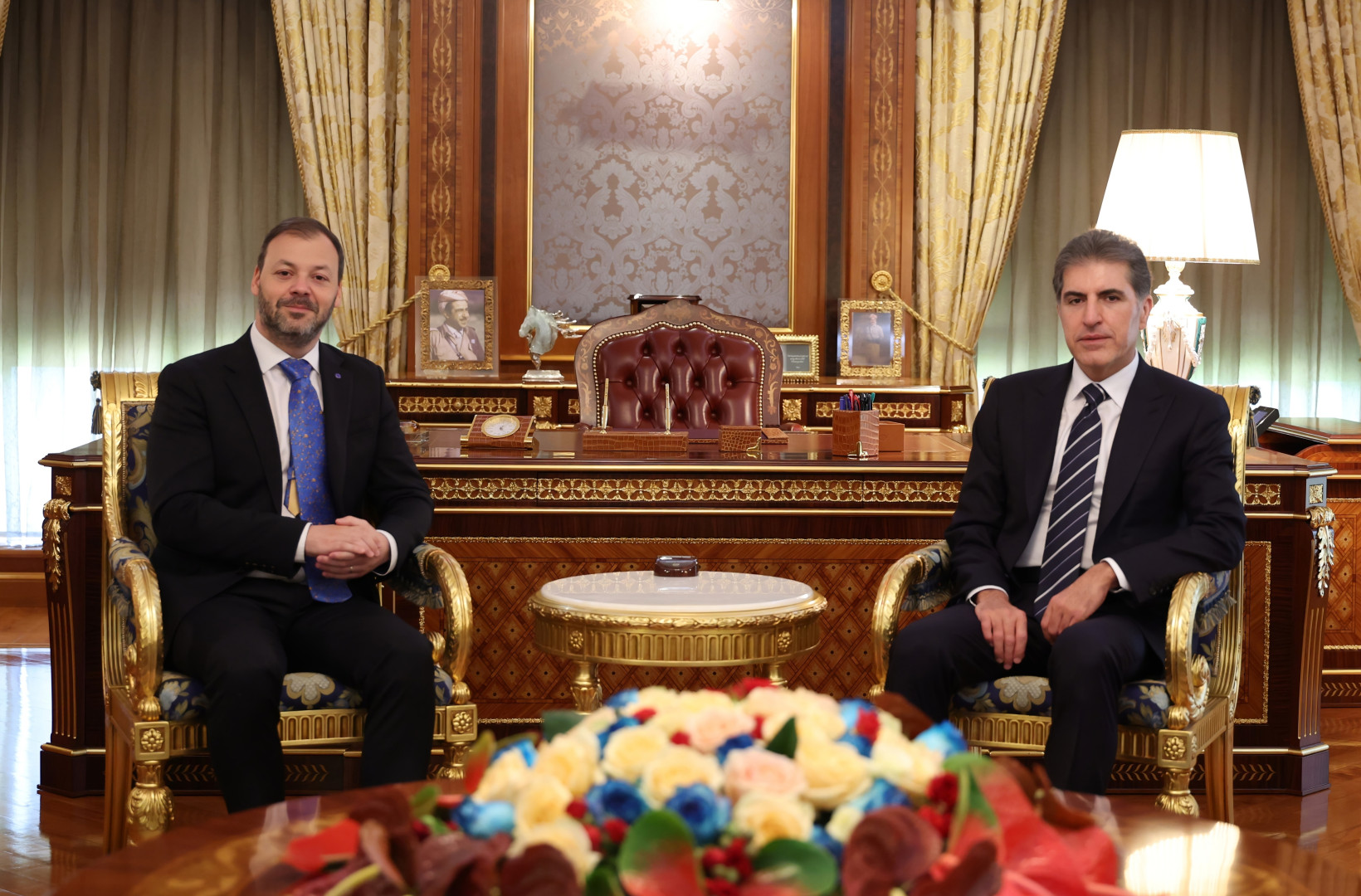
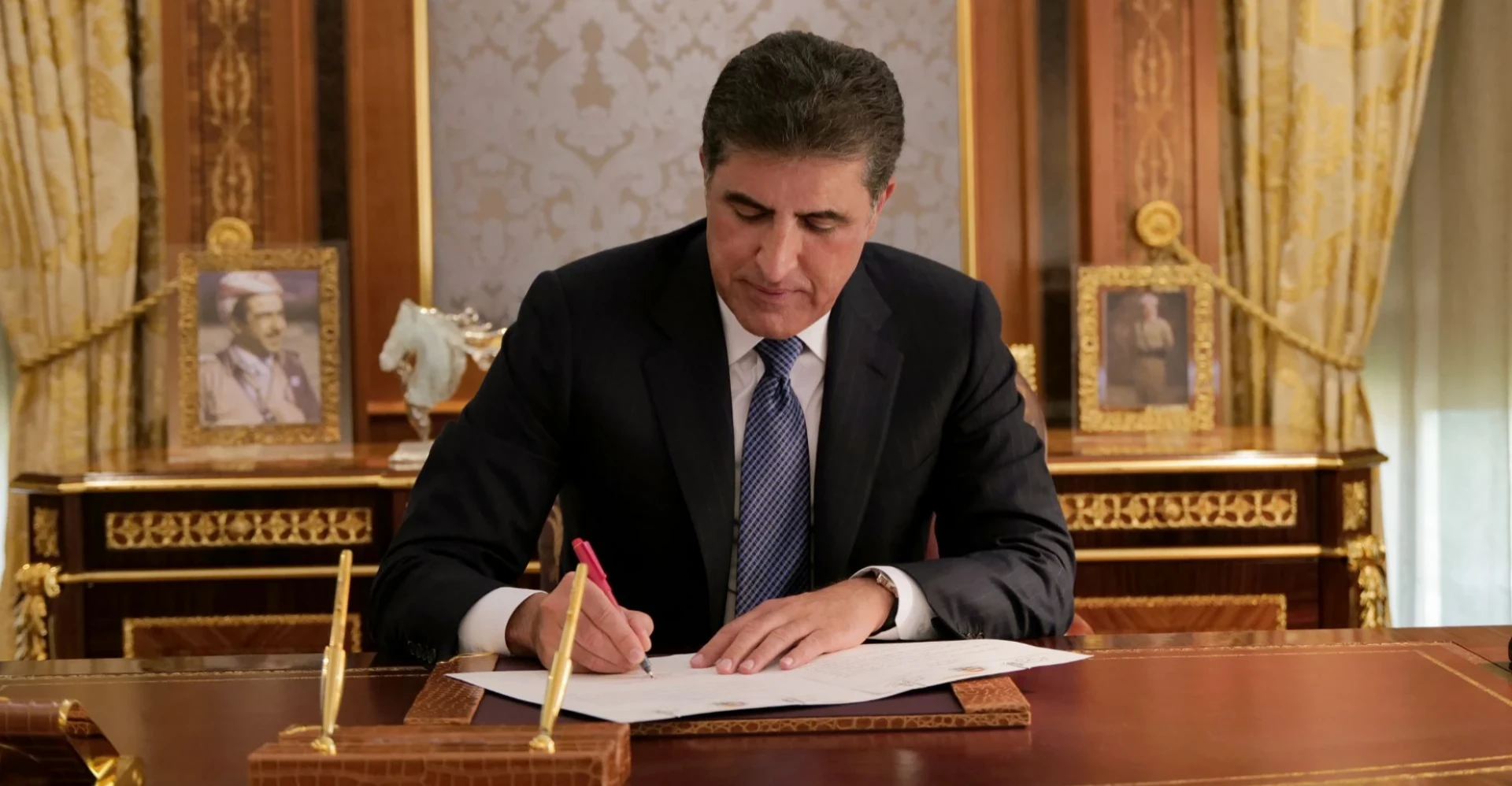
A seminar was held at the University of Kurdistan Hewlêr (UKH) on Wednesday 3rd December about Digital Journalism. Given under the auspices of France Médias Monde (FMM) and its Academy by the well-known journalists Antoine Cormery and Sofia Amara, it explored digital platforms, the opportunities and risks of artificial intelligence, and its growing impact on journalistic work. Dr Yann Braem, the French Consul in Erbil was present alongside Dr Zana Ibrahim, Interim President of UKH.
The aim of l’Académie France Médias Monde is to provide paid professional training courses to promote cooperation and exchange, with the clear aim of contributing directly to the professional development of journalists and technicians. It was in this spirit that the two journalists were returning to Erbil, having assisted in training for the set-up of Kurdistan 24 media network some ten years ago.
Their most recent project involved the production of 25 five-to-seven-minute Kurdish-subtitled educational videos focused on practical skills in journalism and the use of smart technologies of which we were shown three examples. As digital journalism is very much a new and evolving field, there are no real books on the subject so it was quite a long process. These 25 videos are made available online and at the UKH Library to help journalists and budding journalists in the Kurdistan Region, particularly in the field of digital media, focus on practical skills and the use of smart technologies. They have also produced a booklet translated into Kurdish which was distributed afterwards.
It was explained that in a changing media landscape, a variety of different formats are available depending on one’s capacity to absorb news as well as time available and convenience, for example long format articles in newspapers such as Le Monde or The Guardian; podcasts, reels, spoken articles, videos and so on. The media is moving on from the ‘silo culture’ whereby one might consume all their news through specific means at certain times, such as the radio and television, or print only such as newspapers. Investing in new technology is crucial to keep pace with the world, although there needs to be a balance between the use of technology and editorship. With the rise of Artificial Intelligence (AI), it has become imperative that fact checking is more essential than ever before in order to counter the flow of fake news and ‘Deepfakes’ (a portmanteau of ‘deep learning’ and ‘fake’). Maintaining the trust of viewers, listeners and readers is essential; trust is hard to gain but very easy to lose.
Deepfakes can be countered firstly through an awareness of the general culture – the example was given of a video in which the Ukrainian President, Volodymyr Zelenskyy, appears to surrender, as well as another in which the United States President, Donald Trump, appears to be running away from the police. This was created by Eliot Higgins, the founder of Bellingcat, using the AI image and video generator Midjourney. Many similar tools are now available, including HeyGen, which can generate narration, captions, visuals and animations.
It is in this vein that at least two national weather forecasts are now given by virtual news presenters – one in Switzerland and the other in Kuwait. While the information is provided by humans, the presentation is through these characters; the Kuwaiti one, ‘Fedha’ (an old Kuwaiti name referring to silver, the metal, so because robots are normally imagined as being silver and metallic in colour, they were combined).
Asking my question to Sofia Amara.
I asked a question to Sofia Amara about this. I had noticed from the video that these virtual presenters appeared somewhat wooden; one might expect a weather presenter to be more emotional or ‘human’ because weather is something that affects us all. It was explained that the Kuwaiti people seemed to like ‘Fedha’ but it was acknowledged that because AI is a rapidly developing field, she could be given a Kuwaiti accent and improved on in due course. Such virtual characters encapsulate the [current] limitations of AI in that they do not sense emotion or often understand humour, but who knows what the future holds.
A point emphasised throughout the seminar was that journalism must strive to be ethical, credible and trustworthy thus maintaining its reputation among those who consume it. The distinction was drawn between a “content producer” and a journalist. While AI may be used to protect sources (changing appearance in a video, distorting or changing voices and so on), and in translation, one must find the limit at which the use of AI is acceptable. To this end, one participant in the seminar asked a question about the ‘AI Act’ (EU Regulation 2024/1689) and by corollary whether a similar law could be enacted in the Kurdistan Region of Iraq.
Because AI is a kind of jungle, when news relates to politics and particularly elections, the first victim is often the viewer or consumer of news, and thus by extension democracy itself. While interesting news may require a good story, trust must be the first and foremost principle. It must be firstly a true story before being a good story, which comes back to the role of the journalist. Antoine Cormery made two important and related points on this which are outlined below.
Journalism as a profession is currently in crisis, mainly due to funding issues (lack of advertising revenue, for example), the rise of ‘apps’, decreases in public financing (something that affects state-funded media outlets such as those under the umbrella of FMM) and of course AI. There is a distinction to be drawn between freedom and AI; the gathering of information, data, its analysis and thus fact checking before finally being offered to the public. At FMM, high level meetings at director level on a six-monthly basis are now held to determine the extent to which it is acceptable to use AI in their reporting and news output.
Sofia Amara then emphasised that in serious, ethical journalism, AI would not for example help in a war zone. AI cannot fact check in such a situation – this can only be done by humans. Both presenters had carried out significant war reporting particularly in this part of the world, and spoke from experience. “In times of war, the first victim is truth.”
The key takeaways from this most interesting and informative seminar were that AI is the future, and is now inextricably intertwined with digital media. It is evolving and improving by the day, and we should all try to familiarise ourselves with it. It does however carry with it important questions around ethics, fact checking, and credibility – all of which relate to reputation and thus trust. This is particularly the case for public media.
As CP Scott said in his essay of 5 May 1921,[1] “Comment is free, but facts are sacred.” The same principle applies today; it is just that the technology has changed.