






















Why the BBC may be forced to settle with Trump
Broadcaster faces conundrum over $10bn lawsuit after doctoring US president’s speech

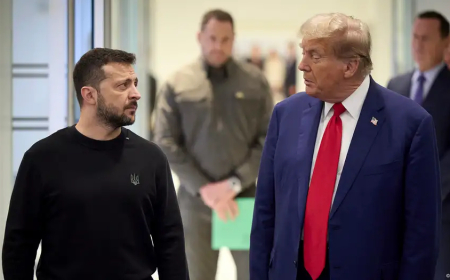
By suing the BBC for $10bn (£7.4bn) for defamation, Donald Trump has set a fiendish trap for its outgoing director-general Tim Davie or whoever happens to succeed him.
On the face of it, the broadcaster has several options for dealing with the case: try to have it thrown out; face down Mr Trump in court; or seek an out-of-court settlement.
Lawyers with more than one eye on how much money they could make from a Trump v BBC show trial will doubtless be telling Mr Davie that Mr Trump has a weak case and that the BBC has every chance of winning if it fights him all the way. Anti-Trump voices within the BBC may very well be saying the same.
But even if the BBC did take on Mr Trump in court and win, any victory could come at a terrible price, both financially and reputationally. By putting out one fire, the BBC could end up lighting several others because of evidence about the behaviour of its staff that might come to light during the trial process.
No easy choices
The truth is that there are no good options for the BBC, and Mr Trump knows it. This is why pragmatists will be urging Mr Davie to settle the case by paying Mr Trump damages and avoid a trial at all costs.
A quick reminder of how we got here. A week before the 2024 US election the BBC broadcast a Panorama documentary called Trump: A Second Chance? which doctored a speech he made on the day of the 2021 Capitol Hill riot, making it appear that he had incited violence.
Two sections of the speech, made 54 minutes apart, were spliced together to make it seem that Mr Trump had told his followers to go to the Capitol and “fight like hell” when in fact he told them to “peacefully and patriotically make your voices heard”.
When The Telegraph exposed Panorama’s doctoring of the Trump speech – along with other allegations of anti-Trump bias – the US president announced he would sue. On Monday night papers were filed in a Florida court accusing the BBC of “an intentional and malicious effort to falsely and deceptively portray President Trump as having called for violent action”.
Mr Trump is seeking damages of $5bn for defamation and $5bn for violation of the Florida deceptive and unfair trade practices act.
Dr Vasileios Adamidis, an associate professor at Nottingham Law School, told The Telegraph that Mr Trump faced “major legal obstacles” in winning at trial, which Mr Davie will be aware of. He might be tempted to face down Mr Trump as a result.
“As a public figure, Mr Trump must meet the demanding ‘actual malice’ standard,” said Dr Adamidis, “meaning he would need to show that the BBC knowingly broadcast false material or acted with reckless disregard for the truth.”
That is a high bar for Mr Trump to clear, according to Dr Adamadis. On top of that, the fact that Mr Trump went on to win an election shows that Panorama did not cause material harm to his chances.
The US also has strong laws on freedom of speech and freedom of the press that make it difficult for litigants to successfully sue news organisations for defamation.
Court battle could backfire on BBC
So there will be a temptation for the BBC to tell Mr Trump: “See you in court.” That, though, could backfire spectacularly even if the BBC went on to win.
Under the rules of discovery Mr Trump’s team would be entitled to demand access to internal BBC communications about Mr Trump.
It is beyond doubt that lots of BBC employees find Mr Trump repellent, so would the BBC be willing to run the risk of allowing Mr Trump to see what its staff say to each other about him? If the BBC had to hand over emails that mention Mr Trump, would those emails also contain disparaging comments about other public figures? Like Mr Trump’s friend Nigel Farage, perhaps?
Mr Davie and Deborah Turness, the chief executive of BBC News, resigned in the wake of The Telegraph’s revelations, but plenty of people who are still at the BBC might rather not have their emails raked over by Mr Trump’s legal team.
One former BBC staffer said: “I’m pretty sure the BBC will want to do anything they can to avoid having to disclose what people have said about Trump in internal messages.
“And even if people at the BBC have been careful about what they put in writing, the US court would presumably want to see any emails from the external production company involved in making the Panorama documentary, which would be outside the BBC’s control.”
A current BBC journalist said: “I doubt anyone would write an email about an intention to damage Trump,” and suggested any internal communications would show “incompetence not malice”.
Jonathan Munro, the director of global news, is among those whose reputation was dented by the Panorama affair. He told an editorial standards meeting in May this year that there was “no attempt to mislead the audience” in the documentary and that it was “normal practice to edit speeches”.
And what about the internal correspondence of Samir Shah, the BBC chairman who failed to take decisive action over Panorama despite being told about the problem as long ago as January? Or, for that matter, the emails of Panorama staff, none of whom have lost their jobs over the Trump fiasco?
Regardless of what might happen in court, fighting the case would also cost the BBC millions of pounds, even if they won, which is another factor the licence fee-funded broadcaster must take into account.
Could the BBC get the case thrown out before it even gets to court?
According to Dr Adamidis, Mr Trump’s team might struggle to prove that the court in Miami has jurisdiction, given that the BBC claims the documentary was never broadcast there.
But the papers filed by Mr Trump’s team state that the court does have jurisdiction because subscribers to the BBC’s Britbox streaming service living in Florida watched the documentary. The Trump team also points out that the BBC has an office in Florida and carries out business activities there.
So it is by no means certain that an attempt to have the case thrown out would succeed. Applications to have cases dismissed can take years to work their way through the courts in Florida, meaning the BBC would rack up ever-growing legal bills on something that would be a huge distraction for Mr Davie’s successor.
Simply by fighting Mr Trump, the BBC might also incur his wrath. Mr Trump might decide to withdraw the BBC’s access to the White House, ban its reporters from Air Force One and tell Republicans to withdraw any help for a broadcaster that the White House has already described as “100 per cent fake news”.
One former BBC executive said: “This is really difficult for the BBC’s management because if you cave in and pay damages and settle, you will be accused of wasting licence fee-payers’ money on a case you could have defended.
“But if you fight the case and lose you will be accused of wasting money on a case that could have been sorted out for far less money, so the only clean outcome for the BBC is to fight the case, win, and for Trump not to get any damages.
“I think the managers will glue themselves to the BBC’s lawyers and won’t vary from what they tell them to do. It’s up to the lawyers to advise them on how to get through this in the least damaging way.”
Settle out of court
The most pragmatic solution for the BBC might be to settle the case by paying out of court damages to Mr Trump.
Not only would this ensure a swift resolution to a major headache for the BBC, it might also be the cheapest option and the one that would best protect its relationship with the White House.
ABC News and CBS News have both settled cases brought by the President for between £11m-£12m in the past two years, which is still a considerable amount but is just a fraction of what Mr Trump would have sought in court.
With the appointment of a new director-general, the BBC would have a chance to wipe the slate clean by paying Mr Trump a similar sum, blaming errors on the previous regime, and making the case to licence-fee payers that even an eight-figure payout was the least bad option.
Having admitted wrongdoing over the Panorama documentary, and given him a personal apology, the BBC cannot claim Mr Trump has no right to launch his legal action, and so a peace offering of some sort seems inevitable.
As several commentators in the US have pointed out, the lawsuit is not about money as far as Mr Trump is concerned. It is about an acknowledgement that he has been wronged.
The bigger picture, and the real endgame for Mr Trump, is to force the BBC to treat him differently in the future by putting it on notice that future transgressions (in his eyes) will have consequences.
[Source: Daily Telegraph]