









Western stupidity is about to unleash Islamic State barbarism once again
The Syrian government’s assault on Kurdish-run Rojava marks a crucial turning point, and the West may come to regret its shortsightedness

For Kurds, it was the nearest thing they had to a country. For idealistic foreigners, a noble experiment in socialism. For the West, a convenient ally against terror group Islamic State (IS). Now, the entity known as Rojava – an independent Kurdish statelet in north-eastern Syria – is at an end.
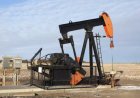
Launched two weeks ago, a Syrian government offensive against Rojava’s Kurdish fighters, known as the Syrian Democratic Forces (SDF), has routed them from a vast swathes of the Euphrates valley, including the country’s largest oil field and the sprawling al-Hol prison camp.
Troops have advanced towards a second camp at al-Roj, which holds women – including Britain’s own Isis bride Shamima Begum. Alarmed US forces have been evacuating the remaining male Isis prisoners to fresh camps in neighbouring Iraq.
Now the sides say they have reached a final peace settlement – one that amounts to a Kurdish surrender.
Under the agreement, the SDF says, security forces affiliated with the Syrian Ministry of Interior will go into the cities of al-Hassakeh and Qamishli in the Kurdish heartland, which they had previously been barred from entering. The SDF’s Kurdish fighters will be integrated into the Syrian armed forces.
Local institutions and their employees, which had operated as independent entities, will be integrated into Syrian state institutions. Kurdish civil and educational rights are promised protection, but the fleeting chance of independence is dead.
And while events in the remote Euphrates Valley have been overshadowed by those in Iran, Venezuela and Greenland, they still mark a crucial moment.
The offensive reflected the determination of former jihadist, now Syrian leader, Ahmed al-Sharaa to unify the country under central rule for the first time since the Syrian civil war began in 2011. It also demonstrates his willingness to use force to do so.
It also underscores his success in wooing the great powers in the region: his offensive against Rojava has been supported by Turkey, given the nod by Israel, and largely ignored by the US, Britain and France – formerly the SDF’s main patrons and allies.
For the Kurds, it is a bitter betrayal and a hard lesson in realpolitik: despite shedding blood alongside US forces to defeat IS, and gallantly guarding the terror group’s prisoners ever since, their erstwhile allies have decided that they are no longer useful.
As America gears up for potential strikes on Iran, keeping Syria out of Tehran’s orbit is more important to Washington than sentimental attachment to old allies.
And for the remnants of IS, including the tens of thousands prisoners at al-Hol and al-Roj camps, it represents a chance of freedom – and possible resurgence.
The sceptical will say that Rojava was always unlikely to survive. Landlocked, surrounded by hostile powers and based in lands dominated by hostile Arab tribes, it was always heavily dependent on regional chaos and Western – primarily American – patronage.
Since the fall of Syrian president Bashar al-Assad in December 2024, the utility of that patronage for the US has faded rapidly, and Sharaa has exploited that ruthlessly.
“I know it seems as though this happened very suddenly out of the blue. Actually, all indicators point to how there will have been military, intelligence, and security planning ahead of this for quite some time,” says Burcu Ozcelik of the Royal United Services Institute.
“I think behind the scenes was a strategic miscalculation in that the SDF overplayed their hand. They exaggerated the extent to which the United States would continue to back them regardless of the major power dynamic shift in Damascus.”
It is not clear how much knowledge the US had of Sharaa’s offensive in advance. Perhaps the Kurdish leadership should have seen this coming. Many in north-east Syria are not particularly surprised that they were thrown under the bus. But that does not make them feel any less betrayed.
The statelet emerged after the outbreak of civil war in Syria in 2012, when the YPG – a branch of the Kurdistan Workers’ Party militant group – took up arms against both rebels and the Assad regime.
It amassed more power and land with the rise of IS in 2014 when, as a militarily competent, ideologically moderate and secular group, it caught the eyes of American generals looking for allies to fight the terrorists.
By 2019, the SDF, an alliance led by the YPG but including many Arab groups, had – with the support of Western special forces and airstrikes – cornered IS between the Iraqi border and the Euphrates river. After the war, they took responsibility for the IS prisoners held at al-Roj and al-Hol.
As long as the Iranian and Russian ally Assad held power in Damascus, that alliance was secure. But once Sharaa overthrew Assad in late 2024, he moved quickly to reassure elements within the Donald Trump administration that he could himself be trusted to keep IS down and make an accommodation with Israel, undercutting the SDF’s monopoly on Washington’s good graces.
That gambit has paid off brilliantly.
But Sharaa has not just courted Washington. His offensive certainly involved co-ordination with Turkey, his main backer (and also a sworn enemy of Kurdish separatists, against whom Ankara has also long struggled in south-eastern Turkey). But it also seems likely that he had at least a tacit assurance from Israel, which has previously positioned itself as a protector of minorities in Syria, not to intervene.
Tel Aviv, which in years gone by has forged significant military bonds with Kurdish rebels, and even backed an independent Kurdish state, this month ignored public appeals from some Kurds to come to their aid.
It is unclear whether the US encouraged or gave the green light to the offensive, but it is almost impossible to believe that American officials did not know it was coming. Tom Barrack, the US ambassador to Turkey and envoy to Syria, is in regular contact with the Sharaa government.
But that does not mean that Sharaa has everything his own way. The areas he recaptured were mostly majority Arab regions that the SDF took control of during the war against IS, where much of the local population resented the Kurdish presence.
As Syrian government forces reached Kurdish majority areas, by contrast, the fighting was likely to get fiercer and more difficult. The terrain here is hilly, sometimes mountainous. The general population is heavily armed, and no one expressed any interest in surrender. There remains almost no trust between the two sides, and significant fear about what Sharaa’s troops might do if they captured the area and its capital city, Qamishli, by force.
Without mediation by the US and others, there could have followed a prolonged and bloody period of ethnic warfare.
Hard-nosed Western officials might argue that this has nothing to do with them, provided that the West’s interests – specifically the continued containment and repression of IS – are secured.
But the American evacuation of IS prisoners to Iraq begs the question of whether the US really trusts the new government in Damascus to keep terrorists behind bars.
And a Telegraph reporter on the ground reported this week that foreign female prisoners, including Shamima Begum, are already packing their bagsin anticipation of being released when a sympathetic Syrian army made up of fellow ex-jihadists arrives.
This is partly a product of Western shortsightedness.
After IS’s last redoubt in Baghuz fell in 2019, Britain refused to extradite and jail British IS members like Begum – citing spurious legal difficulties and claiming, unbelievably, that UK officials simply could not access the area to get the prisoners out (they could easily have done).
As anyone who bothered to visit the camps knew, this was a recipe for eventual disaster: behind the wire, unrepentant extremists held sway and countless children were being raised in the ideology of the Caliphate. It was obvious that this vast population could not be contained forever, and that when they got out they could breathe fresh life into the IS dream.
Kurdish fighters and officials argued that this was exactly why the West should not abandon them now: that Sharaa and his army, with their own backgrounds in al-Qaeda and other jihadi groups, will surely release the terrorists; and that they will then take revenge on Kurds for allying with the West in the first place. As evidence, they point to the attack on al-Hol prison camp, which coincided with a prisoner uprising that may have been co-ordinated with the advancing Syrian government forces.
Countering this argument is Sharaa’s insistence that, though he was indeed a jihadist, he also fought IS bitterly after his own group split from them. Also, he is under intense pressure from the United States to deliver on his promises to repress the terrorists and respect minorities, including the Kurds. Western governments clearly hope that he will restore the Syrian nation state, and keep it quiet and aligned with the West. It may be no coincidence that the ceasefire comes just as the US readies for strikes on Iran.
Those hopes may yet be vindicated or proven naive. Either way, Rojava as it was has already gone.
By the beginning of this week, the isolated border town of Kobani, the site of a key battle against IS in 2014, was surrounded. Government forces had also reached Cil Axa, a village on the road connecting Qamishli to the border down of Derik. If it fell, Rojava would have been cut off from Iraqi Kurdistan, its only friendly border crossing.
Given the realpolitik dynamics in play, the best outcome for the statelet, says Ozcelik, may be one of integration, with the SDF turning “from being primarily an armed organisation into one that is a political movement that can speak on behalf of the rights of the Kurdish peoples under their control – and potentially across Syria as well”.
But that is the best-case scenario. Given the grotesque history of IS in the region, and the barbarity of the Syrian civil war, the worst case does not bear thinking about.
[Source: Daily Telegraph]