/file/attachments/orphans/ED_543155_209242.jpg)



















Hormuz chaos shows Iran is too fractured to speak with one voice
Conflicting messages from Tehran over closure of shipping lane reveal fundamental dysfunction at heart of regime

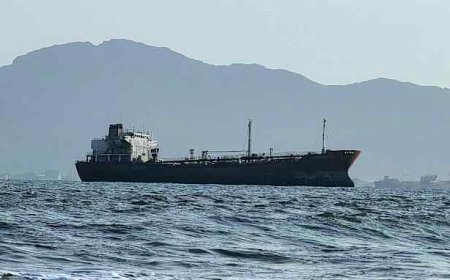
On Friday afternoon, out of nowhere, Iran’s foreign minister announced that the Strait of Hormuz was “completely open” to commercial vessels.
Just hours later, however, the Islamic Revolutionary Guard Corps (IRGC) reminded Abbas Araghchi and the world who was really in charge. In an apparent rebuke, it said it retained “strict management and control” over the waterway and shot at ships attempting to cross.
Two days later, the foreign minister was still under attack by hardliners in Tehran. Newspapers demanded that Mr Araghchi reverse his decision. State television criticised him for tweeting policy rather than explaining to Iranians. Some officials and moderate outlets defended the opening with conflicting explanations.
The immediate domestic backlash and confusion appeared to signal divisions over surrendering Iran’s primary leverage against Washington.
But the deeper problem is that the Islamic Republic is too fractured to speak with one voice during active negotiations. The Telegraph has previously reported that the IRGC is controlling Iranian decision-making instead of Iranian political officials.
The generals said the strait would remain shut if Donald Trump did not “ensure full freedom of navigation for vessels travelling from Iran to destinations and from destinations to Iran”.
The backlash reveals not policy disagreement but institutional dysfunction. Iran’s negotiating position remains unclear to its own citizens, foreign counterparts and possibly Iranian officials themselves. Mr Araghchi almost certainly lacks independent authority to reopen the world’s most important oil chokepoint. That decision requires approval from the supreme leader and implementation by the IRGC.
Yet when the foreign minister announces policy and the Guards contradict him hours later, which institution speaks for Iran? The answer depends on who is speaking.
Mostafa Najafi, a Tehran-based political analyst, said: “Once again, Iran’s weakness in narrative-making was revealed,” adding, Mr Trump “immediately took control of the narrative”.
Mr Trump said Iran agreed to surrender enriched uranium and insisted the reopening “has nothing to do with Lebanon” despite Mr Araghchi citing the Israel-Lebanon ceasefire as justification. He claimed Iranian concessions while maintaining the naval blockade that was supposed to be the leverage forcing those concessions.
If Iran truly negotiated terms, the American blockade should have been lifted in exchange for reopening Hormuz, Iranians believe. Instead, Mr Trump took the opening while keeping the pressure – suggesting Iran made concessions without winning any ground – making the hardliners angry in Tehran.
Iranian officials let Mr Trump frame the decision for days before attempting any clarification. And the domestic criticism followed predictable patterns.
Hossein Shariatmadari, the hardline Kayhan newspaper editor who was appointed to the job by Ali Khamenei, published an open letter demanding Mr Araghchi “take back” the decision.
Mohammad Jafar Khosravi, a state television host, asked why officials announced policy on social media to foreigners rather than explaining themselves to Iranians. “Speak to us on the streets not on X,” he said.
The Fars news agency, which maintains IRGC ties, complained that “Iranian society has fallen into a haze of confusion”.
The critics continued to attack Mr Araghchi while leaving IRGC commanders untouched.
The selective targeting reveals Iran’s power structure where diplomats can be criticised publicly because they lack authority to retaliate and military commanders stay protected because they control implementation.
Mohammad Bagher Ghalibaf, the parliamentary speaker, attempted damage control in a television interview on Saturday night, explaining the reopening was always conditional on the Lebanon ceasefire. He defended Iran’s position, claiming “we were victorious in the field and the enemy had not achieved any of its nine objectives”.
Mr Ghalibaf framed the closure as measured, saying: “We have always sought to normalise transit through the Strait of Hormuz and we still do. If it was stopped now, it was because the ceasefire in Lebanon was not fully established.” He also warned against American overreach, vowing Iran would not allow the US to claim interests in the strait and interfere in it.
But his explanation came days late, to a different audience, and in a different medium, than Mr Araghchi’s announcement.
Outlets published competing defences. The Hamshahri newspaper said this was always the plan, and according to the Nournews website, it implemented ceasefire terms. Each defended the policy with different rationales – although none from the foreign minister and none coordinated.
Mr Najafi said Iran maintained leverage since “the Hormuz card is still in Iran’s hand” through conditional opening. He warned against “hasty judgments based on Trump’s excited statements”, saying what mattered was the final accounting of what Iran gives versus what it gets. But his argument assumes Iran can coordinate what it gives. The Hormuz episode suggests otherwise.
The fragmentation has led to fundamental problems for negotiations. Normally the supreme leader would resolve disputes, enforce messaging discipline and present unified positions. But Ali Khamenei’s still unburied body and his son Mojtaba’s uncertain authority mean the mechanism for settling elite conflicts doesn’t function.
The institutional breakdown runs deeper than just the supreme authority’s incapacity.
Ali Larijani, who previously mediated between competing power centres and enforced coordination, was killed last month. His replacement as supreme national security council secretary, Mohammad Bagher Zolghadr, comes directly from the IRGC rather than political circles. Where Mr Larijani could impose discipline on both civilian and military institutions, Mr Zolghadr represents IRGC interests – removing the neutral arbiter who previously prevented exactly this kind of public institutional competition.
Without authority to enforce discipline, multiple power centres speak for Iran simultaneously.
[Source: Daily Telegraph]