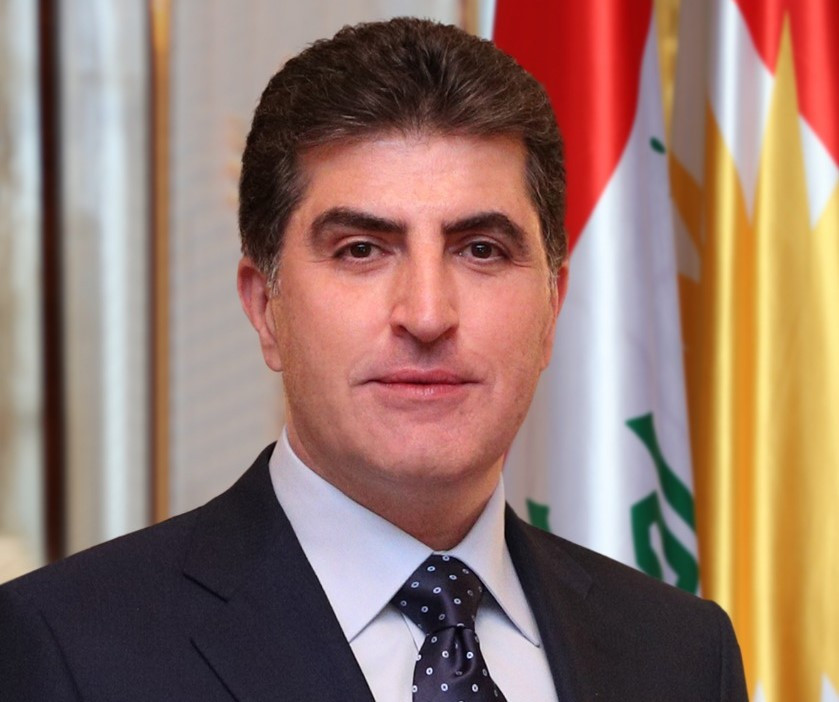
Dr Noori Osman, in his capacity as Chief of Staff to the President of the Iraqi Kurdistan Region and member of the Central Committee of the Kurdistan Democratic Party (KDP), presented his strategic insights and proposals during a session today in Erbil of the Dialogue Circle entitled Iraq: The principles of peace and dialogue as a framework for conflict resolution. His remarks follow:
I express my profound gratitude to the KDP Culture and Media Department for convening this forum and for assembling this distinguished group. It is essential that we examine Iraq and the need to promote peace and dialogue within a transparent and constructive framework, because it is a vital shared concern if we are to resolve outstanding issues within the country.
The roots of contention: divergent constitutional interpretations
I must at the outset emphasise that the primary driver of the divergence between ourselves and Baghdad, prior to any legal or administrative technicalities, is rooted in fundamental political perspectives and paradigms regarding the nature of governance. The Kurdistan Region’s experience is predicated on the establishment of a legal and administrative entity that has been self-sustaining since 1991, following the withdrawal of the former regime’s institutions.
We have maintained sovereign national institutions, formal diplomatic channels, and the Peshmerga forces throughout this time. International delegations have consistently engaged with us as a legitimate political entity; this is the political culture that defines our governance environment.
Many of those leaders now at the apex of decision-making in Baghdad were once our comrades-in-arms and guests in the Kurdistan Region, seeking refuge under the protection of this very entity. We remained steadfast allies from an humanitarian and national standpoint, sharing a history of mutual cooperation. While many of these figures remain in public life and recall that era with respect, others have since passed away.
The contemporary challenge stems from a new political generation in Baghdad that lacks the context of that shared struggle. This generation exhibits a marked inclination towards rigid centralism. Whilst the administrative structure in Baghdad shifted post-2003, a centralist mindset continues to prevail. For some political factions, the adoption of the 2005 Constitution was perhaps seen as a transient necessity of that era rather than a profound, enduring commitment to federalism, largely because they did not anticipate wielding absolute authority in the future Iraqi state.
Power shifts and the logic of parliamentary majoritarianism
Following the withdrawal of United States forces in 2012, Iraq’s balance of power and political ethos shifted significantly, leading to the consolidation of power by Shia factions. This transition gave rise to a "selective reading" of the Constitution and a reliance on the logic of "parliamentary majoritarianism”. Constitutional provisions are thus often implemented only when they serve central interests, while the constitutional rights of the Kurdistan Region are systematically put to one side. In a strong democracy, safeguarding the rights of constituent components is a foundational pillar, whereas in the Iraq of today this concept requires significant reinforcement to maintain balance.
When we advocate at present for implementing the Constitution, Baghdad frequently invokes archaic laws. These statutes are vestiges of previous eras, ranging from the mandates of Abdul Karim Qasim to those of Saddam Hussein, and even include decrees from the defunct Revolutionary Command Council. This occurs despite the fact that our governance should be dictated by the modern Constitution we collaborated on; it is a document founded on the principles of partnership, balance, and consensus. These principles are now increasingly marginalised.
Strategic partnership against centralised consolidation
A profound gap exists between two competing interpretations: the Kurdish side advocates a genuine federal system and peaceful coexistence, while Baghdad seeks to consolidate centralised authority. A third way must be taken to bridge this rift, grounded in a shared understanding that safeguards the collective interests of both sides.
In terms of our historical ties, it must be stated unequivocally that the Kurds have been the primary allies of the national Shia forces, bound by a shared history of resistance to tyranny and injustice. Historically, Kurdish grievances were directed solely against chauvinistic and ultra-nationalist ideologies that sought to impose a single identity upon diverse ethno-religious components.
Institutional accountability and diplomatic engagement
We must also address our own institutional gaps in the spirit of candour. Between 2005 and 2012, when the Kurdish position in Baghdad was at its most unified and influential, we should have been more proactive in institutionalising critical constitutional bodies, such as the Federal Council. During that period of relative stability, the urgency of this task was not fully recognised; today, those legal lacunæ are being weaponised against our rights. It is imperative that we confront these challenges through a modern, unified national discourse.
During the recent visit of the President of the Kurdistan Region to Baghdad, we conveyed our message to the Coordination Framework parties with clarity and diplomacy. We emphasised that armed groups outside formal state institutions pose a direct threat to Iraq’s future stability. Regarding groups operating under the banner of "resistance", we posed a fundamental question: "Given the withdrawal of foreign combat forces, what legal or national justification exists for the continued mobilisation and arming of these entities?”
We further asserted that it is untenable for the Kurdistan Region of Iraq to remain a constant target of external and internal aggression. When past incidents in Basra were cited to downplay these threats, we maintained that such comparisons do not diminish the severity of the security challenges facing the Region. We explicitly informed our partners: "These attacks are not merely a threat to the Region; they jeopardise the integrity of the entire Federal Republic of Iraq."
Civic loyalty and the future of the Federation
Questioning the "Iraqi loyalty" of the Kurdish people is a fallacy. Our message to Baghdad remains: "We occupy a shared geography defined as Federal Iraq. The core objective is peaceful coexistence and the fulfilment of mutual obligations, not the adjudication of one another’s conscience." Such questions only stifle the potential for harmony. We must build a shared future based on equity and reciprocal respect.
History has shown that the people of Kurdistan remain as resilient as their mountains in the face of existential threats. Having endured the horrors of the Anfal campaign and chemical warfare without surrendering, we have deep, unyielding roots. Constructive dialogue is the only viable path forward. Fortunately, there remain visionary leaders in Baghdad who recognise that the Kurdistan Region cannot be excised from the political landscape. They understand that a radical overhaul of the Constitution is legally prohibitive, as established mechanisms prevent the arbitrary manipulation of constitutional texts.
The Constitution, as it stands, is the fruit of an historic partnership. Without Kurdish support, this document would never have achieved legitimacy. Many now in power were our partners in drafting these very articles. The current legislative trend, however, towards sectarian majoritarianism does not reflect the sovereign interests of Iraq as a multi-ethnic and multi-religious state.
Conclusion: The path to genuine partnership
During our deliberations in Baghdad, we offered a clear partnership: "We are not antagonists to your governance; rather, we are a pillar of support." The Kurdistan Region’s social fabric (comprising Sunni Kurds, Feyli Shias, Yazidis, Turkmen, various Christian denominations, and others) serves as a model of coexistence. Technical issues regarding the budget, civil service salaries, and Peshmerga entitlements can be resolved swiftly, provided there is sufficient political will.
I explicitly reminded Mr Hadi al-Amiri of this: "Since 2005, the Peshmerga have been constitutionally recognised as part of the Iraqi defence apparatus. Yet, Baghdad has consistently failed to provide the necessary funding for their equipment and salaries, leaving the fiscal burden solely on the KRG." On the matter of command structures, the Constitution is unambiguous: the President of the Region holds command within our borders, while they fall under the federal Commander-in-Chief during broader national situations. Selective adherence to the Constitution undermines the state's future.
Our objective is a genuine and balanced partnership in state administration, not mere tokenism. Our integration in 2003 was a voluntary act based on consensus. When those foundations were undermined, the 2017 referendum served as a natural reaction to constitutional drift. Today, as we work with international allies to professionalise the Peshmerga as a robust national institution, the definitive solution remains: a comprehensive return to the Constitution and the unreserved acceptance of the principles of true partnership.













/file/attachments/orphans/iStock-802203090_325419.jpg)