

/file/attachments/orphans/Nonku-Nombasa-Mapisa3_550805.jpg)



















Curaçao defied the odds to reach World Cup – with just one player born there
Smallest nation to ever make it to the tournament used data and AI to identify Dutch talent able to play for them

When Curaçao line up against Germany on Sunday, it will mark a remarkable moment in World Cup history: the four-time champions facing the smallest nation ever to qualify for the tournament. A team drawn from a population of 80 million against one selected from only 156,000.
Making their debut, Curaçao – which is 40 miles off the coast of Venezuela – will do well to escape a group containing the European giants, Ecuador, who are 24th in the world rankings, and 33rd-ranked Ivory Coast. The tiny island, ranked 83rd, are the third lowest-ranked nation in the tournament.
How has an island with roughly the population of Oxford, Warrington or Slough, spread across about 171 sq miles, produced a team capable of reaching the World Cup? That they are even in the USA, Mexico and Canada is testament to an ingenious recruitment system rooted in their history.
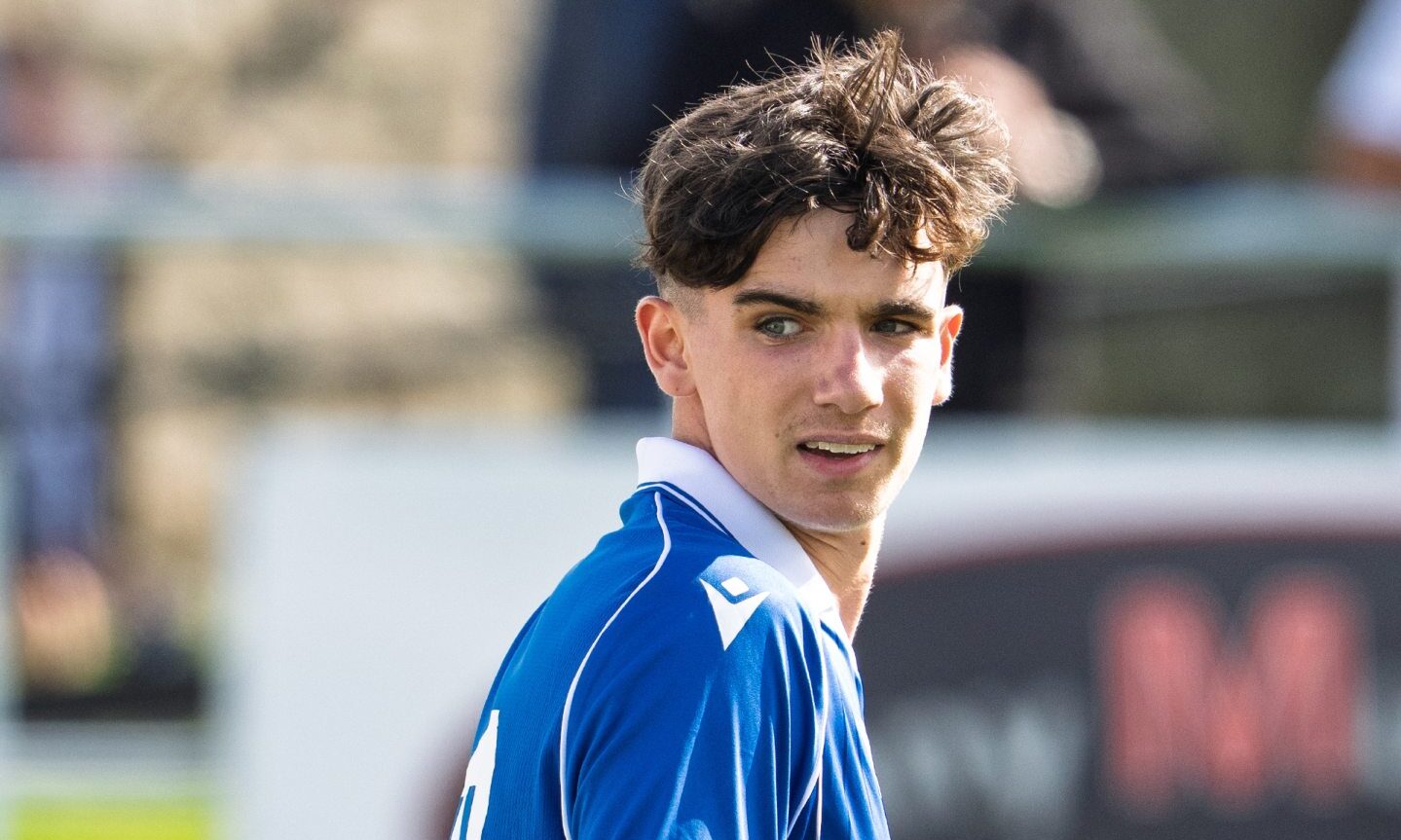
Picking players predominantly from abroad has played a major role, while leveraging data and artificial intelligence to identify talent has significantly enhanced the side’s reach. Only one member of their 26-man squad was actually born on the island. If former Manchester United attacking midfielder Tahith Chong does not start, none of their XI will have been.
Curaçao is part of the Netherlands. First colonised by Spain in the 1500s as a base for exploring South America, it was taken by the Dutch in 1634 during the Eighty Years’ War.
Chong was born in Willemstad, the capital established by the Dutch after identifying the island’s Schottegat inlet as an ideal trading port. He did not stay long on the island: scouted by Feyenoord while playing for Atlétiko Saliña, he moved to the Netherlands when he was 10 and joined Manchester United at 16.
But few footballers of Chong’s calibre are born in the country.
Curaçao’s federation – the Federashon Futbòl Kòrsou – realised that many talented Dutch footballers, who had played for the Netherlands at youth level but had not progressed, qualified to play for them through parents or grandparents. Using diaspora tracking and Geographic Information Systems, they mapped where eligible players lived and planned targeted scouting trips.
“The Netherlands is a good example of a country that has the two things you want,” says Alex Stewart, chief executive of sports-data consultancy Analytics FC. “A very diverse population – partly for colonial reasons they have strong links to a couple of different Caribbean countries. Curaçao is one. They are also welcoming to immigrants.
“And they have a strong youth development system. They have a lot of players going into well-organised academy systems producing strong footballers who are then eligible for other countries. You’ve suddenly got a pool of talent here.”
Other nations with large diaspora have adopted similar strategies. Morocco also look to the Netherlands as well as Spain and France. Senegal and Ivory Coast have a similar relationship with France just as Ghana has developed with the UK.
Curaçao have built almost an entire team this way since they were officially recognised by Fifa in 2010, having formerly competed as the now-disbanded Netherlands Antilles.
The shift has been deliberate. Appointing Patrick Kluivert in 2015 was the first step: a Dutch football icon capable of convincing young Dutch footballers with Curaçaoan heritage to represent the island, instead of their country of birth. In 2015, more than half – 23 of 42 – of the players who featured for Curaçao were born on the island. Now, it is only one.
Dick Advocaat – the 78-year-old former Netherlands, PSV and Rangers manager – becoming coach was the next phase. Advocaat, a figure embedded in Dutch football culture, took over in 2024. He briefly stepped down in February when his daughter fell ill, but returned once her health improved. Dutch media reported that Corendon Dutch Airlines, a key sponsor, applied pressure for him to be reinstated.
In September, Advocaat convinced PSV Eindhoven defender Armando Obispo – born in the small Dutch town of Boxtel and a four-time Eredivisie winner – to play for Curaçao. He also persuaded Middlesbrough winger Sontje Hansen, an Ajax academy graduate and Golden Boot winner in the victorious Netherlands Under-17s Euro 2019 team who was born in Hoorn.
Livano Comenencia and Ar’Jany Martha, born in Breda and Rotterdam respectively, came on board at the start of World Cup qualifying. “We’ve been brought up playing the Dutch way and we’ve got real quality and excellent technique,” Comenencia said. “We’re going to surprise a lot of people.
“For us, qualifying for the World Cup is already a huge milestone, because we’ve never achieved anything on this scale before and we’ll be the smallest country in tournament history. A lot of people already see us as winners. But we’ve got a winning mentality and we’re not here to just make up the numbers. We’re going to the World Cup with the intention of winning it.”
Riechedly Bazoer, a defender born in Utrecht, came through Ajax’s academy before playing over 50 times for the Dutch giants. He won the 2012 Under-17 European Championship with the Netherlands and six caps for the seniors – in friendlies, making him eligible to switch. He committed to Curaçao last August.
Jürgen Locadia, a former Brighton player born in Emmen, was on the shortlist for the Dutch squad for the 2014 Brazil World Cup, but missed out with a groin injury. Multiple further call-ups were halted by persistent injuries. He switched in 2023 when the calls stopped coming from the Netherlands.
Kenji Gorré, from Spijkenisse, moved to England when he was four after his father joined Huddersfield. He spent the majority of his youth career at Manchester United, and was even approached by the English FA to represent them at youth level when he was 15, before accepting an offer from his country of birth. He made his Curaçao debut in 2019.
Their most recognisable player, captain Leandro Bacuna, who played for Aston Villa from 2013 to 2017, was born in Groningen and represented the Netherlands at under-19 and under-21 level.
Despite almost all their players being born elsewhere, everything has come together and Curaçao have harnessed an island mentality to amplify their Blue Wave brand.
Training sessions have been held on the beach while their arrival in Florida in an old school bus with no glass windows provided a stark contrast with many of the major nations at the World Cup.
Their YouTube channel has only 4,000 subscribers (the England team have three million), yet a “world, welcome to Korsou” video – featuring some unsubtle Adidas product placement – has been viewed more than 200,000 times.
“Korsou, a strong rock in the blue sea,” says Tio “The Kitman” in the video. “Island of bare feet. Open hearts. Still waters run deep. A bit rebellious. Always free.”
He paints a picture of a calm, tranquil way of life. Beneath it lies a razor-sharp cutting edge.
[Source: Daily Telegraph]





/file/attachments/orphans/ED_543155_209242.jpg)
