



/file/attachments/2996/04ED_610405_518242.jpg)























The 'Axios' report and Nechirvan Barzani’s role on the world stage
Michael EJ Phillips / Department of French, Salahaddin University
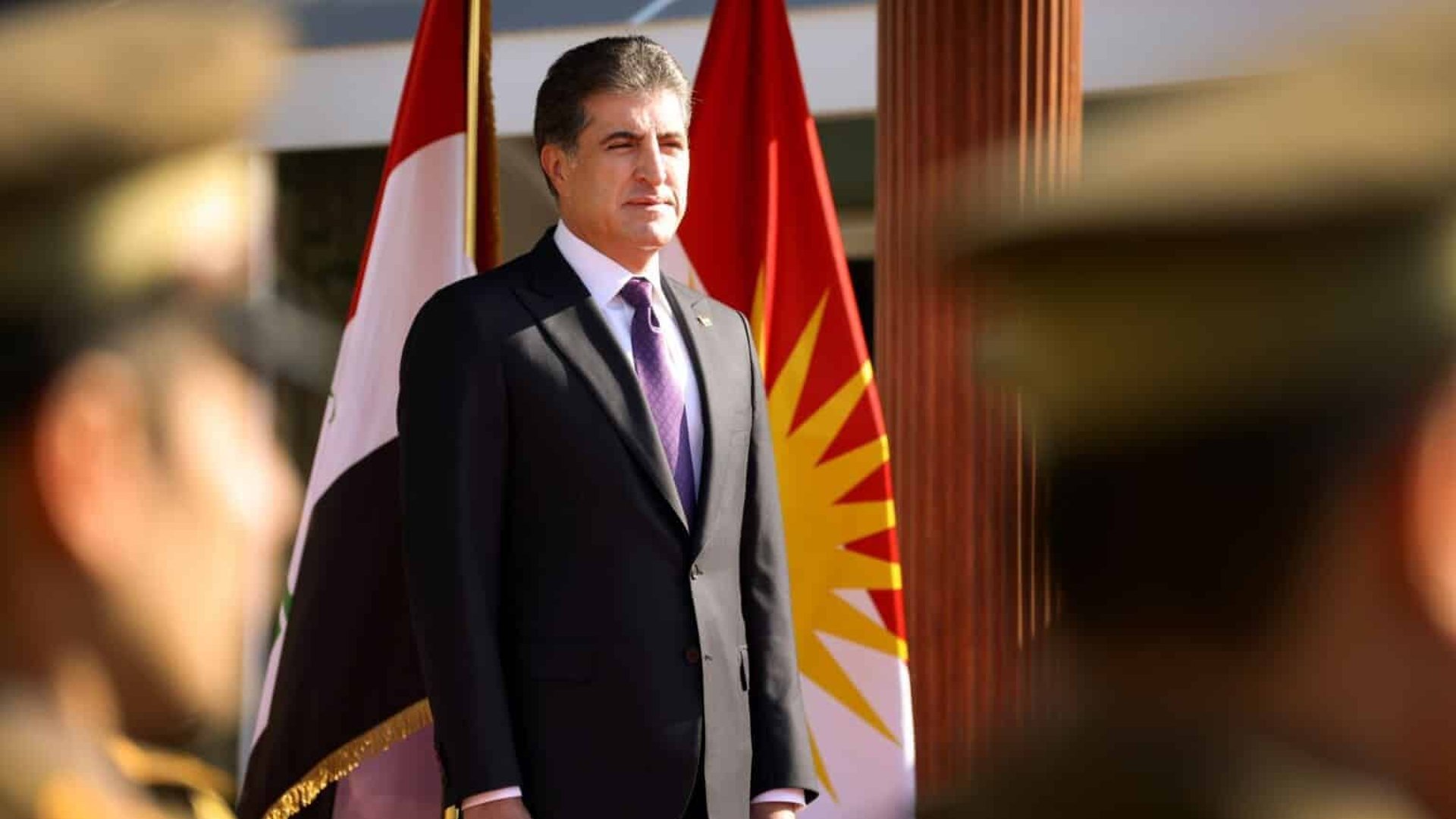
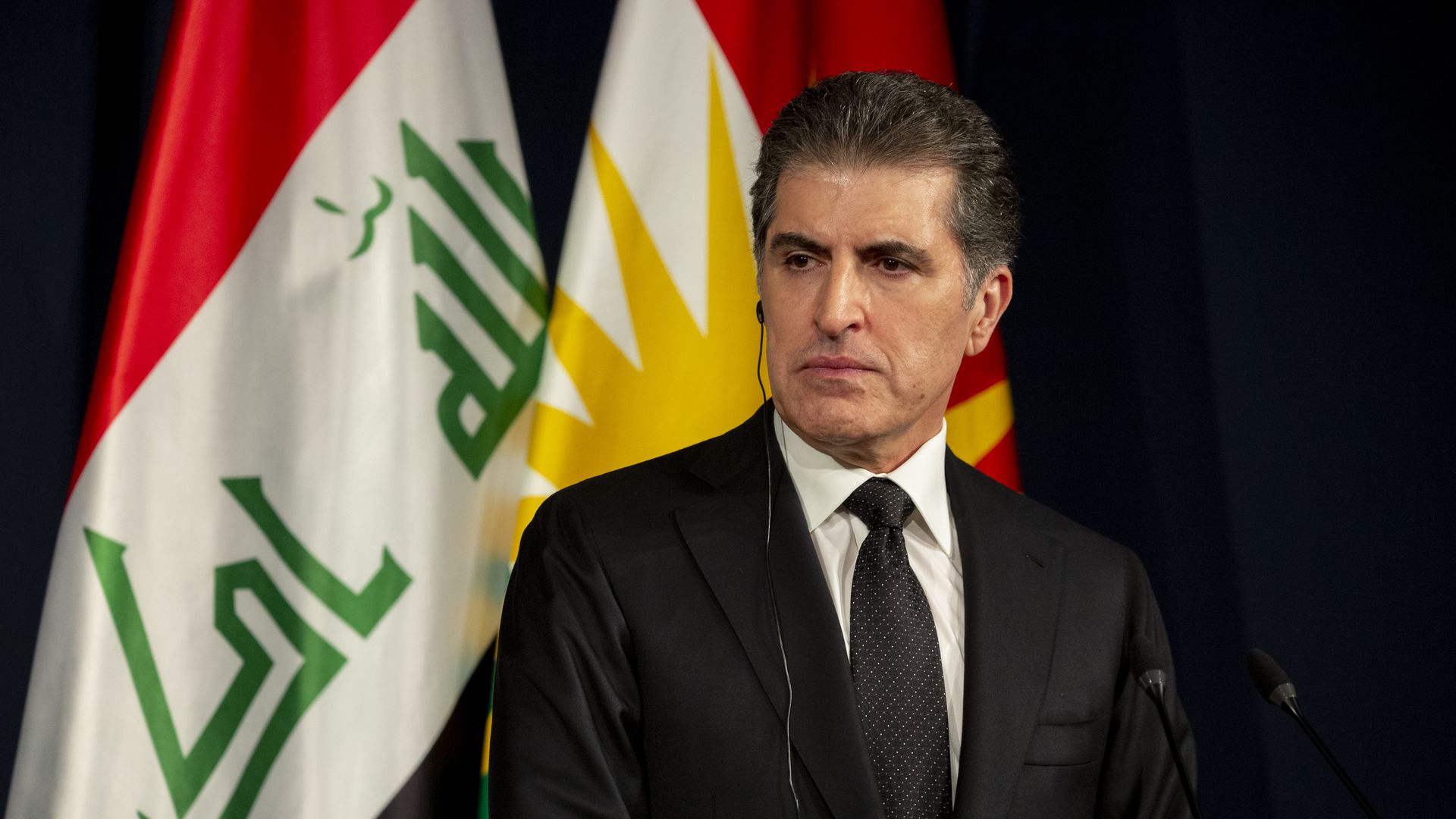
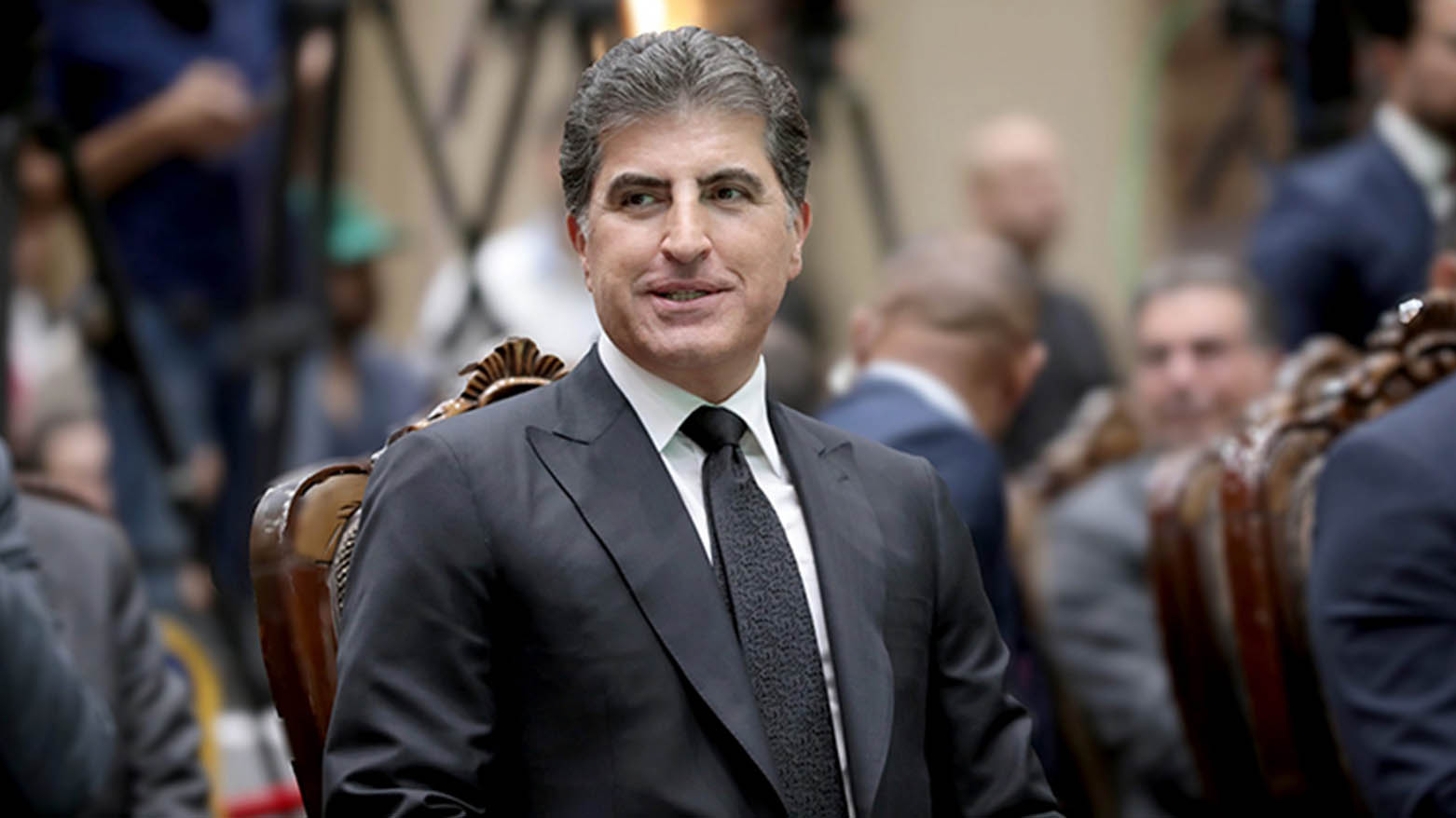
An alleged secret channel between the Trump administration and Iran’s Islamic Revolutionary Guard Corps (IRGC), as reported by Axios on 16 August 2026, is significant far beyond the immediate question of whether every operational detail can be independently verified. Its significance lies in what it reveals about informal diplomacy, the fragmented nature of Iranian decision-making, and the confidence placed in President Nechirvan Barzani by opposing centres of power.
US officials had apparently become uncertain in May as to whether Iran’s formal negotiators (Foreign Minister Abbas Araghchi and Parliamentary Speaker Mohammad Bagher Ghalibaf) held sufficient authority to reach an agreement or whether their decisions could be overruled by the IRGC. The White House therefore sought an intermediary by approaching neither a Gulf ruler, a European diplomat, nor the representative of a major international organisation, but Nechirvan Barzani, President of the Kurdistan Region of Iraq.
The report explained that then-Director of National Intelligence Tulsi Gabbard contacted President Barzani with the approval of President Donald Trump and Vice President JD Vance. Barzani subsequently used his contacts to communicate directly with General Ahmad Vahidi of the IRGC. An Iranian official travelled to Erbil with an encrypted telephone through which the conversation was conducted.
Three sources with direct knowledge, including a White House official, were cited in support of the account. Brett McGurk, who served as a Middle East adviser to four American presidents, also spoke on record as follows. "Nechirvan Barzani is a pragmatic problem solver. He's respected across the region. He knows nearly everyone in Tehran as well as Washington. That's who you call in a pinch.”
These details do not constitute independent documentary proof of every telephone call, quotation or proposal. Nonetheless, their specificity, the number of sources cited, and the inclusion of an identifiable senior American official among them make it difficult to dismiss the entire report as sensationalist fabrication.
Some local Kurdish news outlets have given extensive and sometimes self-serving coverage to the Iranian denial, presenting it almost as though the denial itself disproved the Axios account. Others have attempted to “verify” Tehran’s position. Such efforts raise a basic question: how can a local media organisation conclusively verify or disprove a highly classified exchange involving the White House, American intelligence officials and senior IRGC commanders without access to communications records or the officials directly involved?
A responsible news organisation may report that Iran denies the story, examine inconsistencies and seek additional evidence. It cannot transform an official denial into an established fact merely through endless repetition.
Iran had powerful reasons to deny the report and few politically comfortable alternatives. Confirming it would have meant acknowledging that the United States had bypassed the Foreign Ministry given uncertainty about whether Iran’s official negotiators possessed real decision-making authority. It would also have confirmed direct communication between the Trump administration and the IRGC at a time when Tehran’s public discourse continued to emphasise resistance to American pressure.
The report consequently touches on an internal Iranian sensitivity: who was actually authorised to negotiate? Confirmation could have weakened the Foreign Ministry's institutional position, exposed divisions within the governing system, and contradicted the public image of a unified leadership.
One reasonable question is why Washington would turn to the President of the Kurdistan Region when sovereign states such as Qatar and Pakistan were already acting as mediators.
Qatar has extensive experience in hosting negotiations and possesses the diplomatic infrastructure, sovereign protection and international recognition necessary for formal mediation. Pakistan can similarly transmit messages through established state channels. The Axios report does not suggest that Barzani replaced either country. The implication is that Washington needed to take a different approach, namely direct access to a specific centre of power inside Iran.
In conventional geopolitical terms, the Kurdistan Region is a federal entity within Iraq and cannot be compared with Iran in terms of state power, population, or military capacity. Yet diplomacy is not determined exclusively by size or constitutional status. At moments of crisis, access, discretion, credibility and personal trust may become more valuable than formal power.
The central figure in this case was therefore not the Kurdistan Region as an abstract territorial entity. It was a particular leader who speaks Persian, understands Iranian political culture, maintains long-established relationships in Tehran and is trusted in Washington.
This explains why President Barzani could perform a function that larger states could not in precisely the same way. Qatar could provide a recognised negotiating venue, but it might not possess the same personal access to the individuals whose approval Washington was seeking. It is possible that the Pakistanis have been more optimistic in their readouts than the talks justify in an effort to create a sense of momentum. Barzani’s value lies in his ability to move between political worlds without presenting himself as belonging entirely to either side.
The report was published on 16 August. Just after midnight on 17 August, drones targeted the private office of Kurdistan Region Prime Minister Masrour Barzani. According to the Kurdistan Counterterrorism Service, the drones were launched from Iranian territory. Iran disputed that assessment, condemned the attack and warned that it could have been a false-flag operation. No organisation immediately claimed responsibility.
Such timing inevitably raises questions. The Axios report exposed highly sensitive contacts between Washington, President Nechirvan Barzani and the IRGC. It also suggested that the Iranian Foreign Ministry might not have exercised complete authority over negotiations. A retaliatory warning by a faction unhappy with the disclosure is therefore one possible interpretation.
Other interpretations remain equally relevant. The Kurdistan Region had already been subjected to around 1,000 drone and missile attacks during the wider regional conflict. The present attack may have formed part of that established pattern and could conceivably have been planned before the Axios article appeared. Iran had apparently benefited by allowing the IRGC to communicate its position to Washington. Punishing the intermediary would therefore appear counterproductive unless the operation reflected disagreement within Iran’s political and security establishment.
A plausible conclusion could be that the Axios disclosure and the drone attack belong to the same wider environment of American-Iranian confrontation, without a direct causal connection having been demonstrated. The timeframe is however significant and merits investigation though it is not proof positive in itself.
Internationally, the report raises President Nechirvan Barzani's diplomatic profile in three ways. It first portrays him as a trusted intermediary between powers directly engaged in confrontation. Such trust cannot be created at the moment of crisis. It is usually the result of relationships cultivated patiently over many years.
Secondly, the account places Erbil within the wider diplomatic geography of the Middle East. The reported American proposal to hold secret US-Iranian negotiations in Erbil (although the meeting did not materialise) suggests that the city was considered a possible venue for high-level crisis diplomacy.
Finally, the report presents Nechirvan Barzani’s role as extending beyond Kurdish affairs. He was reportedly acting in relation to a conflict affecting Iran, the United States, Iraq and the wider region. The significance of his intervention should therefore be understood within an Iraqi and regional context, not solely through the framework of Kurdish politics.
Expressions of pride among prominent Iraqi political figures are understandable for this reason. An Iraqi political leader was reportedly trusted to carry messages between Washington and one of Iran's most powerful institutions at a time when conventional diplomacy had encountered serious obstacles. Whatever Iraq’s internal political disagreements, such access represents a form of national diplomatic capital.
The deeper lesson of the Axios report lies in the nature of political influence. Influence per se does not always follow the formal hierarchy of states. It can also arise from character, consistency, and the ability to maintain communication among parties who distrust one another.
President Nechirvan Barzani’s diplomatic style has generally been pragmatic, measured and understated. His public language emphasises dialogue, stability and the avoidance of regional escalation. He stated in March that “the Kurdistan Region will not be part of the war and conflict” and emphasised that “protecting peace within the region is a top priority … the Kurdistan Region will under no circumstances become a source of threat to the Islamic Republic of Iran or any other neighbouring country.” Such a stance stands as a credible foundation for mediation: an intermediary cannot be effective if one side sees him merely as an instrument of the other.
His low-key and personally respectful approach should not be mistaken for political weakness. In diplomacy, humility can create access while predictability creates trust. The capacity to maintain relations with Washington, Tehran, Baghdad, Ankara, the Arab world and European governments is itself a form of strategic power.
For Kurdish politicians, the report should be seen as a source of institutional pride rather than narrow partisanship. Recognising a Kurdish leader’s international role does not mean abandoning political disagreements. It means understanding that pragmatic leadership and ongoing relationships can lend the Kurdistan Region and Iraq influence beyond their material power.
The Axios account cannot simply be taken at face value, but the broader political conclusion is difficult to ignore. In a pinch (to quote Brett McGurk), Washington reportedly sought someone capable of engaging with Tehran’s real decision-makers, trusting him to convey a highly sensitive message. The international significance lies not simply in the message he carried, but in the years of balanced leadership that made both sides willing to receive it.
Every Iraqi, Kurd, and those from Kurdistan in its wider sense ought to be proud of the progress the Kurdistan Region of Iraq has made under President Nechirvan Barzani.