

























Simon Sebag Montefiore: Appeasing radical activists will make the West ungovernable
Ahead of a new book about the Middle East, the historian reflects on the dangerous public discourse around terrorism, migration and gender

The historian Simon Sebag Montefiore has always been a keen observer of British politicians. After all, this is the man who introduced his close friend King Charles, then the Prince of Wales, to David Cameron and Michael Gove over a cosy kitchen supper before Cameron became prime minister. As a 17-year-old schoolboy at Harrow, he took Margaret Thatcher to task in an interview for the school magazine. He often has the ear of party leaders, and frequently discussed the seemingly interminable quagmire between Israel and Gaza with Keir Starmer while he resided in No 10 – his principal suggestion being to avoid implying that there was a straightforward, legalistic solution.
So I’m keen to know what words of advice this genial man has for Britain’s new Prime Minister, Andy Burnham. “Burnham is the king of breezy affability, of middle-aged DJing and of crisp-eating clips,” he says, dryly. “But his challenges will come fast when he has to match all those promises and catchphrases with reality. Most of all, he needs to bear in mind that the foreign and domestic policy of a great power such as Britain should not be directed by small cadres of aggressive radical activists, but by a calm, long-term analysis of what our interests are.”
I meet Montefiore, or Sebag, as he likes to be known, in his five-storey Notting Hill town house – white wooden floors, carefully chosen art, extremely tidy bookshelves – where he lives with his wife, Santa, a romance novelist and sister of the late society girl and TV presenter Tara Palmer-Tomkinson. When Santa and Montefiore married in 1998 (they had a Jewish wedding: Montefiore is Jewish and Santa converted for him), they wrote at the same table together in a tiny flat in Battersea, dreaming of becoming writers. Now, they have separate studies – his cream, clean, almost monkish; hers adjacent but for a shallow flight of stairs. She has written around 35 books, many bestselling, and he, now 61, is one of the most acclaimed historians of our time. His books, which include biographies of Catherine the Great and the Romanovs, have won multiple prizes and are read by the political elite (Bill Clinton, Tony Blair and George W Bush are all fans).
Not for nothing, then, are they known as one of the best-connected couples in London. Politicians and aristocrats mingle at Montefiore’s launch parties. Charles and Camilla were guests at his and Santa’s wedding, and the four regularly go skiing together, thanks in part to a strong friendship forged on the slopes between Santa’s parents and Charles during his marriage to Diana. Montefiore and Charles reportedly go to the theatre together. Although, disappointingly, he points out that the King doesn’t exactly pop around for dinner. “It only happened the once!” he protests.
I try to dig further, though Montefiore pleasantly refuses to spill any more beans on his and the King’s 30-year friendship. “But I will say that the fact we’ve had seven prime ministers in the last 10 years has demonstrated how important the continuity and service of a constitutional monarchy can be. King Charles has known every leader since Churchill. We’re incredibly lucky to have a sovereign who has such a record of service, diligence, diplomacy and duty – all the things that we should associate with politicians. We saw that when he met Trump in America [during a state visit in April]. None of his predecessors could have done what he did there.”
I’m here because Montefiore is about to publish another book, a 20th-century history of the Middle East. Aptly titled The Cauldron, it’s a companion piece to two of his previous books: 2011’s Jerusalem: The Biography, and 2022’s The World: A Family History of Humanity. “Obviously, books about Israel and Palestine are an ever expanding industry,” he says before I can. “But there’s so much misunderstanding. After the October 7 Hamas attacks against Israel, I felt there was a real necessity for a book that put [the entire region] all together.”
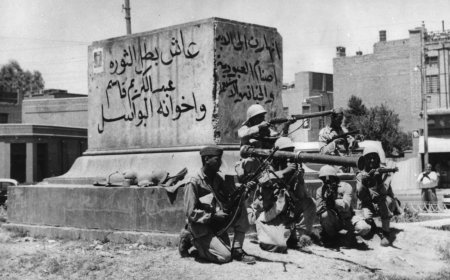
Certainly, The Cauldron is terrifically comprehensive. Stretching from 1900 to the present day, it both zips along and bulges with detail, offering a blockbuster narrative of old empires collapsing and new nations created, of playboy kings and Western imperialists, of deals struck, promises broken, blood spilt and everywhere volcanic upheaval and change.
Above all, Montefiore has taken immense care to depict highly charged events as neutrally as possible. “I’m not ideological. I’m not following either a Marxist imperialist or de-colonialist view of history,” he says. “Everyone has forgotten that the creation of Turkey and Israel happened against the will of Empire. Everyone says that it was the British who helped create Israel in 1948, but in fact Israel was an armed revolt against British imperial power… the history is essential for understanding what is happening now: if you want to understand why, for example, president Erdoğan of Turkey keeps talking about wanting to rule Jerusalem, Beirut and Damascus [formerly part of the Ottoman Empire], then it’s all here.”
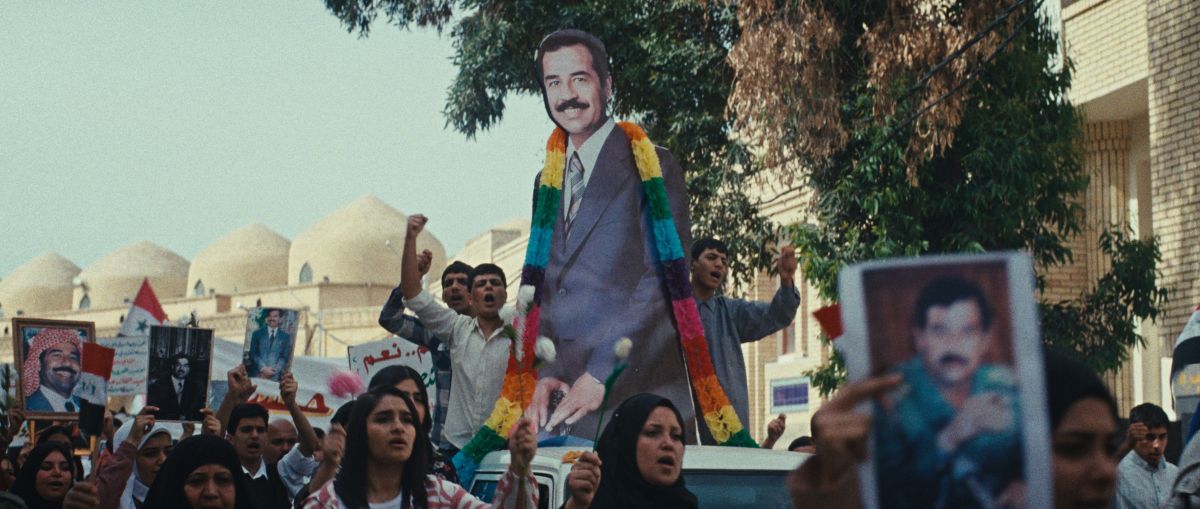
It’s telling that Montefiore feels the need to frame The Cauldron as a primer for the less-informed. Everyone has opinions on the conflict of Israel and Gaza, but many of us would be hard pressed to articulate the finer points of its torturous, millennia-old history. Subjective interpretations of the facts, let alone flat-out ignorance of them, is rampant in the febrile ideological climate that has sprung up with renewed toxicity in the wake of the Hamas attacks. “October 7 changed everything,” he says. “It was years in the planning that did what it was meant to do, which was to put the Palestinian issue at the centre of the world, unleash the ideology of anti-Zionism in Western universities, and nix the Saudis normalising agreements with Israel. The only thing it hasn’t succeeded in is helping the Palestinian people.”
The speed and intensity of anti-Israel sentiment that has spread like wildfire through Britain took Montefiore “by surprise”. “There’s nowhere better to live now than Britain or America or France than at any other point in the last 10,000 years,” he says. “Yet that unprecedented comfort, liberalism and freedom have permitted the hothouse of exciting but intolerant radicalisms such as ‘de-colonialisation’, ‘anti-Americanism’, ‘anti-Westernism’, ‘Third-World-ism’ – whatever you want to call it – particularly in many cultural, academic and media institutions in this country.”
He thinks that the liberal West has become guilty of ideological complacency. “In the book, I write about the extent to which Western comfort democracies have neglected these institutions and allowed them to manage themselves,” he says – he also means international organisations such as the United Nations and NGOs. “Much of the anti-Western thinking that has sprung up has been driven by a bourgeois graduate activist caste that dominate the NGOsphere and parts of the media, too. But these people specialise in intimidating the middle-aged people who run our main cultural institutions, and it’s essential that our institutions have the courage and principle not to bow to their purity tests and boycotts.”
This is one function of democracy: to allow institutions to prosper free from political interference and to promote freedom of speech. “People absolutely have the freedom to preach the destruction of the liberal democracies that protect them,” he agrees. “I’m not in favour of banning or cancelling anybody unless they’re encouraging killing. But a lot of the people on the pro-Palestinian marches in this country, for example, were doing just that. I found myself encountering a few because the Israeli embassy is just around the corner. And while they were full of bien-pensant, white retired-teacher types, whose liberalism one probably couldn’t fault, they were also filled with extreme ideologues, who were backing Iran, and who were backing Hamas.”
He thinks that Starmer, who became prime minister nine months after the marches first sprang up, appeased these demonstrations and their anti-Semitic rhetoric, which for months were a weekly feature of London life, partly out of a fear of offending members of Britain’s Muslim community. He fears something similar under Burnham who, days before we meet, apologised for Labour’s failure to immediately demand a ceasefire after Israel launched military action against Hamas (Burnham said that his party “didn’t get it right”).
“To Andy, I would say: politicians need to think about the right response for Britain in the wider sense, and not just in the short-term sense of being terrified of losing constituencies,” he says. “The Muslim population greatly enhances this country, but it worries me how scared the Labour Party leadership is of the pro-Palestinian activists. It scares me that when MPs were harassed by [activists] during the election campaign, Labour don’t dare name them.”
Has he experienced any abuse himself? “Of course. I’ve received death threats online. But you just have to get on with it.” He is relatively observant – the occasional Jewish holidays such as Passover and Yom Kippur, and will sometimes light a candle on Friday nights. He has never, however, considered leaving Britain. “My parents would always say, ‘Don’t be emotionally attached to possessions and places. Always be free to move where necessary.’ Jewish history has always been made by the ability to make a home in different places. But I’m British. I don’t think of myself as a Jewish historian.”
Montefiore has long been a champion of a Palestinian state. During the 1990s, he was good friends with the Israeli politicians Yitzhak Rabin and Shimon Peres who, along with Yasser Arafat, won the 1994 Nobel Peace Prize for helping to bring about the 1993 Oslo Accords. “It’s still the only way ultimately to settle the aspirations of both nations and save them from a future of grinding conflict,” he says. On this issue, however, he thinks Starmer failed to project sufficient power on the world stage when it came to international efforts to bring about a ceasefire. “The recognition of a Palestinian state, for instance, was a [virtue-signalling] absurdity that achieved nothing,” he says. “Instead, it revealed Britain’s impotence in the Middle East and it rewarded a genocidal organisation that is much more nihilistic than humanitarian. And I say that as a champion of a [Palestine] that I’m desperate to see established.”
By which he means a Palestinian state without Hamas. What, given the options on the table, might that Palestinian state look like? “Hamas must be dismantled, the Board of Peace plan [which involves an international Board of members overseeing the implementation of a peace agreement] is difficult but plausible, the Palestinian Authority provides a possible structure. But it will be very hard. That’s for sure.”
But not impossible? “One of the rules in the Middle East is never discount Netanyahu,” he says. “But his government is certainly highly discredited by recent events. There are Israeli elections in October, and a new government could make a big difference. Though it has to be able to stop the outrageous abuses in the West Bank, and it has to recognise that it cannot achieve everything by armed force. In the short term, I think Gaza will continue to be an agonising sore for Israel, and a tragedy for the Palestinian civilians who are suffering there, until Hamas is disarmed.”
Montefiore’s family history is as rollicking and eventful as many of the stories he tells in his books. He’s of mixed Italian and Moroccan ancestry: one very distant relative, the Moroccan politician and diplomat André Azoulay, pops up in The Cauldron. His maternal grandparents escaped the pogrom in Tsarist Russia in the early 20th century and eventually settled in London. His father, Stephen Eric Sebag Montefiore – a scion of a wealthy banking family – was a GP and a psychiatrist and when not visiting patients by car, young Sebag in tow, saw them, often for free, at home. Alongside, it seems, half of swinging London. “His GP surgery was in the basement of our house, so it was a bit like living above a soap opera,” says Montefiore. “Peter Sellers, Peter Cook and Dudley Moore would often drop by and there were always a few rock stars coming in and out of the house as well. My mother [Phyllis April Jaffé, an actress and author] always said to me, ‘You can know everything, but if you tell anything you’ll ruin your father.’ So I never have.”
Montefiore studied history at Cambridge and, after abandoning a career in high finance, worked as a war correspondent for various newspapers, covering wars in Karabakh, Ossetia and the Caucasus. He has hung out with warlords and spies in Grozny and Moscow and comes across as part dashing adventurer, like a character from a Graham Greene novel, and part urbane London intellectual. Yet part of him craves the simple life. On the day we meet, he plans to join Santa later at their house in the country near Basingstoke. “I love it there,” he says. “I love the quiet. When I’m here, we live a pretty simple life too. Actually, I sometimes think I’d love not to work at all. I think I’d prefer just to drink coffee and talk to people and read.”
Perhaps he simply sometimes finds the weight of history overwhelming. Later, he lets slip that he remains haunted by Stalin. He was granted personal access by Putin to the KGB archives for the first of his two books about the former Soviet dictator, 2003’s The Court of the Red Tsar, although Putin subsequently – with seemingly no sense of irony – took exception to the book’s portrait of Stalin as “murderous” and withdrew access for the second book, 2007’s Young Stalin. Certainly, both biographies feature so much methodical slaughter, I sometimes had to take a break when I first read them. “I used to have a lot of nightmares about being executed by Stalin during his Great Terror,” Montefiore says. “He never attended the torture himself, but he was very interested. He would always ask the guards, ‘How did they [the prisoner] behave?’ He used to tell the interrogators, ‘Mount your prisoners,’ by which he meant, control them absolutely. I think if you write about Stalin, he is always with you.”
He thinks that he developed his journalistic interest during his upbringing. “Watching all these people come and go, it made me very interested in psychology and in personality,” he says. “I became very aware too of how political careers are made.” Which British political leaders does he currently rate? “One of the reasons Kemi Badenoch is rising fast in the polls is that she is not afraid to throw out platitudes and say unpopular, sensible things. I actually think she’d be a superb leader.” He then offers a word of caution (Montefiore is very good at casually slipping in observations of apocalyptic magnitude). “If politicians continue to appease sectarian or ideological factions on important matters of life and death, on terrorism, on migration and on gender, then Western democracy will become ungovernable,” he adds. “Public discourse has already got more dangerous. You only need to look at the terrible killing of Ann Widdecombe, who personified the idiosyncratic but honest eccentricity that has always been an essential part of British public life.”
His own celebrity can be a curse as well as a charm. Earlier this year, he became the subject of a social media-generated witch hunt when a Norwegian bookshop erroneously included one of his books in a display titled “Epstein Island Guest List”. A picture of the display went viral and Montefiore was pilloried online for this supposed connection to Epstein [the bookshop apologised after he pointed out the mistake]. “There was a pile-on,” he says wearily. “It’s frightening and overwhelming. But you have to stand up and fight it. A lot of the moral hysteria that is taking place right now wouldn’t be out of place in Savonarola’s witch-hunts in 15th-century Florence.”
Yet he also fears profoundly for the future of his profession. Book sales of serious non-fiction are falling, previous readers now turn to podcasts; no one has the concentration anymore to understand complex stories and multiple competing facts. What can be done? “History today has the propulsive moral power that religion once had,” he argues. “From Iran and Israel-Palestine to Russia and Turkey, dictators are deploying neo-imperial history to justify aggressive foreign policies. But at the same time, the respect for facts and sources, for knowledge and context, are being burnt away by ideological fervour. The amount of ignorance on TikTok and X is truly alarming.”
What about podcasts? Several, including Tom Holland and Dominic Sandbrook’s The Rest is History, are runaway successes. “But do listeners actually go out and buy history books afterwards? I am not sure they do. The only way to learn history is to read history books. I think it’s right to say that we historians are facing failure in our life’s work to make history relevant, important and authoritative. We have to stand up for the facts even in the face of moral hysteria. We have to raise our game.”
He gives a dry little laugh. “The danger is that we’ll end up like the Middle Ages where we’ll have the equivalent of small monasteries where people like me will be writing by lamplight in gorgeous scripts on parchment for a tiny elite group, and that the rest of the world is like a barbaric world riven with gangs of horsemen.” The problem is that I don’t think he is entirely joking.
The Cauldron: The Making of the Modern Middle East (Weidenfeld and Nicolson, £25) will be published on Aug 25
[Source: Daily Telegraph]