


/file/dailymaverick/wp-content/uploads/2025/04/Krill_school_1_credit-Aker-Qrill.jpg)


















From patron to partner: Moscow preserves its footing in Syria
The agreement concerning Russian bases marks a turning point in relations between the two countries.
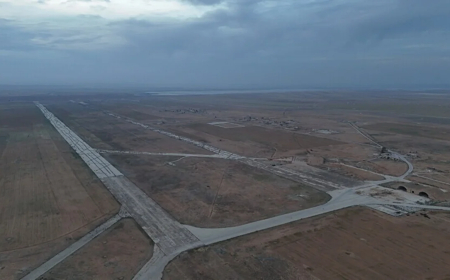
It was through Hmeimim, the Russian air base located on the Syrian coast, that ousted President Bashar Assad was evacuated to Moscow in December 2024. Nearly two years later, the airfield has become one of the symbols of a deeply transformed relationship between Moscow and Damascus.
On Aug. 9, Syria announced the conclusion of a memorandum of understanding with Russia regarding the future of Hmeimim, near Latakia, and the Russian naval base in Tartus. Reached after some 18 months of negotiations, the agreement provides for the return of the civilian infrastructure of both sites to Syrian management and the transformation of their military installations into joint Syrian-Russian training and qualification centers.
Moscow loses its privileges
After its intervention in the Syrian war in 2015, Russia enjoyed permanent and free use of Hmeimim, while a 2017 agreement granted it a 49-year lease in Tartus, with considerable privileges and the possibility of hosting up to 11 warships there. But after the fall of the Assad regime, Moscow had to negotiate its presence with the same rebel forces that its planes had bombed in Idlib.
However, this was not the first time Vladimir Putin dealt with Ahmad al-Sharaa and his men. In 2020, the de-escalation agreement between Russia and Turkey led to the establishment of joint patrols between the two armies along the M4 highway, which separates Idlib from Aleppo and the coast.
This fait accompli was pragmatically accepted by Hay’at Tahrir al-Sham, at the price of quietly suppressed internal dissent. Talks resumed only weeks after the government fell, with the new president quickly signaling that Damascus did not intend to simply expel Moscow. "The two governments quickly concluded that they still needed each other. Moscow wanted to preserve its foothold in the Mediterranean; Damascus needed debt relief, energy deliveries and diplomatic support," explains Ruslan Trad, an expert on Russia and the Syrian conflict.
The new compromise dismantles much of this exceptional status: Damascus regains control of the Latakia airport adjacent to Hmeimim, as well as the fourth commercial quay in Tartus, its warehouses and associated infrastructure, which in practice functioned as true Russian enclaves.
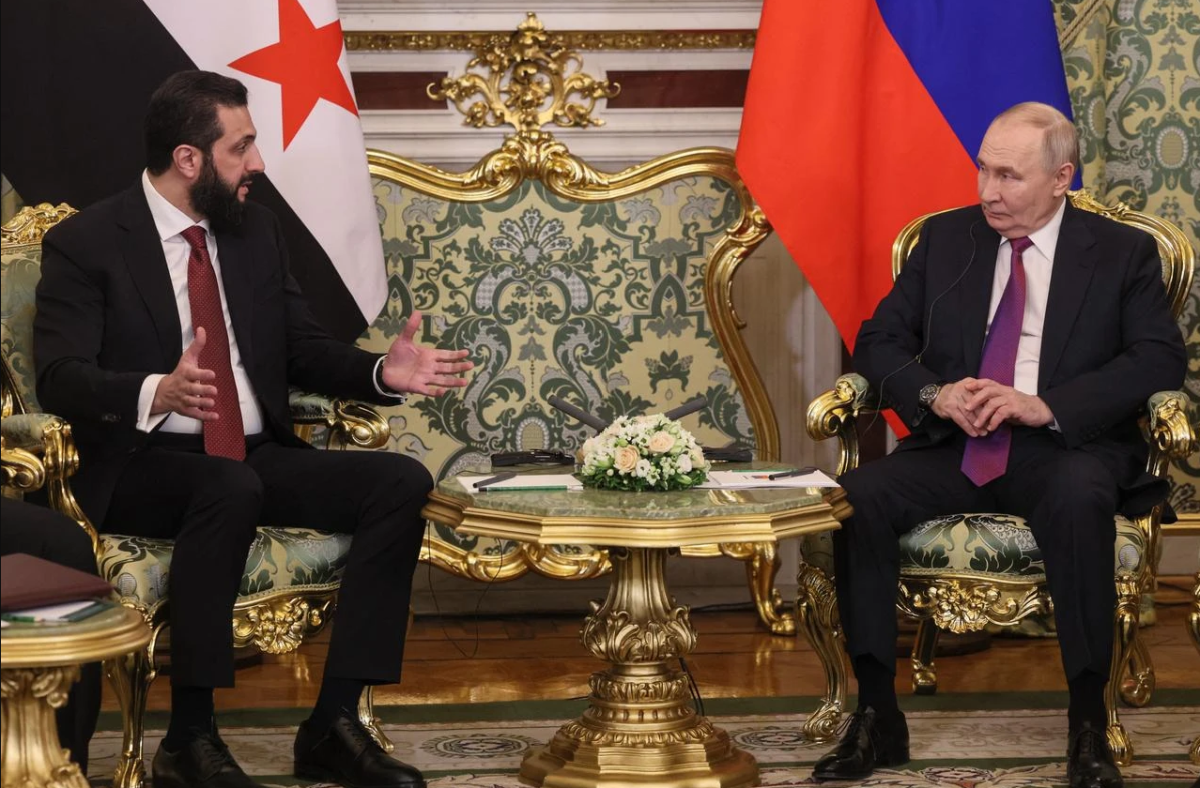
The Syrian Ministry of Foreign Affairs described the agreement as a "reorganization of the Russian presence" and as a diplomatic victory for Damascus. For many Syrians, this regained control is all the more symbolic because Moscow remains closely linked to the air campaign that allowed the Assad regime to retake territory held by the opposition. Sharaa, during a visit to Moscow in January 2026, was even criticized for referring to Russia as a "blessed land."
"For Moscow, the agreement represents a real loss compared to the access and legal privileges Russia enjoyed under Bashar al-Assad," notes Ruslan Trad. "But what really matters to Moscow is keeping the platform, far more than institutional labels." Tartus remains its only naval supply and repair facility in the Mediterranean, while Hmeimim has long been an essential logistical hub for Russian operations in Africa. Especially since Russia’s attempts to find alternatives in the region, notably in Sudan or Libya, have yielded little so far.
Maintaining the previous arrangement would therefore have been politically difficult for the new authorities. This is a "successful attempt by Russia to save the core of its position by conceding to Damascus the symbols needed to reinforce its domestic legitimacy," notes Ruslan Trad. It also allows Damascus to maintain good relations with Moscow, which it remains highly dependent on militarily, especially for maintenance, spare parts and expertise. Russia also continues to be an important supplier of wheat and energy.
Another advantage is that the agreement strengthens the sovereignty of the Syrian state over the coast, where the Russian bases and Alawite strongholds are located, some of which remain wary of Damascus. Meanwhile, Sharaa continues efforts to secure the dissolution of the Syrian Democratic Forces (the Kurdish militia that controlled the Northeast until early in the year). Secret talks are also reportedly underway with Hikmat al-Hijri, the Druze leader who controls the separatist province of Sweida.
Between Ankara, Moscow and Tel Aviv
For Damascus, keeping a more limited Russian presence is also part of a strategy to avoid excessive dependence on a single foreign power. The Syrian president has simultaneously sought closer ties with Washington, Europe, the Gulf states and Ankara. Keeping Moscow in the equation offers Syria military, economic and diplomatic support, while potentially giving it more room for maneuver in dealing with competing powers.
In this context, the continued Russian presence takes on another dimension. Moscow and Israel established a military deconfliction mechanism after the Russian intervention in Syria in 2015. In February 2025, Reuters also reported that Israeli officials had urged Washington to maintain the Russian bases at Hmeimim and Tartus, seeing Moscow’s presence as a potential counterweight to Turkey’s growing influence.
For Damascus, having Russia remain provides an additional channel to Israel, which bombed the airport this week. But from the Israeli perspective, large parts of southern Syria are now either under direct occupation or indirect control. "Russia retains a certain diplomatic utility, notably because of its longstanding ties with Damascus and, historically, with Israel," notes Trad. "But it no longer has the same operational footprint on the ground as under Assad, and Israeli opposition to any Russian military return in the South is now the main limitation on what Moscow can really achieve."
This article was translated from L'Orient-Le Jour.
[Source: L'Orient Today]