





/file/attachments/orphans/ED_543155_209242.jpg)
























Labour approves Chinese embassy and risks Trump’s wrath
Government gives go-ahead despite security fears about secret room that was revealed by The Telegraph

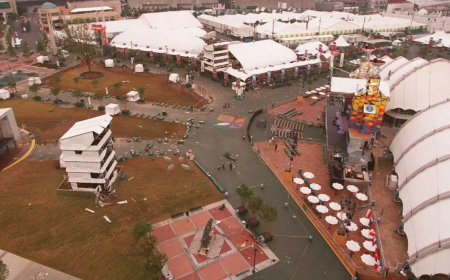
China has been granted planning permission to build a “mega-embassy” in London, risking further criticism from Donald Trump.
On Tuesday, Steve Reed, the Housing Secretary, announced that Beijing’s application to build on the former Royal Mint site in east London had been approved.
White House sources previously said the Trump administration was “deeply concerned” about the embassy plans. In meetings with ministers and Downing Street staff, US officials expressed fears about sensitive cables alongside the site.
Approving the embassy risks further enraging Mr Trump, who criticised Sir Keir Starmer’s deal to give away the Chagos Islands on Tuesday morning.
He wrote on his Truth Social platform that the Chagos deal – which he previously supported – was an act of “great stupidity”.
Critics claimed that the embassy – which would be China’s largest diplomatic site in Europe – would become a “spy hub” in the heart of the capital.
Last week, The Telegraph revealed previously redacted blueprints that showed China intended to build a secret room in the embassy’s basement alongside fibre-optic cables carrying sensitive financial information from the City of London.
A senior member of Mr Trump’s national security council met Foreign Office officials about the embassy plans in August 2024 and discussed reports that the building contained secret rooms.
It is understood that he questioned British officials about the blueprints and requested a technical briefing from British intelligence agencies about the cables and their vulnerability to Chinese interference.
The embassy application was first submitted by China in 2018, and was subjected to repeated delays.
After planning permission was initially rejected by Tower Hamlets council, Sir Keir Starmer “called in” the decision to be assessed by ministers at the request of Xi Jinping, the Chinese president, in 2024.
The Government said that China would continue to withhold permission for the refurbishment of Britain’s own embassy in Beijing if it was rejected.
The site has been the subject of significant controversy and protests from local residents, who are now expected to challenge the planning decision in court.
Sir James Cleverly, the shadow housing secretary, said the approval was a “disgraceful act of cowardice from a Labour Government and Prime Minister utterly devoid of backbone”.
He said that Sir Keir had failed at his duty to keep the country safe in favour of his “desperate desire for Beijing’s approval”, adding: “Labour’s latest sell-out confirms they cannot be trusted to stand up for Britain on the international stage.”
Dame Priti Patel, the shadow foreign secretary, said Sir Keir was giving Mr Xi “a colossal spy hub in the heart of our capital”, adding: “Keir Starmer has sold off our national security to the Chinese Communist Party with his shameful ‘super-embassy’ surrender.”
A Labour peer and top barrister described the Government’s approval of China’s new embassy as a “dangerous” concession.
Baroness Kennedy of the Shaws, who co-chairs the cross-party Inter-Parliamentary Alliance on China, said: “Whilst British parliamentarians, like myself, remain unjustly sanctioned and British citizen Jimmy Lai remains imprisoned on political charges, the UK must take a principled stand.
“We cannot reinforce the dangerous notion that Britain will continue to make concessions – such as granting a ‘mega-embassy’ – without reciprocity or regard for the rule of law.”
In a statement, Mr Reed said he had made the decision “fairly”, and had considered matters of national security, including concerns about fibre-optic cables running alongside the building.
On Tuesday, the Ministry of Housing, Communities and Local Government published a 240-page document setting out the decision. The text stated that the ruling was “final unless it is successfully challenged in court”.
It noted that Mr Reed did not include “moral, ethical or cultural considerations” about the planning application, but did consider matters of “national security”, including underground cables.
It added that “that no bodies with responsibility for national security, including [the Home Office] and [the Foreign Office], have raised concerns or objected to the proposal on the basis of the proximity of the cables or other underground infrastructure” and that Mr Reed “considers that the lack of objection from these bodies on this issue carries significant weight”.
It added: “He further notes that this matter has not been raised by the owner and operator of the cables. In light of the above, he does not consider that the generalised concerns which have been raised about these cables are a reason to refuse planning permission, or that this matter weighs against the proposal.”
The document said that if China were to practice “unlawful or improper activity” from its embassy, which could include espionage, the Government would challenge it under the Vienna Convention rather than through the planning process.
It also addressed concerns about redacted documents, which ministers demanded to see last year.
Dan Jarvis, the security minister, is expected to give a statement to MPs about the national security implications of the embassy decision later on Tuesday.
However, the Ministry of Housing, Communities and Local Government is not expected to make any further comment about the planning application in anticipation that it will be challenged in court.
The Telegraph’s reporting revealed 208 rooms in the basement of the embassy complex, which were redacted on blueprints submitted to the planning inquiry.
The documents showed that China planned to construct a secret room next to the external wall of the embassy, which would run parallel to telecommunications cables carrying sensitive data from the City of London.
An external wall between the embassy and the cables would be demolished, bringing workmen employed by China within 6ft of the cables.
The Government’s decision said the plans submitted by China “do not show use information for all rooms”, but that Mr Reed “does not consider that there is real as opposed to theoretical ambiguity as to what planning permission is sought for, or that it is impossible properly to understand the scope of the uses proposed”.
“The rooms for which no particular use is specified may only be used for any lawful embassy use,” it added.
“Other than the issue of staff and visitor accommodation, he does not consider that any lawful embassy use of the unmarked rooms would give rise to material adverse planning impacts.”
The decision is expected to be challenged in the courts within weeks by campaigners, who argue that it was unlawfully “pre-determined” by Labour.
Mark Nygate, the treasurer of the Royal Mint Court Residents’ Association, told The Telegraph: “Now that the Government has made this decision, which we think is wrong, we are going ahead with a judicial review.”
The campaigners are expected to be represented in court by Lord Banner KC, one of Britain’s leading planning lawyers, and have previously told The Telegraph they are willing to take the fight all the way to the Supreme Court.
If multiple appeals are allowed by the courts, the legal battle could run for years, extending beyond the next election.
[Source: Daily Telegraph]