



















Iran: A mosaic state rife with internal conflicts
Iran is a multi-ethnic state — yet its leadership has failed to find an answer to recurring protests, minority grievances and deepening environmental crises.
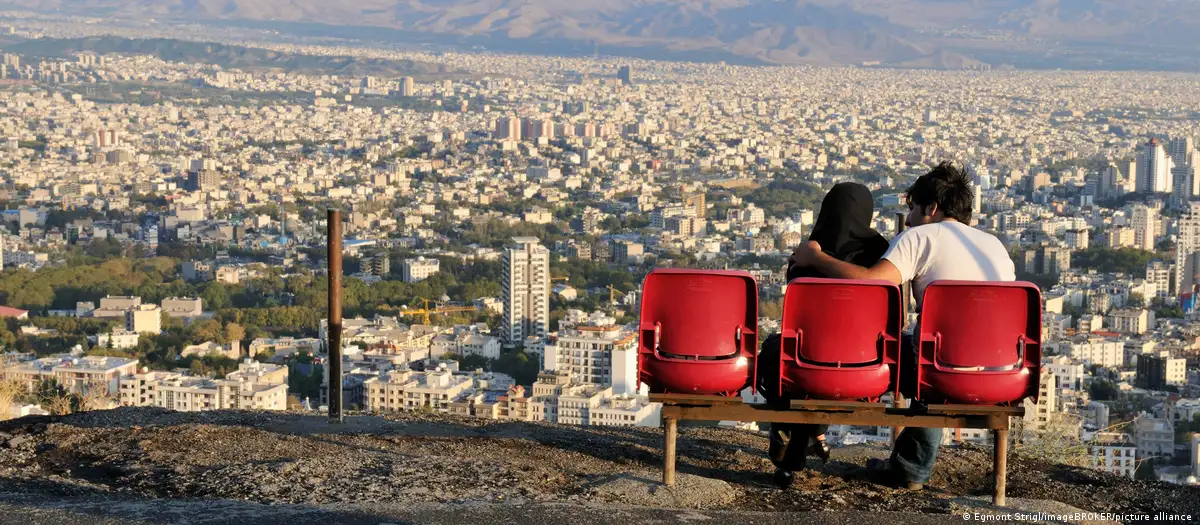
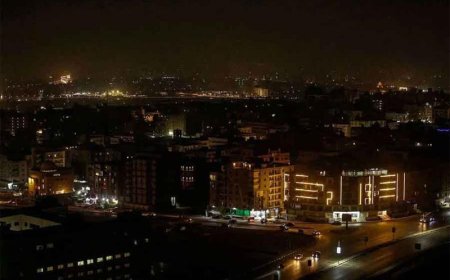
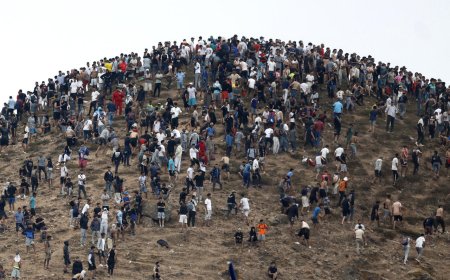
The extent of the violence used by the security forces against demonstrators in Iran has deeply shocked the population. Triggered by an economic crisis, mass protests broke out across the country at the end of December 2025. The authorities responded with temporary internet blackouts and resorted to violence to suppress the protests.
According to official figures, 3,117 people were killed, including many security forces. Human rights organizations report significantly higher numbers. According to the US-based human rights organization HRANA (Human Rights Activists News Agency), 6,126 deaths have been confirmed so far, including 86 children and 5,777 protesters; another 17,091 cases are currently being investigated.
The victims were among millions of young Iranians who dream of a better life in their home country. Iran is in the midst of a deep economic crisis and faces high unemployment. Water shortages and drought are putting additional pressure, forcing many to flee their home regions.
Statistics from the Iranian Parliament's Research Center show that at least 30 million people have moved within the country in the last 30 years, making up more than a third of the population.
Persian language, Shiite religion
Iran is a multi-ethnic state comprising numerous ethnic groups that share a long common history.
Islam was introduced after the Arab conquest in the 7th century. However, the population retained its Persian language, which remains a central pillar of Iranian identity to this day.
In the 16th century, Shah Ismail I, founder of the Safavid dynasty, declared Twelver Shiite Islam the state religion. In doing so, Iran deliberately distanced itself from the Sunni-dominated Ottoman Empire, against which Iran defended its territorial integrity.
For centuries, Persia was a central power in the region. In 1935, Shah Reza Pahlavi officially renamed the state "Iran" to foster a modern national identity.
To this day, Sunnis are a religious minority in Shiite-dominated Iran, making up about 5% to 10% of the population. They live mainly in the border regions: in Kurdish, Baloch, and Turkmen areas.
Iran's internal lines of conflict
For decades, minorities, especially the ones in border regions, have been complaining about systematic discrimination by the state.
The political system is supported by ideologically loyal followers of the Islamic Republic, who tend not to focus on ethnicity as an issue.
The state media is once again spreading reports about the activities of separatists who allegedly want to plunge the country into chaos and bring about civil war.
The recurring protests show that an ever-growing majority of society rejects the existing system. At the same time, however, there is still no clearly defined political alternative that could find broad support among all dissatisfied sections of society.
Kurdish areas
With an estimated population of 9 to 12 million, the Kurds form a large, predominantly Sunni minority. They belong to the Kurdish population spread across four countries: Iran, Iraq, Turkey and Syria. Since the collapse of the Ottoman Empire, many Kurds have dreamed of an independent Kurdistan; however, there is no common political agenda as yet.
The short-lived Kurdish Republic of Mahabad in Iran, which was founded in 1946 with Soviet support and existed for only eleven months, continues to inspire the quest for independence to this day. All Kurdish uprisings in Iran have been suppressed so far; like the uprising by the left-wing Democratic Party of Kurdistan-Iran in 1967, which was violently ended by Shah Mohammad Reza Pahlavi.
During the 1979 revolution, many Kurds took part in demonstrations against the Shah. After his overthrow, however, the new rulers refused to grant them any autonomy. An immediate uprising in the spring of 1979 was brutally suppressed.
Waves of protest against the regime spread particularly quickly in Kurdish areas, such as the nationwide protests following the death of 22-year-old Kurdish woman Jina Mahsa Amini in police custody in 2022, who was arrested in Tehran for allegedly violating the headscarf requirement.
When unrest breaks out in Kurdish areas, Tehran works closely with neighboring countries, especially Turkey, officially under the pretext of national security.
What do separatist and nationalist groups want?
Two Iranian provinces on the northwestern border are called West and East Azerbaijan. The present-day country of Azerbaijan was separated from Iran in 1828 after a Russian-Persian war and has a population of around 10.2 million.
In Iran, the number of citizens with Azerbaijani roots is estimated at around 18 million. In Tehran, there is concern about separatist groups seeking an independent "South Azerbaijan." At the same time, there are nationalist movements in Baku that speak of a "Greater Azerbaijan" that would also include the Iranian provinces.
The expansion of relations between Azerbaijan and Israel in recent years is a thorn in Tehran's side. Since the 1979 revolution, the rulers have threatened the state of Israel with destruction and have tried to profile themselves as the protector of oppressed Muslims in the Islamic world.
Around three million of Iran's approximately 92 million inhabitants live in the province of Sistan and Baluchistan in the southeast of the country. The majority of the population are Sunni Baluchis, an ethnic group that also lives in Pakistan and Afghanistan.
The number of executions for drug offenses is very high in Baluchistan. Of the 975 documented executions in 2024, 503, more than half, were for convictions related to intoxicants.
Human rights organizations are calling for the UN Office on Drugs and Crime (UNODC) to also step up its efforts to end the use of the death penalty for drug offenses.
Frustration and anger toward the central government are widespread in the region. The nationwide protests under the slogan "Woman, Life, Freedom," which began after the death of Jina Mahsa Amini in the fall of 2022, also reached Balochistan. The provincial capital Zahedan, in particular, became a stronghold of protests and harsh state repression. Protesters were arrested, some later sentenced to death.
Due to restricted communication and repeated internet blackouts, there is little reliable information available about the current protests.
[Source: DW English]