




/file/attachments/orphans/iStock-802203090_325419.jpg)












Iran closes Strait of Hormuz for first time since 1980s
Blockade for ‘live-fire drills’ comes as Ali Khamenei threatens to send Trump’s aircraft carrier ‘to bottom of the sea’

Iran announced the temporary closure of the Strait of Hormuz for the first time since the 1980s on Tuesday, amid a US military build-up in the Arabian Sea.
The Islamic Revolutionary Guard Corps (IRGC) announced on Tuesday that sections of the strategic waterway would be closed for several hours for live-fire naval drills.
Iran’s supreme leader also threatened to send US aircraft carriers to the “bottom of the sea”, despite diplomatic efforts continuing in Geneva.
After the talks concluded on Tuesday, Abbas Araghchi, Iran’s foreign minister, said that both sides agreed on “guiding principles” but they fell short of a full deal.
A US official said: “The Iranians said they would come back in the next two weeks with detailed proposals to address some of the open gaps in our positions.”
Later on Tuesday, JD Vance told Fox News: “In some ways, it went well; they agreed to meet afterwards. But in other ways, it was very clear that the president has set some red lines that the Iranians are not yet willing to actually acknowledge and work through.”
The US vice president added that they would stop Iran having a nuclear weapon “whether it’s through diplomatic options or through another option”.
Both Washington and Tehran are refusing to call off the escalating military tensions.
The talks appeared to focus on finding the parameters of a future deal rather than an agreement itself.
Sources familiar with the discussions suggested Iran and the US agreed on potential elements that could be included in any future deal. These could include a broad brush agreement that sanctions should be discussed, allowing Tehran to claim it has secured backing for relief against any punitive measures on its economy.
On Monday, the IRGC launched naval drills in the Strait of Hormuz, north-west of the USS Abraham Lincoln strike group, while the USS Gerald R Ford powers towards the Middle East.
Iranian state television broadcast footage showing cruise missiles being fired toward targets during the exercises.
Iran has never fully closed the strait, through which 21 per cent of the world’s oil is shipped, though it has repeatedly threatened to do so and has taken actions short of complete closure that have disrupted shipping.
During the so-called “tanker war” of the 1980s, Iran and Iraq both attacked oil shipping in the Persian Gulf, with Iran mining international waters and attacking vessels with speedboats and missiles.
The narrow waterway, just 24 miles wide at its narrowest point, is one of the world’s most critical energy choke points, with approximately 21 million barrels of oil passing through daily.
Any official closure would send oil prices soaring and inflict severe global economic damage.
The strategy carries risks for Iran itself – oil exports account for the majority of government revenue, and closing the Strait would harm Iran’s economy even more than its enemies’.
Iranian officials have said blocking the waterway would involve attacking tankers with missiles and drones, and potentially sinking vessels to obstruct shipping channels.
After Tuesday’s talks, Mr Araghchi said both sides are set to exchange draft texts of a potential agreement before scheduling a third round of talks.
He told state TV: “The second round of indirect negotiations was held and we had good discussions, and in this round more serious issues were raised compared to the previous round.”
He added: “There was a more constructive atmosphere in this round and different ideas were raised that were discussed seriously.”
The US president was represented by special envoy Steve Witkoff and son-in-law Jared Kushner at the talks, mediated by Oman, aimed at halting Iran’s nuclear programme.
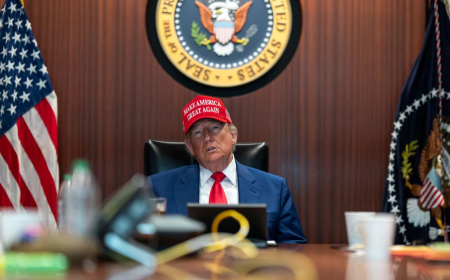
Mr Trump confirmed he would be closely involved in the discussions, adding: “I don’t think they want the consequences of not making a deal.”
But Ali Khamenei continued to inflame tensions, warning that Washington’s military superiority would not protect it from Iran.
“They constantly say we have sent an aircraft carrier towards Iran,” the Islamic Republic’s supreme leader said. “Very well, an aircraft carrier is certainly a dangerous machine, but more dangerous than the carrier is the weapon that can send it to the bottom of the sea.”
Khamenei’s threats to sink US warships are likely aimed primarily at a domestic audience rather than Washington, but nonetheless risk angering Mr Trump.
“It seems that the president of the United States keeps saying that their army is the strongest army in the world,” Khamenei said. “The strongest army in the world may sometimes receive such a slap that it cannot get back up.”
With Iran’s political establishment deeply divided over the Geneva talks, thousands dead following January’s protest crackdown, and reformist leaders under arrest, Khamenei is under pressure to project strength.
His public threats may also provide political cover for whatever compromises his negotiating team may be forced to make in negotiations, including limits to his nuclear programme.
On Monday, the Iranian foreign ministry said it believed the US position on the nuclear programme had moved towards a “more realistic one”.
The White House is under pressure from Israel to push for limits on Iranian ballistic missile stocks, as well as its sponsorship of terrorist groups.
The US negotiators are also using their visit to Geneva to meet a Russian delegation to discuss Ukraine.
On Tuesday, Mr Witkoff was seen having breakfast with Jonathan Powell, Sir Keir Starmer’s national security adviser, at the InterContinental hotel in Geneva before the expected meeting with the Russians.
They were briefly joined by Dan Driscoll, the US Army secretary, who stood over them in workout clothes.
An initial round of discussions between Iran and the US took place in Oman 10 days ago, after which both sides expressed cautious optimism that further talks would be worthwhile.
Despite the positive signals, Mr Trump has continued to threaten Iran with military action.
On board Air Force One, Mr Trump told reporters he believed Iran wanted to strike a deal on its nuclear programme.
Referring to the American strikes on the nuclear facilities last summer, which followed several rounds of talks which yielded no agreement, he said: “We could have had a deal instead of sending the B-2s in to knock out their nuclear potential. And we had to send the B-2s,” referring to US stealth bombers.
“I hope they’re going to be more reasonable,” he added.
Mr Araghchi met the United Nations (UN) nuclear watchdog chief on Monday, saying in a post on X he was in Geneva to “achieve a fair and equitable deal”.
But he said: “What is not on the table: submission before threats.”
On Tuesday, referring to the talks in Geneva, Khamenei said that possessing deterrent weapons is “necessary and obligatory” for every nation.
He branded US demands for Iran to abandon its nuclear programme “illogical”, adding: “If negotiations are to take place, pre-determining their outcome is wrong and foolish. This foolish act is being done by the US government, president and some senators, and they don’t realise this path is a dead end for them.”
Marco Rubio, the US secretary of state, said reaching a deal with Tehran would be “very difficult”.
“I think that there’s an opportunity here to diplomatically reach an agreement ... but I don’t want to overstate it either,” Mr Rubio said during a visit to Hungary on Monday. “It’s going to be hard.”
Meanwhile, Iran’s foreign ministry said Washington’s position on Tehran’s nuclear programme has shifted towards “realism” since the Muscat talks.
Esmail Baghaei, a spokesman, said: “A cautious assessment of the outcome of the talks that took place in Muscat until today is that, at least based on what has been told to us, America’s position regarding Iran’s nuclear issue has moved towards becoming more realistic, in the sense that they would be committed to Iran’s explicit rights under the NPT treaty.”
[Source: Daily Telegraph]