
/file/attachments/orphans/ED_543155_209242.jpg)




















Trump says Iran war ‘very complete’ after call with Putin
President claims Tehran regime has nothing left after hour-long conversation with Russian leader

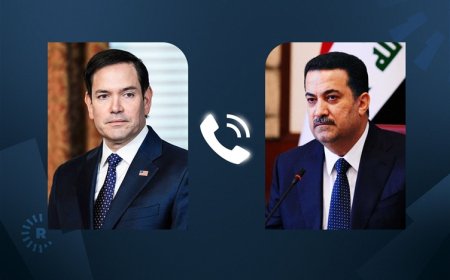
Donald Trump said the war in Iran was “very complete” after an hour-long phone call with Vladimir Putin.
The US president said his country’s joint operation with Israel had left Iran with “no navy, no communications … no air force”.
“I think the war is very complete, pretty much,” he told CBS News, adding that the US was “very far” ahead of schedule.
His comments came after a lengthy call with Putin, who presented Mr Trump with several proposals to end the war quickly, according to the Kremlin.
At a subsequent press conference in Miami, Mr Trump announced the US would waive “oil-related sanctions” to unnamed countries, widely understood to be Russia.
The news lifted stock markets and triggered a fall in oil prices, as defence officials in the US said the military was close to achieving its objectives.
The S&P 500 index of America’s biggest companies reversed an earlier decline to rise 0.8 per cent in afternoon trading in New York, while the Dow Jones Industrial Average was up 0.5 per cent.
Meanwhile, oil prices dropped back to $92 a barrel, after reaching as high as $120 earlier in the day.
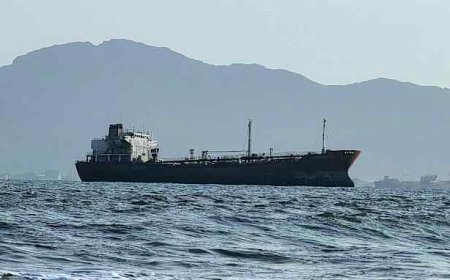
Mr Trump was under pressure to intervene in the markets after Iran closed the Strait of Hormuz, through which 20 per cent of the world’s oil and gas passes.
Emmanuel Macron announced on Monday that France was sending an “unprecedented” naval deployment to reopen the strait.
The announcement came in a speech in Cyprus, where Britain has failed to send a single warship after a drone attack on an RAF base.
Mr Trump’s hints at ending the war came after his phone call with Putin, as reported in Russian state media.
“The Russian president expressed a number of considerations aimed at a speedy political and diplomatic resolution of the Iranian conflict, including taking into account the contacts held with the leaders of the Persian Gulf countries, with Iranian president [Masoud] Pezeshkian, and the leaders of a number of other countries,” a Kremlin spokesman said.
Speaking about the call, Mr Trump said that Putin wanted to be “helpful” on Iran, adding: “We had a very good talk and he wants to be very constructive.”
Earlier, Putin offered Mojtaba Khamenei, Iran’s new supreme leader, “unwavering support”.
“Today, as Iran is opposing an armed aggression, your work in this high post will certainly require immense courage and selflessness,” the Russian president said in a statement.
The US president said last week that the US navy could begin escorting oil tankers through the Strait of Hormuz to get oil moving again.
On Monday night, Britain’s Ministry of Defence announced it had begun “air sorties” over the United Arab Emirates, and warplanes had shot down an Iranian drone in the region.
France, meanwhile, will deploy eight frigates – more than the entire British fleet possesses – two amphibious helicopter carriers and the country’s flagship Charles de Gaulle aircraft carrier.
Announcing France’s naval deployment, Mr Macron said: “We are in the process of setting up a purely defensive, purely escort mission, which must be prepared together with both European and non-European states, and whose purpose is to enable, as soon as possible after the most intense phase of the conflict has ended, the escort of container ships and tankers to gradually reopen the Strait of Hormuz.
“Our objective is to maintain a strictly defensive stance, standing alongside all countries attacked by Iran in its retaliation, to ensure our credibility, and to contribute to regional de-escalation. Ultimately, we aim to guarantee freedom of navigation and maritime security.”
Saudi Arabia followed Qatar, Iraq, Kuwait and the United Arab Emirates (UAE) in cutting back oil production as local storage tanks filled up.
Sheikh Mohammed bin Abdulrahman al-Thani, the Qatari prime minister, became the first Gulf state leader to put public pressure on Mr Trump to end the war.
He said that the latest events had delivered “a huge shake-up” of the trust underpinning his country’s relationship with Iran.
“For the US, we would like to see a de-escalation, we would like to see ... a diplomatic solution that addresses our concerns as well as their concerns,” he added.
The earlier jump in oil prices had prompted Rachel Reeves to warn households of a looming inflation shock.
Government borrowing costs surged as traders speculated that Labour would bail out struggling families, as well as expectations that the Bank of England may have to raise interest rates to keep a lid on inflation.
The war has killed more than a thousand civilians in Iran, rights groups say, and hundreds more in Lebanon under Israeli air strikes. Dozens have been killed in Gulf states targeted by Iran, while seven US soldiers have died.
[Source: Daily Telegraph]