



/file/attachments/orphans/ED_543155_209242.jpg)






















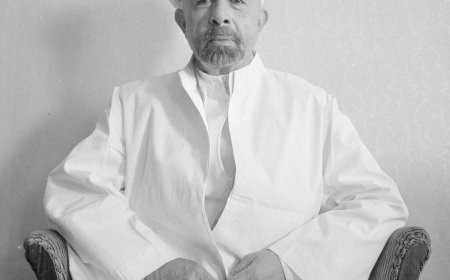

Sir Anthony Leggett, physicist who won the Nobel Prize for his research into superfluids
He explained how atoms interact with each other in supercooled helium.

Professor Sir Anthony Leggett, the theoretical physicist who has died aged 87, shared the 2003 Nobel Prize in Physics for his contributions to the arcane theory of superfluids – liquefied gases that behave strangely when cooled to very low temperatures.
Superfluids were first observed by Pyotr Kapitsa, among others, in the late 1930s. They have peculiar properties such as boiling without forming bubbles, flowing without internal friction or viscosity and being able to defy gravity to climb the walls of vessels. If spun they turn without stopping. The first superfluid discovered was liquid Helium-4, which becomes fluid when cooled to below about 2 degrees above absolute zero.
The phenomenon was explained almost immediately by the young theoretician Lev Landau, who suggested that, as in the case of supercooled solids, where electrons form pairs to create superconductors, in liquid Helium-4, the helium atoms link with each other to form superfluids.
At the time this was only thought to be possible where atoms had an even number of protons, neutrons and electrons. But then in 1972 a team of physicists at Cornell University produced a supercooled Helium-3 which has only one neutron in its nucleus, but behaved very like supercooled Helium-4.
Explaining how the unwieldy Helium-3 atoms combined with each other posed a much harder challenge for theoretical physics, and it was Leggett who, working at Sussex University, succeeded in explaining how this occurs. The atoms, Leggett suggested, first form into pairs, which then act like single particles that can occupy the same quantum state.
Scientists find superfluids interesting because they behave in a similar way to superconductors - materials which lose all resistance to electricity when cooled below certain temperatures. The theory of superfluidity, though, has found wide-ranging applications as superfluid liquids can provide scientists with insights into the ways in which matter behaves in its lowest and most ordered state.
Recent studies have been concerned with examining how this order passes into chaos or turbulence – one of the unsolved problems of classical physics. Astronomers are also interested in superfluids because they may help to explain the behaviour of some of the more bizarre objects in the Universe. Neutron stars, the ultra-compact bodies left over when massive stars explode, are thought to have rotation properties similar to those seen in superfluids.
The field of superfluids and superconductivity is one of the most complex and, to the layman, baffling fields in science, yet Leggett came to it after giving up science at school as “incomprehensible” and taking an arts degree.
Anthony James Leggett was born in London on March 26 1938 and educated at Balliol College, Oxford, where he read Greats, a combination of Classical literature, ancient history and philosophy. But he became disillusioned with philosophy and decided he wanted to work in a field where “in some sense nature could tell you if you are right or wrong.”
His father had been a physics teacher, though he had never encouraged his son to take an interest in the subject, so it came as a surprise when, “out of the blue”, Leggett announced his intention to stay at Oxford to study physics. His lack of scientific knowledge seemed to be no hindrance, and after taking his physics degree a year early at Merton, he went on to do a doctorate at Magdalen.
After leaving Oxford, Leggett worked for a time as a postdoctoral research assistant at the University of Illinois before returning to Britain to take up a post as lecturer in physics at Sussex University in 1967. It was while working at Sussex in the 1970s that he made the breakthrough that would earn him the Nobel Prize (which he shared with the Russians Alexei Abrikosov and Vitaly Ginszburg).
Leggett was appointed Reader in 1971 and Professor of Physics in 1973. But in 1983, he joined the brain drain of scientists leaving Britain for America and took up a post as MacArthur Professor of Physics at the University of Illinois.
Leggett was a modest, unassuming man – though one of his students at Sussex recalled: “If you speak to him, he will speak twice as quickly as you, think twice as fast and twice as deeply.” He was described as an “intuitive thinker” and approached his subject as a philosopher as well as a physicist.
In his later career he explored the question of how far quantum mechanics describes the physical world on the everyday level, and from 2007 he was a professor at the Institute for Quantum Computing at the University of Waterloo in Canada.
Leggett’s contribution to theoretical physics was recognised in many honours, including fellowships of the Royal Society, the American Physical Society and the American Institute of Physics. He was awarded the Wolf Prize in Physics, the Maxwell Medal and Prize and the Simon Memorial Prize of the British Institute of Physics. He was knighted in 2004.
Leggett married Haruko Kinase, whom he met at Sussex, in 1973. They had a daughter.
Anthony Leggett, born March 26 1938, died March 8 2026
[Source: Daily Telegraph]