




















Iran fires missiles at UAE after US tries to take control of Hormuz
Gulf state says the attacks pose a ‘direct threat to our security and stability’

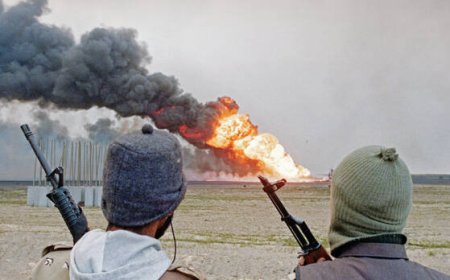
Iran has attacked the United Arab Emirates with a barrage of missiles and drones after the US launched a major operation to wrest control of the Strait of Hormuz.
The UAE’s foreign ministry said it was “actively engaging” ballistic missiles, cruise missiles and drones fired by Iran, while two ships were also struck in the strait.
As the fragile ceasefire between Washington and Tehran hung by a thread on Monday night, US guided-missile destroyers entered the strait and escorted two American-flagged merchant ships safely through.
Iran fired cruise missiles, rockets and deployed combat drones near the American destroyers, state media reported, but America denied that any of its ships were hit.
After coming under fire, US Apache and Seahawk helicopters hit “six Iranian small boats threatening commercial shipping”, Admiral Brad Cooper, the head of US Central Command, said. Donald Trump later said they had hit seven.
Scott Bessent, the US treasury secretary, said the US was “firing only when fired upon”, and insisted that it had “absolute control” of the strait and was opening up the channel for other ships.
The South Korean government said an explosion and fire had broken out aboard a South Korean-operated ship anchored in the strait. Mr Trump said: “Perhaps it’s time for South Korea to come and join the mission,” referring to “Project Freedom” and the reopening of the waterway.
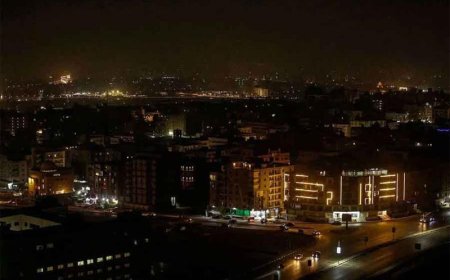
A separate Iranian drone strike caused a fire in the city of Fujairah, injuring three Indian nationals. Fujairah is the starting point of an oil pipeline that allows the UAE to bypass the Strait of Hormuz and transport crude directly to Oman, carrying up to two million barrels a day.
The price of oil jumped after the Iranian strikes. Brent crude, the international benchmark, rose more than 5 per cent to $114 a barrel following the missile attacks, after trading as low as $105 a barrel earlier in the day.
“These attacks represent a dangerous escalation and an unacceptable transgression, posing a direct threat to the state’s security, stability and the safety of its territories,” the UAE’s foreign ministry said in a statement.
It added that the UAE “reserves its full and legitimate right to respond to these attacks”.
Mr Trump said Iran had “taken some shots” but caused little harm in the Strait of Hormuz.
In a Truth Social post, he made no mention of apparent attacks on the United Arab Emirates and Oman, in an apparent effort to downplay tensions in the face of surging oil prices.
Pete Hegseth, the US secretary of defence, was expected to host a news conference on Tuesday.
The US military has said “Project Freedom” involves multiple destroyers, more than 100 aircraft and 15,000 troops.
Mr Trump described the operation in humanitarian terms as an effort to rescue stranded seafarers on oil tankers or cargo ships, many of whose governments had asked the White House for help, he said.
Using drones, missiles and mines, Iran imposed a blockade of the vital maritime corridor in the early days of the war, a stance the Islamic republic has maintained despite a ceasefire with the US and Israel since April 8.
Mr Trump ordered a US blockade of Iranian ports on April 13 in an effort to strangle Iran’s economy and force it to reopen the strait.
Monday’s military operation is an attempt to force open the Gulf to shipping.
Breaking Iran’s chokehold over the strait, through which about a fifth of the world’s oil normally flows, would deny Tehran a major source of leverage in the talks to end the war. It is also refusing to accede to Mr Trump’s demands to give up its nuclear material.
However, Iran warned that commercial vessels still required its permission to transit the strait and said any ship that tried to cross without consent would be “at risk”.
Up to 30 ships are thought to have been attacked in the wider Gulf region since the war began on February 28.
Dozens have been trapped in the Gulf, either in port or at anchor, for weeks.
Even with US naval support, it is far from certain that many ship owners or their insurers will risk sending their vessels through while Iran continues to threaten hostile fire.
The blockade has caused a spike in fuel prices and has threatened a slowdown in the global economy.
The tension at sea came after Iran handed over its latest peace proposal to Pakistani mediators last Thursday.
The proposal is believed to have focused on stopping the war in the short term, rather than extending the current ceasefire, while delaying agreement on the issue of the nuclear programme.
Mr Trump subsequently said he was “not satisfied” with it, but did not give more details. He also said Iran had “not paid a big enough price”.
Tehran has since confirmed it has received the US response.
Later on Monday, Iranian state media said the reports that two ships had transited the strait were “entirely false”.
Central Command did not name the commercial vessels, but said they were US-flagged.
Axios had reported that the Pentagon was preparing “short and powerful” strikes to break Tehran’s hold on the maritime corridor.
However, Mr Trump warned last week that there would be “no more Mr Nice Guy” as he ordered an extension of the American naval blockade of the strait, suggesting he would focus on squeezing the Iranian economy rather than on strikes.
The president said he believed the US naval barrier was working, and rejected an Iranian proposal to reopen the strait in exchange for the end of the blockade until the two sides reached an agreement on Tehran’s nuclear programme.
‘Choking like a stuffed pig’
He wrote on Truth Social: “The blockade is somewhat more effective than the bombing. They are choking like a stuffed pig. And it is going to be worse for them.”
In a meeting with oil executives on Wednesday, Mr Trump reportedly signalled he would be willing to enforce the blockade for months.
The US has warned shipping companies they could face sanctions for paying Iran for transit of the strait.
The Joint Maritime Information Centre urged mariners to coordinate closely with authorities in Oman “due to anticipated high traffic volume”.
It warned that passing close to usual routes “should be considered extremely hazardous due to the presence of mines that have not been fully surveyed and mitigated”.
The head of security for the Baltic and International Maritime Council, a leading shipping trade group, said no formal guidance or details about the US effort had been issued to the industry.
Jakob Larsen questioned whether the effort was sustainable and said it carried a “risk of hostilities breaking out again”.
[Source: Daily Telegraph]