



















Trump’s war on Iran has China in a chokehold
As the US president prepares to visit Beijing, he may have ended his hosts’ decades-long growth miracle

A robot that can win a half-marathon. A pilotless plane. A soap opera made by AI. An electric supercar with a top speed of 308mph.
Whenever a new bit of Chinese-made tech goes viral online, it seems to be something that goes further, faster or smarter than ever before.
And every time, it feels like a silicon-made metaphor for China’s coming of age as a global superpower.
As Donald Trump prepares to visit Beijing in two weeks’ time, he confronts a Communist Party regime that, on the face of it, looks on the up.
Beijing controls access to critical minerals used by his military, and holds at least $700bn (£517bn) in outstanding loans to his government.
Little wonder that, even as he pours scorn on Sir Keir Starmer, Emmanuel Macron, Friedrich Merz and Mark Carney, Trump deferentially calls his Chinese counterpart, Xi Jinping, “the Highly Respected President of China”.
But that doesn’t mean Trump is making things easy for Xi.
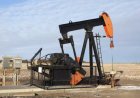
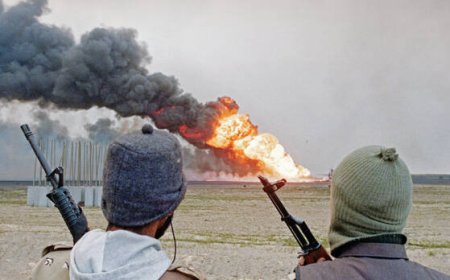
First he choked off the half a million daily barrels of oil that China was buying from Venezuela. Now, his attack on Iran, leading to the closure of the Strait of Hormuz, has squeezed another 40pc of Chinese crude supply.
An oil crunch is never good news, but Beijing was prepared for this. Through price caps, export bans, fuel stockpiles and home-grown alternatives to imported oil and gas, China has managed to stave off the early economic threat from the Gulf war.
If the conflict drags on and the Strait of Hormuz remains closed, however, China could start to feel the pinch.
A global slowdown or recession could cut demand for its exports, which have been almost single-handedly propping up the Chinese economy ever since the country’s great property crash of 2021.
And if that happens, Xi may struggle to keep a lid on three ticking time bombs sitting beneath China’s economy: its reliance on bloated factories churning out exports, its spiralling budget debts and its alarmingly shrinking population.
Xi hopes to defuse these problems by winning the global race on AI, quantum computing and robotics. But the Communist Party is also keen to stay in control, so it may struggle to make the most of this disruptive juggernaut.
The war in Iran isn’t going to plan for Trump. Yet whatever his intentions were, he may have triggered the tripwire that will blow up China’s decades-long growth miracle.
This won’t be the only consequence of the Iran conflict that Xi is weighing up.
As ever, his thoughts will have quickly turned to Taiwan – an island whose reunification, he has said, is a task for his generation to fulfil.
He might like what he sees. The Gulf war may divert America’s attention, money and resources away from the Pacific. It may strain alliances in which Taiwan has put faith.
And if Iran’s asymmetric resistance to superior US force is a playbook for Taipei, then Beijing can pick up strategies and tactics on how to push past it.
“A world in which the Trump administration is expressing a lot of transactionalism, and with the US maybe diminished by its failure in Iran, all of this opens up possibilities for Beijing vis-à-vis Taiwan,” says David Lubin, of the think tank Chatham House.
Perhaps this is why Xi has been relatively quiet on Iran. Since the war began he has only once picked up the megaphone, urging a swift reopening of Hormuz.
This one ask would certainly be his top priority – the Chinese economy, and his regime’s legitimacy, may yet depend on it.
Economic shock
On Zhihu, a Reddit-style Chinese social media site, users enjoying a cloak of anonymity are swapping stories on the impact of the US-Iran war.
“My industry uses plastic as a raw material,” says a user called Ms Lee. “Since plastic is a derivative of oil, the cost of raw materials has doubled and changes three times a day, with no stable price. As a result, global customers have stopped placing orders because they dare not order.
“Work has stalled, and the long-term high-pressure work is exhausting. I can’t change natural disasters or man-made calamities. Fine, I’ll go relax for a few days. But I realised that air ticket prices have also gone absurdly high, so I can’t go out.
“I have no choice but to squat every day in front of the Longjiang Braised Pork Leg Rice stall downstairs, asking, ‘Is it half price after 8pm?’”
China is powerfully exposed to the current of high costs rippling out from the closure of the Strait of Hormuz, the vital conduit for oil, gas, petroleum products and fertiliser.
China imports about 70pc of the oil it needs, of which about half comes from the Gulf. Its shipments from there slumped by one third in March from a year earlier, and that number doesn’t even include the illicit Iranian oil.
On the gas front, about half of China’s gas imports come via pipeline from Russia, Myanmar and Central Asia, with the rest arriving on LNG tankers. One third of that LNG comes via Hormuz, and imports plunged 41pc in March.
For now, the damage may be less than these numbers might suggest, because China has spent the past decade building a large and still growing domestic gas industry.
This insurance policy means home-grown output now satisfies almost two-thirds of China’s gas demand, so the Iran war has disrupted just 5pc of China’s total supply.
“China has actually in some ways been prepared for this type of a situation much better than anybody else,” says Chetan Ahya, the chief Asia economist at Morgan Stanley in Hong Kong.
The Chinese have been similarly savvy with crude oil. Last year, it bought 11.6 million barrels per day (bpd), taking advantage of lower prices to stockpile almost half a million bpd.
By the end of 2025, that reserve totalled almost 1.4 billion barrels, vastly more than the rest of the rich world put together.
If China released supplies from this trove of black gold at a rate of two million bpd, a level that would largely negate the Hormuz closure, the stockpile would still last until at least the end of next year.
Still, the Chinese aren’t leaving anything to chance. Beijing told refineries to stop exporting petrol, diesel and jet fuel, in case supplies run low.
But this has rebounded on Beijing. The move irked trading partners such as Vietnam, the Philippines, Singapore and Australia, whose fuel shortfalls have been exacerbated by China’s parsimony.
China appears to have now acknowledged that its stockpiles are almost too big, and that it needs to mend some fences. According to Bloomberg, exporters have now had the go-ahead to ship 500,000 tonnes to regular customers.
China’s biggest vulnerability to Iran, as the disgruntled Zhihu user Ms Lee said, lies in its reliance on oil-based products, such as naphtha, which is vital to greasing the mighty Chinese industrial machine.
“If you go back far enough in the chemical processing chain, or petroleum products, that’s where you’ll see the prices rise,” says Ben Cavender, the managing director at China Market Research Group. “Access to that is a continual problem, and that’s where the fear is.”
Producer price inflation, which was at or below zero last year, hit 1pc in March – the highest since the pandemic.
But businesses can’t pass these costs on to customers, largely because they are not spending.
Retail sales rose an unusually sluggish 1.7pc in March, and in April car sales dropped by more than 25pc. The household savings rate was 37.8pc in the first quarter, the highest recorded except during the Covid pandemic.
“If the situation continues to escalate and oil prices keep rising, then there is going to be some damage,” Ahya says.
Exports to the rescue?
China’s get-out-of-jail card is its exports. The country’s use of coal, wind and solar has insulated its producers from the global energy shock, helping keep export prices competitive.
Export growth slowed to 2.5pc year-on-year in March, but a key indicator of activity at export-oriented firms in April hit 52.2, its highest level in more than five years.
That buoyancy in part reflects Chinese factories’ dominance of the supply chain for wind turbines, solar panels, batteries and electric cars. The soaring oil price has brought green tech back into worldwide fashion.
Exports of solar cells doubled in March, and were up by more than one third for lithium-ion batteries.
But this tech, together with electric vehicles known in Beijing as “the new three”, still comprises just 7pc of China’s exports. The bigger trade picture will be more worrying for China.
If Hormuz remains closed for several more months, the blow to the global economy will become exponentially bigger – and the appetite to buy China’s goods may wane.
Exports to the Middle East are already suffering. On Zhihu, one post related how a toy exporter had seen a 20pc to 40pc drop in demand. “Even Saudi Arabia and the UAE are waiting and watching, afraid of escalating conflicts. No one dares to act recklessly,” he said.
The real pain could come from South-East Asia. It has been a crucial shock absorber for Chinese exporters who have had to drop out of the US market since Trump came back to office. But many of these countries are Hormuz-dependent, and the war has hit them hard.
“If its trading partners don’t want to buy so much stuff, then China won’t be selling so much stuff,” Lubin says.
This is the tripwire that could set off China’s first time bomb.
Beijing has spent decades subsidising its industries to produce more and more, but China’s massive domestic consumer base simply won’t open its wallet.
This means the only place for factories’ overproduction is the world market. But if demand for exports falters, the cracks in the Communist Party’s model will open wider and wider.
The trouble is, the only way out of this impasse could be a worldwide trade war.
The broken economic model
China’s most well-known company, these days, is probably the electric car giant BYD. In just two decades, it has risen to the pinnacle of the global electric vehicles market.
But all is not well. Its first-quarter profit is down 55pc, to a three-year low. Its inventory of unsold stock has stacked up by 16pc since the start of the year.
BYD and fellow carmakers are capable of producing more than twice the number of cars each year that they can actually sell in China.
At home, this forces BYD and its rivals into a price war, squeezing margins. But domestic sales have still declined for seven straight months.
Meanwhile, exports are booming. BYD’s overseas sales jumped more than 50pc in the first quarter, accounting for 45pc of all sales.
Its market share in Europe might still be only 2.2pc, but aggressive discounting in Germany has helped more than double this figure in just the past 12 months.
BYD’s story is a microcosm of the successes, failures and risks of China’s economic model.
The system builds powerful companies, but relies on the rest of the world to pick up the tab.
China’s trade surplus with the rest of the world hit $1tn last year. This is, in effect, a monetary gauge of the deindustrialisation of the West, and the stymieing of industrial development in poorer countries.
The rest of the world’s tolerance for this is gradually waning. Trump may have stepped back from his tariff war, but many observers suggest it’s only a matter of time before China provokes a wider backlash.
“China’s strategy is always outbound, export driven, because they don’t have the demand. So it’s not going to change. But of course, we could change, the world could change,” says Alicia Garcia Herrero, chief Asia economist at Natixis in Hong Kong.
Charles Austin Jordan, of the consultancy Rhodium Group, says the reckoning is already approaching.
“Countries are realising that they need some economic security. That means maybe not getting the absolute rock bottom price. We will have to pay something in order to have diversified suppliers,” he says.
The only way Beijing could head off the consequences of an export downturn would be to bolster demand at home. But this is now a deeply entrenched problem.
China’s consumer confidence index stood at 92 points in February. That was a three-year high, but before the property crash the index was never below 100.
“They do not want to buy consumer durables. They only buy what consumer staples, cheap stuff that you consume every day,” says Garcia Herrero.
Households face insecurity on every front. Their real incomes grew 4pc in the first quarter, but have been slowing for years from the 6pc-plus rate pre-Covid.
House prices, which plunged after the authorities called time on a property bubble in 2021, are still falling everywhere except Beijing, Shanghai and a handful of other big cities.
“Property is still Chinese households’ biggest asset. If housing continues shrinking in value, that just works against the authorities’ other efforts to try and stimulate consumption,” says David Zhang, of the analysis firm Trivium.
The jobs market is also failing to inspire confidence. The unemployment rate of 5.4pc is at a three-year high. The youth jobless rate has been improving, but is still 17pc.
Cavender says graduates of elite universities are still finding jobs, and some businesses are still hiring, but life is tough for young people further down the ladder.
“They will have a side hustle, or they’re doing a couple different jobs, and they’re not really the jobs that they want to be doing,” he says.
The government has tried to stimulate consumption, but in a piecemeal fashion. Its signature effort last year was a trade-in scheme for white goods, which delivered at best a mild and temporary boost.
Many hoped that a meeting of the Communist Party’s Politburo last week would recognise that the economic model was unsustainable. Disappointment followed.
“There were no concrete measures or targets around anything that would boost household consumption,” says Leah Fahy, a China analyst at Capital Economics.
Without targets for lower tiers of government, she says, nothing will change.
“A lot of the high-level policies are focused on boosting domestic self-sufficiency, on AI and tech development. It feels like those will continue to be the priorities. That might come at the cost of, or instead of, boosting support for households,” she says.
Beijing has apparently decided that its export-oriented model won’t trigger a trade war or hobble its companies’ profits.
Lubin says the regime may see more risk in changing course than in sticking to what they know, and projecting stability. But Jordan says sitting on their hands represents the real risk.
“As soon as Western countries start threatening demand, they’re screwed. It will mean factory closures. It will mean spiralling deflation, on top of deflation that we’re already seeing because of overcapacity and over investment. This becomes catastrophic for the average Chinese household,” he says.
No babies, no budget
The deep-seated consumer anxiety may be one reason why many Chinese are choosing not to have children.
A recent Rhodium report noted that the 7.9 million births last year were half the number a decade ago. New births are at 1939 levels – below even the time of the one-child policy, which ended in 2016.
As the death rate also creeps up, the country will lose nearly 60 million people in the next decade – a population almost the size of France.
Beijing has offered a 3,600-yuan (£390) subsidy per child for three years, starting last year. But government policy seldom reverses a demographic decline.
The population loss is going to make the problem of domestic under-consumption much worse.
“It’s going to present a massive headwind to China’s economy, and that’s why they’ll be hoping to gain productivity benefits from new technology like AI, to offset that,” says Fahy.
Rhodium says this will create a massive budget headache for Beijing, as the government is forced to support an older population with fewer taxpaying workers.
But Beijing is already fiscally neuralgic. Government revenue is now almost static, with tax income flatlining and land sales declining.
The public debt-to-GDP ratio is about the same as Britain’s. The budget deficit was 9pc of GDP last year, and could widen further. “By 2030 this is crisis-level territory,” Jordan says.
Meanwhile, the public and private lending that washes through the Chinese economy is shrinking in size. It is also producing weaker financial returns and diminishing economic benefit.
The level of debt has grown much faster than the economy, putting China “in a league of its own”, Capital Economics has said in a note. It is “a signal that all is not well”.
Rhodium’s warning is even more stark: “The era of fiscal trade-offs has already arrived, and the stress is deepening ... This is what fiscal and financial decay looks like.”
Searching for a saviour
Beijing hopes that AI and robots will defuse these time bombs. Tech-fuelled productivity growth could prop up the economy, if China’s population is falling and the world is turning away from its export wares.
China has one big advantage. In a command-and-control economy, the Communist Party can push businesses to adopt AI, and can build out the infrastructure to support it.
The Chinese also seem to be taking to it very quickly, says Cavender – “to a greater extent, I would say, than the average consumer in the US or in Europe”.
“AI is being directly embedded into the commercial stacks that people use on a daily basis, the e-commerce platforms or content platforms. It’s quite interesting to watch,” he says.
The government is also on board. Technology isn’t just an economic panacea, it’s a must-have in Beijing’s relentless quest for self-reliance.
Last week, Ding Xuexiang, the vice premier, said: “China’s AI must take the path of independent innovation, to have the confidence to withstand any containment or suppression.”
But the Communist Party may also be its own worst enemy. Trivium says Beijing’s refusal to rely on America for chips – instead pushing companies to use domestic Huawei alternatives – is holding back development.
Officials will also be fretting that AI might destroy more jobs than it creates – an outcome the regime wouldn’t be able to stomach.
“What you might see is a lot of companies adopting AI, seeing productivity improve, but then not being able to follow through with the kind of lay-offs that would result from that in most economies. And then you don’t actually see a boost to labour productivity,” says Fahy.
Beijing also has a broader insecurity about technology: it must rely for innovation on the private sector, which the leadership simply doesn’t trust.
The feeling is mutual. Xi’s 2020 attack on Jack Ma, the founder of the fintech firm Ant, left lasting scars on China’s entrepreneurial class.
Their fears were renewed this week when Beijing kyboshed Facebook owner Meta’s proposed merger with Singapore-based AI firm Manus.
Manus’s Chinese founders had moved the company to Singapore, but not beyond the reach of the Communist regime.
“If you’re a private entrepreneur in China, what incentives do you have to try to go global, if this can always happen, and the Party can just come in and say, ‘All of your work, it’s ours now’? This is devastating,” says Rhodium’s Jordan.
He says the Xi regime’s innate fear of losing control will be its undoing, and hobble its tech push.
“The signature feature of Xi Jinping and his administration is how conservative it is. It is not a radical, progressive, transformative regime. In the back of their mind they’re always thinking, ‘We can’t change too fast’.”
China has built a robot that can win a marathon. The question, though, is whether it can build an economic model that can keep the country competitive.
Trump’s war in Iran, if it lasts well into the year, may force out an answer.
[Source: Daily Telegraph]