
















The tour when the King finally stepped out of the late Queen’s shadow
King and Queen return to Britain via Bermuda after triumphant visit to US

The King landed in Bermuda on Thursday night, fresh – or as fresh as anyone could be – off a plane from the US, and a four-day state visit with Donald Trump.
He had spent the flight re-reading his briefing notes, and stepped off the plane eager to get going. Welcomed by Andrew Murdoch, the governor of Bermuda, the King tapped his watch and greeted the media waiting for him with a cheerful: “You made it!”
As dusk turned to darkness, he was driven from the airport to Government House, where he would be staying, as rain fell outside.
Along the road, despite the weather, curious Bermudans had come out to catch a glimpse of him. The King, gratified, wound the car window down so he could wave.
He got wet, but he kept it open for as long as there were people to see him.
The next day, thousands more turned out to see him wherever he stopped in the archipelago. At a garden party in the evening, he told guests it had given him the “greatest pleasure” to meet “as far as I can make out, half the population today”.
The King, aides say, has been “deeply touched” by the response.
His three days in the British Overseas Territory, where he became the first reigning King to ever visit, followed four days in America, where he was in the spotlight like never before.
He left on a high almost unmatched during his time in public life.
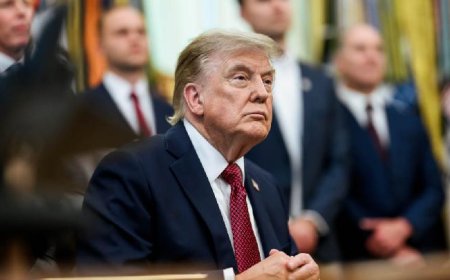
He is “the greatest king, in my book”, said Mr Trump. Republicans and Democrats alike gave his speech to Congress a standing ovation. From Harlem to small-town Virginia, Americans clutched his hand and thanked him.
“I keep trying,” he told one member of the public.
It was the refrain during his decades as Prince of Wales: there were sometimes frustrations that he was doing his best but that no one was listening.
Now, it seems, the world is finally paying attention.
The US trip has been, says one source who knows the King but is not paid to say so, a “masterclass in global leadership – sorely missed in the world so often today”.
In particular, palace sources say, it has shown the world who the King really is.
And the world seems to like it.
Where once, the King’s overseas trips in his reign echoed those of his late mother, recalling her previous visits and building on her lifetime of relationships with world leaders, this was the King as himself.
There were more jokes in his speeches, a little more of an artistic flourish, a lot more self-deprecation and a face that lit up when he realised that people were listening and even enjoying themselves.
His tour itinerary has had his favourite causes woven throughout, highlighting some of the charities and organisations he has set up over the years – the King’s Trust in New York and the Sustainable Markets Initiative in Bermuda.
And then there was that gift.
When Elizabeth II and Prince Philip visited Philadelphia for the 200th anniversary of US independence, they donated a Bicentennial Bell – a replica of the Liberty Bell – to the American people to mark the occasion.
This King, for a very different age and unrecognisable political climate, brought a bell from HMS Trump, a Second World War submarine, to give to the US president.
It was “perfect”, declared one guest at the White House state dinner. “Someone is getting [a] knighthood,” joked a royal insider afterwards.
The “high stakes” address to Congress went better than anyone could have expected, a 20-minute draft stretched to 30 minutes on delivery once the King had paused for the standing ovations.
Commentators on both sides of the Republican-Democratic divide, as well as observers at home, have seized on different parts of it as evidence of the King offering a rebuke to one side or another, but aides do not agree that it was political.
“First, what the King says will always be guided by the truth,” said a senior aide.
“Two, it will be guided by conscience. And three, they’re all observable facts. Everything that is in that speech is an observable fact.
“So I think we felt very comfortable with the King speaking as he did.”
The King, they added, “is absolutely driven by duty, by service”.
Three quarters of the British public, surveyed by YouGov after the US leg of the trip, believe the King “handled the trip well”, with 43 per cent voting that US policy towards the UK has improved.
Quite the turnaround from before the trip, when the same polling company found almost half of the surveyed British population opposed the trip entirely.
“What looked like risk and challenge was also a phenomenal opportunity,” said the senior aide. “One that was grasped in both hands by the King.”
Saying the word historic was “much overused”, they added: “We always hesitate to use it in the Palace but I think one could use that term for this visit.”
Warren Stephens, the US ambassador to the UK, who was at both the White House state dinner and the Bermudan garden party, described the trip as magnificent.
Asked about the state of the “special relationship” – a term that he uses “all the time” but the British embassy in Washington does not – he said: “We go through disagreements and whatnot but we work through ’em and whatever’s going on now, we work through ’em [and] the work between the governments at the working level goes on.
“We don’t have a better ally or a more important ally than the UK. I mean, we just don’t.”
In Bermuda, where he could have had an easier time, the King chose to tackle one of the outstanding challenges of his reign: the transatlantic slave trade.
He viewed an exhibition of the neck irons used to transport slaves, pausing to take it in.
In the autumn, he will be at the Commonwealth Heads of Government Meeting hearing the growing calls for Britain to pay reparations to its former empire.
The conversation is not so heated in Bermuda as it is in the Caribbean realms, but it was a sign of the King’s willingness to approach the difficult issues head-on.
The trip was something of an experiment for the Palace, albeit one that was approached carefully. How would the public in a British Overseas Territory welcome a King who lived so far away, after the long, quiet acceptance of the system under Elizabeth II?
Bermuda is about a “50/50 split” between wanting to stay a territory and wanting independence, said Michael Weeks, Bermuda’s minister of national security, adding that “we feel appreciated by the monarchy whenever they find time to come and visit us”.
“I think that the current arrangement is fine because we are one of the most independent [of the] dependent territories. We are definitely self-governing,” he said.
“But there’s no problem with a child leaving home at some point and standing on their own and taking care of themselves with the opportunity to reach out to the parent country if ever needed.”
At the garden party, the King reminded guests of his late mother and father’s Commonwealth tour in 1953, which took six months and covered 13 realms. This trip totalled six days, but made headlines around the world.
“He’s not a man to dwell long on what some may consider yesterday’s successes,” a senior palace aide on the trip said of the King. “He is always looking towards tomorrow’s opportunities.
“Generally we’ve tried to encourage him to feel positive – and he has, about the way that the American leg has gone in particular, but his mind is already on what he can achieve next rather than what he achieved this week.”
On the final day of the tour, the King visited Great Bay on St David’s Island to open a new coastguard station.
An impromptu walkabout, which left the programme behind schedule, saw the King meet locals who had waited for hours in the hot sun to thank him for coming.
Shawn Ming, 58, showed the King photographs of the time his late mother visited the island and met his father, Frederick Ming, 83.
Mr Ming said: “I told him that it was very fitting that the sons got to meet and both of us have followed in our parents’ footsteps because I am a chef like my father before me.”
At the site of a new UK Space Agency observatory, the King heard about Project Nova, which will install a global network of telescopes across five sites to track space debris.
“As they say,” he smiled, “the force is with us”.
From there, it was time to go home. At the airport, at the top of the steps of the British government aeroplane, the King turned to wave.
The verdict from the Palace was jubilant in private and understated in public.
It was, said an aide, “a week well spent”.
[Source: Daily Telegraph]